Features | May. 2026
FINDING A WAY FORWARD
By Contributor

JWC Media
a luxury lifestyle website that delivers a colorful and passionate telling of neighboring events, fashion, beauty, finance, and the pursuit of leisure.
When Winnetka educator William Hadley found a way forward after suddenly losing his vision in 1915, he set out to help others find theirs with a braille-by-mail program. More than a century later, much has changed and yet one thing remains the same—the continued demand for practical and emotional help for those coping with vision loss.
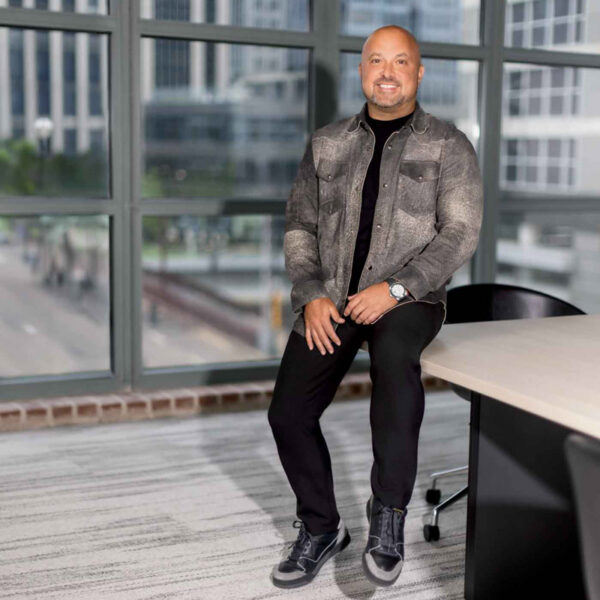
“Our founder recognized that people adjusting to vision loss needed a way to get help without geography or money being a barrier,” explains Johnjoe Farragher, President and CEO of the national nonprofit organization known today as Hadley. “The insight that support should be accessible to anyone who needs it still drives everything we do today.”
What’s changed most since Hadley was founded is what’s possible with modern technology. Smartphones and devices come with built-in accessibility features like screen readers and magnifiers; apps can read aloud what’s in front of a camera; and voice-controlled assistants like Alexa and Google can manage appliances, lighting, and thermostats.
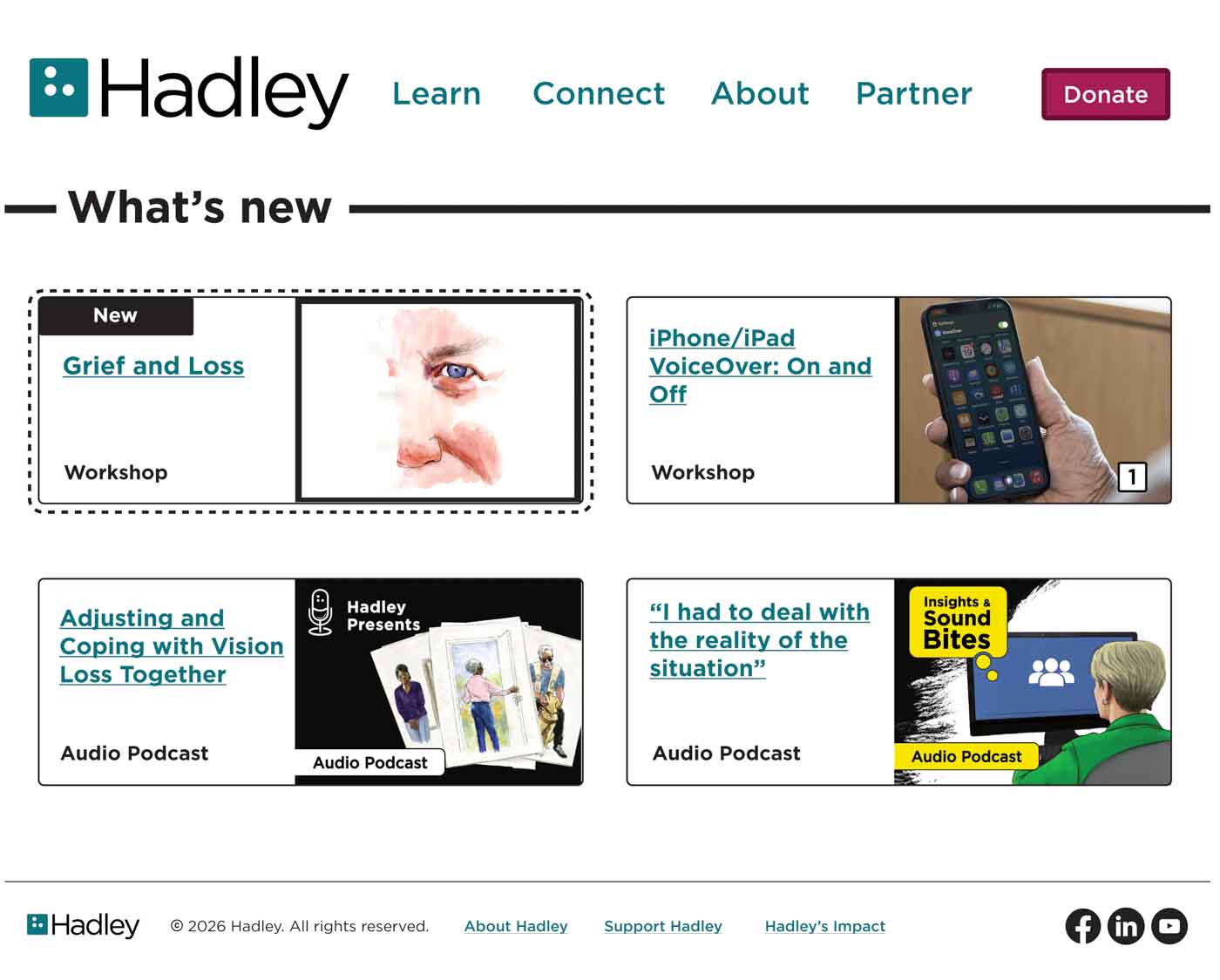
“Technology has also transformed how Hadley delivers support. We now offer more than 500 on-demand how-to videos covering everything from what to expect with a diagnosis to how to keep cooking safely to how assistive technology works, alongside Adjusting and Coping Together, our new video series focused on the emotional journey of living with vision loss,” says Farragher. “And with the recent launch of the Hadley app, we are making Hadley’s help even more accessible.”
Statistics show that roughly one in four adults over 65 experiences some level of vision loss, and the risk increases significantly after age 75. On the North Shore, where residents tend to live longer, the odds of experiencing vision loss—or having a loved one who is—are significant. For most older adults, that vision loss is not only permanent but is also progressive with vision continuing to change over time.
“A doctor may offer treatments to slow that progression but cannot reverse it. And the medical conversation rarely has room for what people are actually grappling with: the fear, the grief, and the very practical question of how to keep living the lives they want,” says Farragher. “That’s where Hadley comes in. We serve people across the country—including many on the North Shore—providing free practical and emotional help for the challenges that come with vision loss.”
Specialists at Hadley’s Donahoe Center for Support are available by phone, whether someone needs to talk through what they’re feeling, figure out how to manage daily tasks, or simply doesn’t know where to begin. The nonprofit also helps to connect people with others facing loss who understand the experience firsthand.
Farragher emphasizes that adjusting to vision loss is not a single moment: it’s a continuous process of loss, adaptation, and rediscovery.
“That’s where Hadley comes in. Not to solve the problem, but to help people work through it and find their way to the other side,” he says, noting a man who came to Hadley after spending 50 years in the trades. “His tools weren’t just equipment—they were an extension of who he was. When vision loss made it impossible to use them, letting go felt like losing himself. Working through his feelings in a Hadley support group helped him realize that his identity wasn’t in the equipment—it was in his skill set, his knowledge, his decades of experience that vision loss couldn’t touch.”
Over the past century, Hadley has grown to serve 190,000 people nationwide, with free help supported entirely by individual donors and foundations. And with a goal of helping a million people by the end of this decade, Farragher says the focus is on finding people sooner—ideally at the moment of diagnosis or shortly after.
“Too many people spend years not knowing that help exists,” he adds. “We’re working to change that. Vision loss brings real losses—some of them permanent. What doesn’t have to be lost is connection, purpose, and a way forward.”
For more information about Hadley, call 800-323-4238 or visit hadleyhelps.org.