Features | Oct. 2026
BEYOND THE BLUE LINE
By Monica Kass Rogers
PHOTOGRAPHY BY MONICA KASS ROGERS
Brent Sopel

JWC Media
a luxury lifestyle website that delivers a colorful and passionate telling of neighboring events, fashion, beauty, finance, and the pursuit of leisure.
By Monica Kass Rogers
PHOTOGRAPHY BY MONICA KASS ROGERS
Brent Sopel

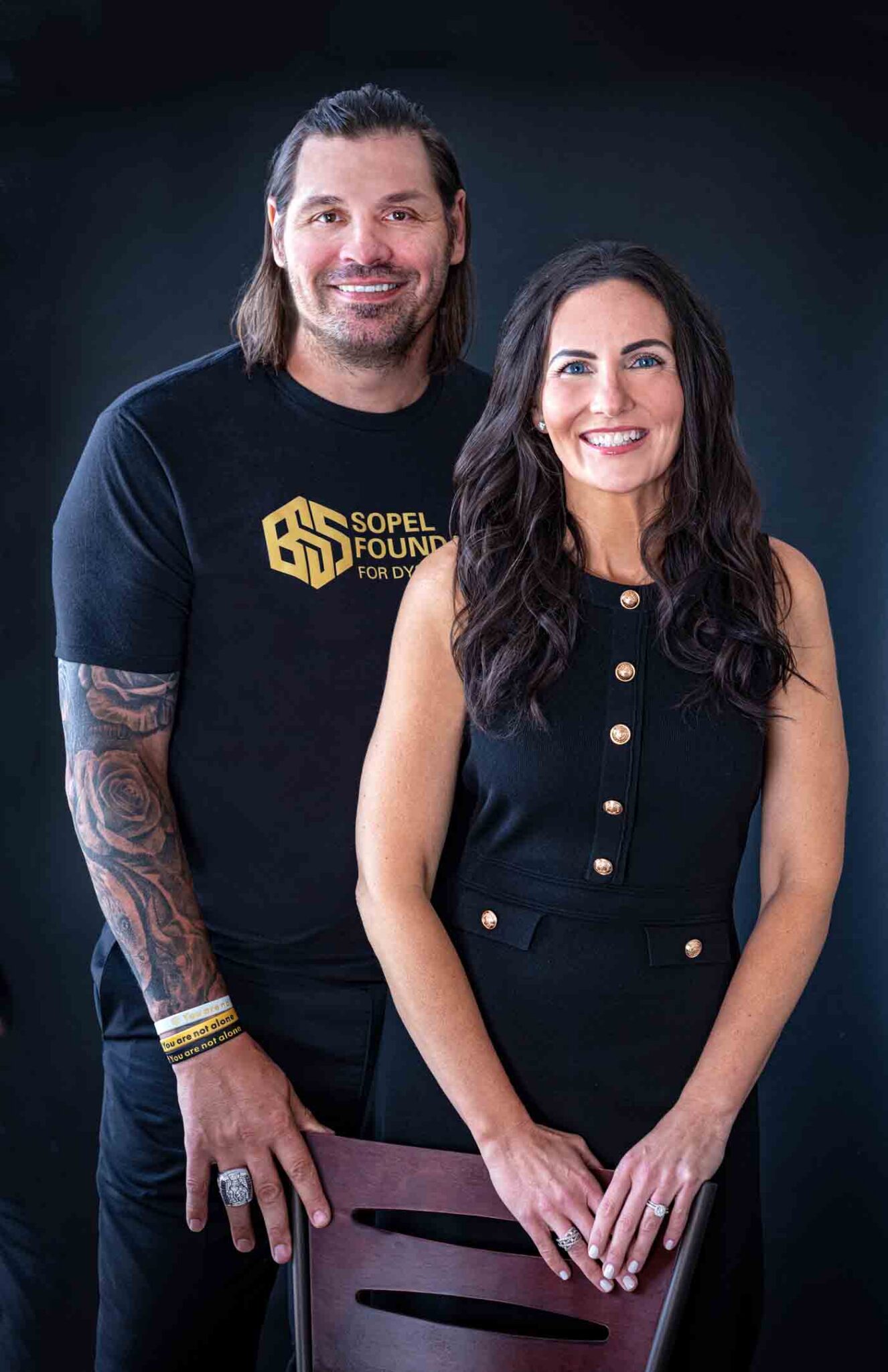
Former Chicago Blackhawks Brent Sopel spent 12 seasons in the NHL, earning respect for his toughness and resolve as a shot-blocker and hard-working defenseman. He played 659 regular-season games for six teams. And ultimately, his 18-season professional hockey career included more than 1,000 games, capped by the 2010 Stanley Cup win with the Blackhawks that secured his place in hockey history.
But the story doesn’t end there.
A late diagnosis of dyslexia after his retirement from hockey marked the beginning of a new chapter and life purpose for Sopel: creating a better world for people with dyslexia through his Sopel Foundation for Dyslexia.
A neurological difference that affects how the brain processes and interprets written language, dyslexia is not a measure of intelligence, ability, or potential. In fact, brilliant creatives such as entrepreneur Richard Branson and filmmaker Steven Spielberg, are dyslexic.
The incidence is huge: Dyslexia affects about one in five people, according to Yale University’s Center for Dyslexia & Creativity. Yet despite this staggering statistic, many people with dyslexia remain undiagnosed and unsupported throughout life.
The Sopel Foundation for Dyslexia is working to change that. Its goal is to build awareness, increase detection by advocating for change in educational systems, and to provide practical support, resources, and community for families dealing with dyslexia.
Sopel started the nonprofit after discovering that his daughter was dyslexic, and subsequently realizing that he was, too.
“I was 32 when my daughter was diagnosed with dyslexia in first grade,” he says. “Before that, I had never even heard the word, ‘dyslexic.’”
Realizing he shared many of his daughter’s symptoms, Sopel was tested and found out he had dyslexia as well as dyscalculia, dysgraphia, and ADHD—learning differences that often happen along with dyslexia.
Suddenly the difficulties Sopel had experienced with written language and reading made sense. “It was all because my brain processed information differently, not because I was dumb,” he says.
But receiving diagnosis so late meant that Sopel had already spent years struggling with self-worth.


“A lifetime of people making fun of you or telling you you’re lazy or aren’t trying hard enough really affects your self-esteem,” he says. “Early diagnosis—like we got for my daughter, makes a world of difference. It gives you a map that helps you navigate. This improves the quality of life from there on.”
While dyslexia is a life-long condition, intervention and accommodations can help children develop stronger reading skills and strategies for navigating challenges.
“We work three times harder than conventional learners,” Sopel explains, describing memorization techniques and other work-arounds he and many other dyslexic people develop to accomplish what others may take for granted.
“We zig and zag to get there,” he adds, “there’s no straight line.”
Because of all of this, early identification and diagnosis for dyslexics is one of the Sopel Foundation’s primary goals. “We want to make dyslexia testing more accessible and for it to happen sooner, so kids don’t spend years struggling, feeling different, or believing they don’t have what it takes to succeed,” says Sopel.
The testing, which is done by neuropsychologists, includes an assessment of aptitude to map out brain function, plus a broad survey of academic testing, language testing, semantic access and executive functioning. Because the testing is expensive, the foundation where it can provides financial support for students whose families can’t afford it.
But the foundation’s work extends well beyond this. It provides practical resources that address the dyslexic journey—from identifying the condition and helping families and children navigate a diagnosis at school and at home, to providing interventions, building confidence and creating a safe, supportive community.
For parents approaching schools, the foundation helps explain what to ask for and how to advocate for their child. It’s Individualized Education Program (IEP) resources walk families through the process, from requesting an evaluation and determining eligibility, to developing goals and accommodations and communicating with teachers.
The foundation also supports grants for K-12 educators to receive specialized training that better helps children with reading challenges.
Just as important, the Sopel Foundation provides a sense of community and belonging to families, children and adults with dyslexia—all in keeping with Sopel’s tagline, “You’re Not Alone.”
As part of this, Sopel and his associate Juliet Hahn, who is also dyslexic—co-host the podcast, Word Blindness sharing their experiences with dyslexia. Filled with facts, interviews with experts, and both lighthearted and poignant real-life stories, the popular podcast has already reached tens of thousands since it launched.
As well, Sopel Foundation’s 5D Collective is a new online community for families dealing with dyslexia and related learning differences including dysgraphia, dyscalculia, dyspraxia and ADHD—i.e. the five ‘d’s.
Including live parent conversations, Q&A sessions with experts, and themed discussions around sports, building confidence, communication with teachers, and more, the 5D Collective is a resource to help with all sorts of everyday challenges.
“The whole idea with this is that we get you,” says Sopel. “We really understand what the dyslexic journey is about and want people to feel like they have a place to be seen and heard without judgement. Getting a diagnosis is just the beginning. We give families and dyslexics the place to learn and go for more information and community after that.”
Because the sense of isolation and “otherness” can be so devastating, the Sopel Foundation also promotes a sense of belonging through its Dyslexic Star program. Celebrating the progress children make as they navigate dyslexia, the program provides each with a personalized gift box containing a T-shirt and other swag.
Through a partnership with WithYouWithMe, Sopel Foundation also offers young people with dyslexia free, strengths-based assessments that identify natural abilities, along with free digital-skills training aimed at building confidence and opening career pathways.
“Changing the focus from, ‘What can’t this person do?’ to ‘What are this person’s strengths?’” says Sopel. “It’s so important to change the whole narrative.”
That change in narrative is deeply personal for Sopel.
“In my own life, I had to find a way to move forward when nothing else worked and hockey helped me do that,” he says. “Now, through the Sopel Foundation, my entire goal is to help kids with dyslexia find their skills and strengths much earlier. To let them know they are not alone. Together, we can do that.”
For more information on the Sopel Foundation for Dyslexia, please visit sopelfoundation.org.