Fashion | Sep. 2026
WORN SILENCE
By Monica Kass Rogers
PORTRAIT PHOTOGRAPHY BY ROBIN SUBAR
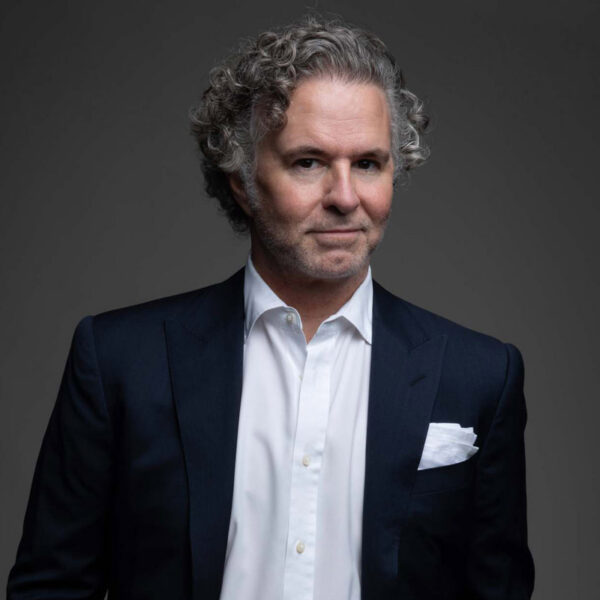
Contemporary artist and fashion professor Justin Dougan-LeBlanc

JWC Media
a luxury lifestyle website that delivers a colorful and passionate telling of neighboring events, fashion, beauty, finance, and the pursuit of leisure.
By Monica Kass Rogers
PORTRAIT PHOTOGRAPHY BY ROBIN SUBAR
Contemporary artist and fashion professor Justin Dougan-LeBlanc
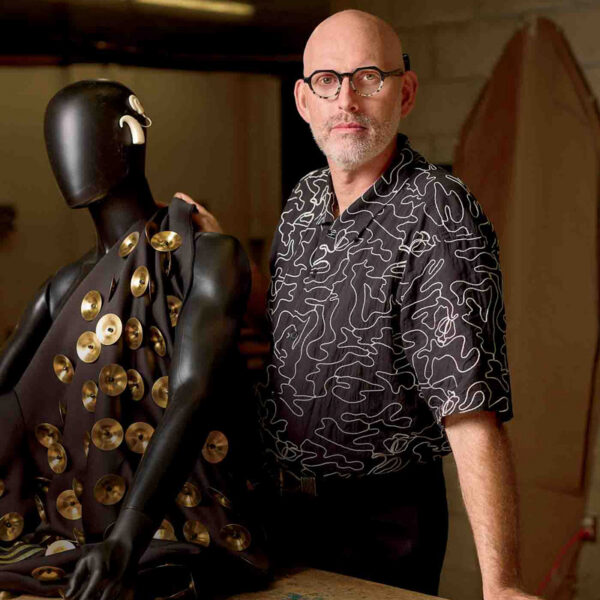
Contemporary artist and fashion professor Justin Dougan-LeBlanc was riding the train home to Winnetka from his job at Columbia College Chicago when a message came through.
Coming from the curatorial team at The Metropolitan Museum of Art’s Costume Institute, it read: “Might some of your pieces be available to include in The Met’s permanent collection and an exhibition we are developing?”
Blinking at his phone in disbelief, Dougan-LeBlanc initially thought the message was a scam.
“But it was real,” he says. “In minutes, I was on the phone with my husband, weeping for joy on the train.” For Dougan-LeBlanc, whose art spans wearable sculpture, installation, architecture, and fashion, and who is, to his knowledge, the first Deaf full professor working in fashion academia, this was celebratory news.
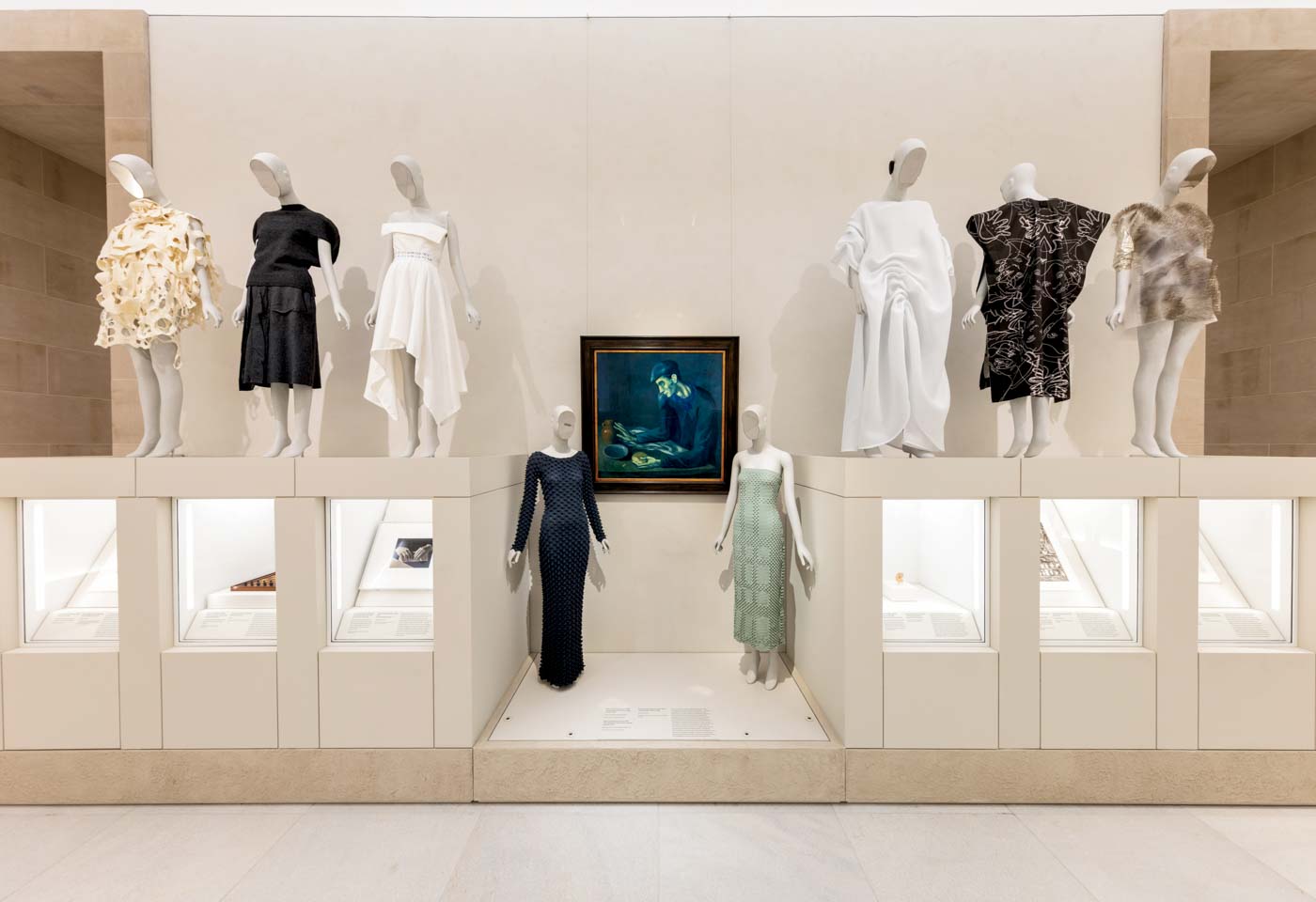
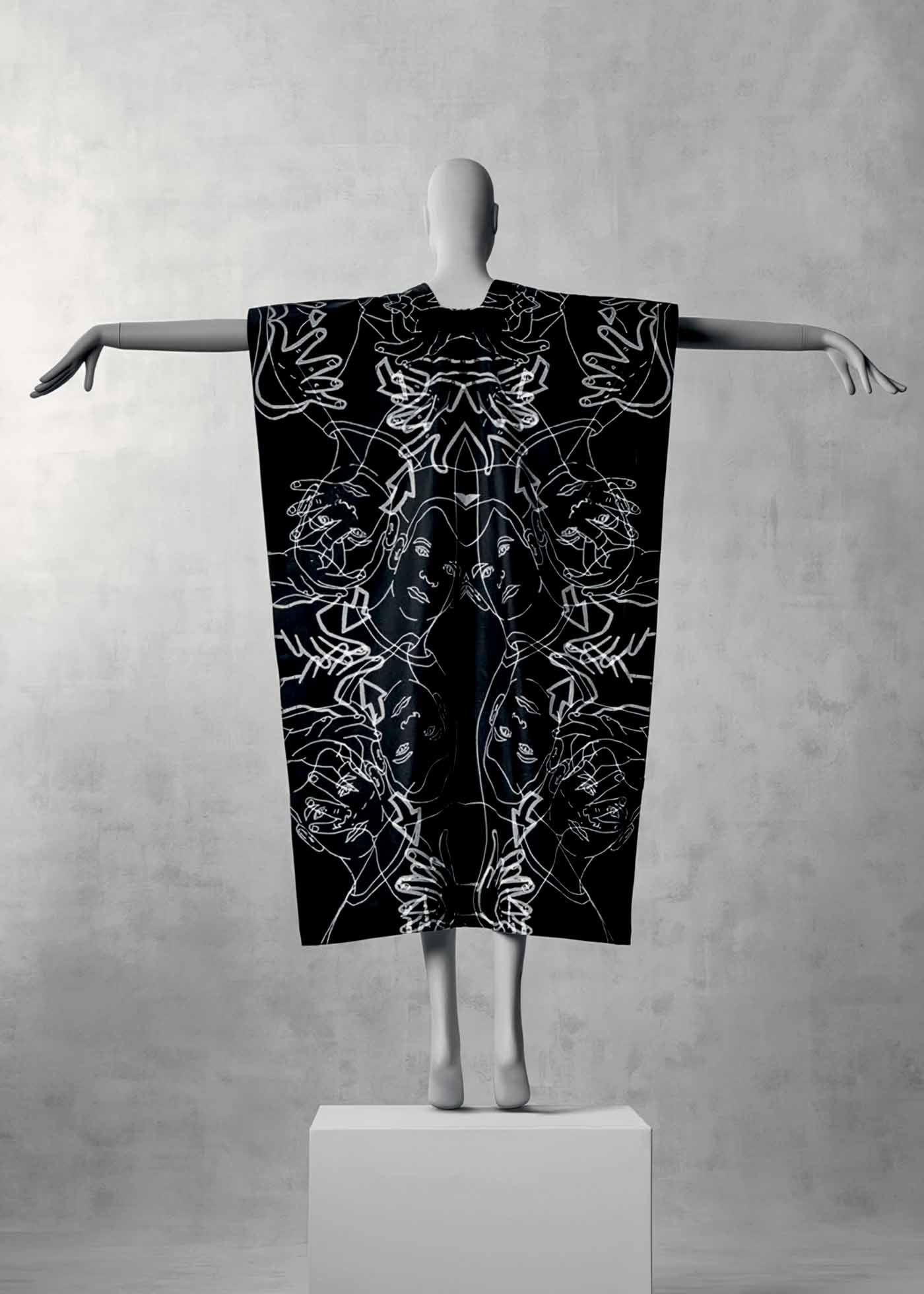
Power of Play: Look #6, Deaf Dysmorphia: Look #10, and Deaf Dysmorphia: Ear Binder Accessory are now on view at The Met as part of the Costume Institute’s spring 2026 exhibition, Costume Art. These, plus a fourth piece, Courage: Sign Language Neck Accessory, have also been acquired for The Met’s permanent collection.
The first exhibition to open in the new, nearly 12,000-square-foot galleries at The Met, Costume Art literally brings the Costume Institute out of the museum basement. Each fashion object in the show is paired with art from The Met collection. Shaped by Andrew Bolton, Curator in Charge, the exhibition is designed to show that fashion is art.
It’s a philosophy that certainly aligns with Dougan-LeBlanc’s practice. While some of his works can be worn, all are conceived as sculptural objects meant to be displayed, collected, commissioned, and experienced in space.
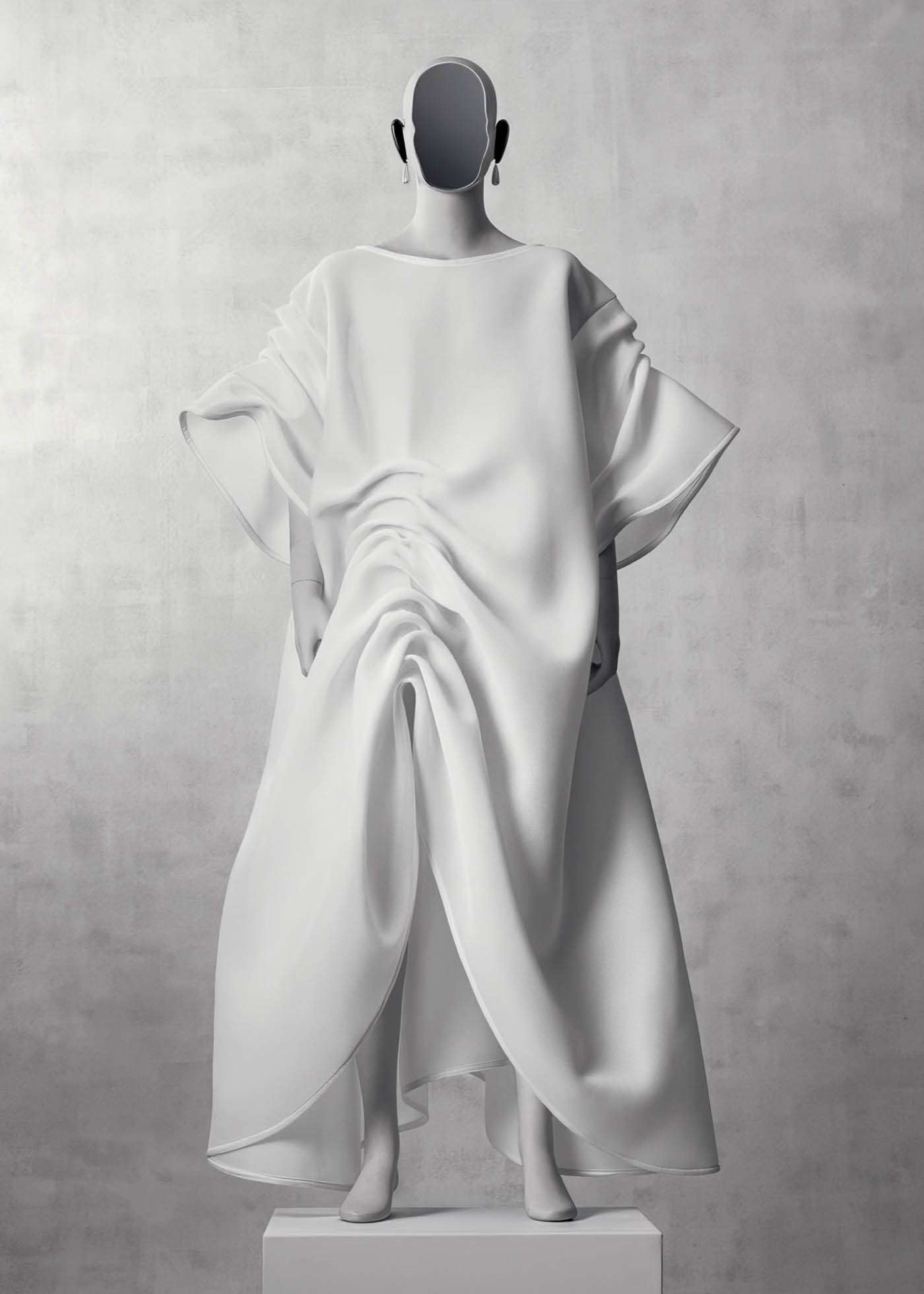
Two of the works featured in Costume Art—Look #10 and Ear Binder Accessory—come from Dougan-LeBlanc’s Deaf Dysmorphia series, which explores how deafness is often perceived through absence or distortion, while reimagining the body as a site of adaptation and reinterpretation.
Look #10 is a wearable sculpture consisting of an oversized floor-length top with sculptural pleating. Paired with this, the ear binder is a sculptural jewelry piece made to obscure the ear, transforming silence into ornament.
A third piece, Look #6, from the artist’s Power of Play series, is a kimono-inspired jacket dress of cotton canvas featuring a printed motif based on American Sign Language (ASL). Here, the concept explored Club Kid culture, movement, joy, and self-expression.
“Together,” Dougan-LeBlanc explains, “these translate communication into material form: ASL becomes surface, gesture becomes sculpture, access becomes structure, and silence becomes presence.”
Dougan-LeBlanc has taught for nearly two decades—first at North Carolina State University and, since 2018, at Columbia College Chicago’s School of Design, Fashion, and Visual Arts. Deafness deeply informs how he experiences space, language, and the body. And those perspectives come through in his work. Yet his art also speaks to the broader questions of human connection, adaptation, misunderstanding, and belonging.
“I might be a quiet person,” he says, smiling, “But my work is the loudest thing in the room!”
Inclusion in Costume Art and The Met’s permanent collection is an honor that Dougan-LeBlanc hopes will move that dialogue forward, opening more nuanced conversations about disability, fashion, and contemporary art.
“Too often, disability is presented through a medical lens or a sentimental lens. I am not interested in that. I want people to see disabled artists as artists first: as thinkers, makers, innovators, and cultural contributors. Likewise, I want my work to be experienced for its beauty, form, materiality, and presence. But I also want people to understand the lived experience and questions that helped create it.”
In his work, Dougan-LeBlanc explores how scale, repetition, weight, and bodily contact reshape expectations of the body and the spaces it occupies.
To do so, he moves between hand fabrication and digital processes such as 3D printing and laser cutting, creating works from materials rarely associated with fashion, like glass, metal, and concrete.
His unconventional approach has its roots in architecture.
Before earning his MFA in Fashion, Body, and Garment at the School of the Art Institute of Chicago, Dougan-LeBlanc studied environmental design in architecture at North Carolina State University.
“That training still shapes everything I do,” he says. “I am always asking, ‘How does the body occupy space? How does an object create a boundary or extension around the body? How does a form affect movement, perception, or communication?’”
His earliest body-based work grew out of those questions.
“I approached garments as constructed systems,” he says. “That allowed me to bring architectural thinking onto the body, giving me a way to create precision, repetition, and surface, and to turn rigid or industrial materials into forms that could move, fold, or behave like textiles.”
The materials he most enjoys are those that are capable of dramatic transformation.
“Mesh, for example, moves easily between wearable art, sculpture, and installation work,” he says. “More recently, I’ve become interested in elemental materials such as glass, metal, and concrete because they carry memory, weight, fragility, and permanence,” he explains.
The results are both fascinating and deeply personal.
During a recent visit to his studio, Dougan-LeBlanc’s worktable was filled with pieces for a solo show, Worn Silence, at Gallaudet University in Washington, D.C., which opens September 14 and will be on view through spring 2027.
Looking ahead, Dougan-LeBlanc hopes to expand the scale and reach of his work from wearable sculpture into larger installations. At the same time, he is committed to preserving histories too often overlooked.
“Moving forward,” he says, “I want to create work that invites conversation, preserves memories, and expands how people understand communication, access, and belonging. I see myself not only as an artist, but also as someone helping to archive and carry forward stories that might otherwise be lost.”
For more information, visit justindouganleblanc.com.