First Class | Sep. 2026
TRÈS JOLIE
By Dustin O’Regan
Pont Alexandre III Bridge Photography by aletheia97

JWC Media
a luxury lifestyle website that delivers a colorful and passionate telling of neighboring events, fashion, beauty, finance, and the pursuit of leisure.
By Dustin O’Regan
Pont Alexandre III Bridge Photography by aletheia97
This spring, my daughter, Redding, who was studying abroad in London, and I reunited in Paris. Since the City of Lights had been our first international journey 14 years earlier, I wondered if our return might diminish that treasured memory. It didn’t. If anything, it burnished it.
Both of our trips were graced by an early spring. Paris was in full bloom, its trees draped in fresh green leaves, softly lit by dappled sunshine. It was as if the city had somehow remembered us and donned her prettiest dress in welcome.
WHERE TO STAY
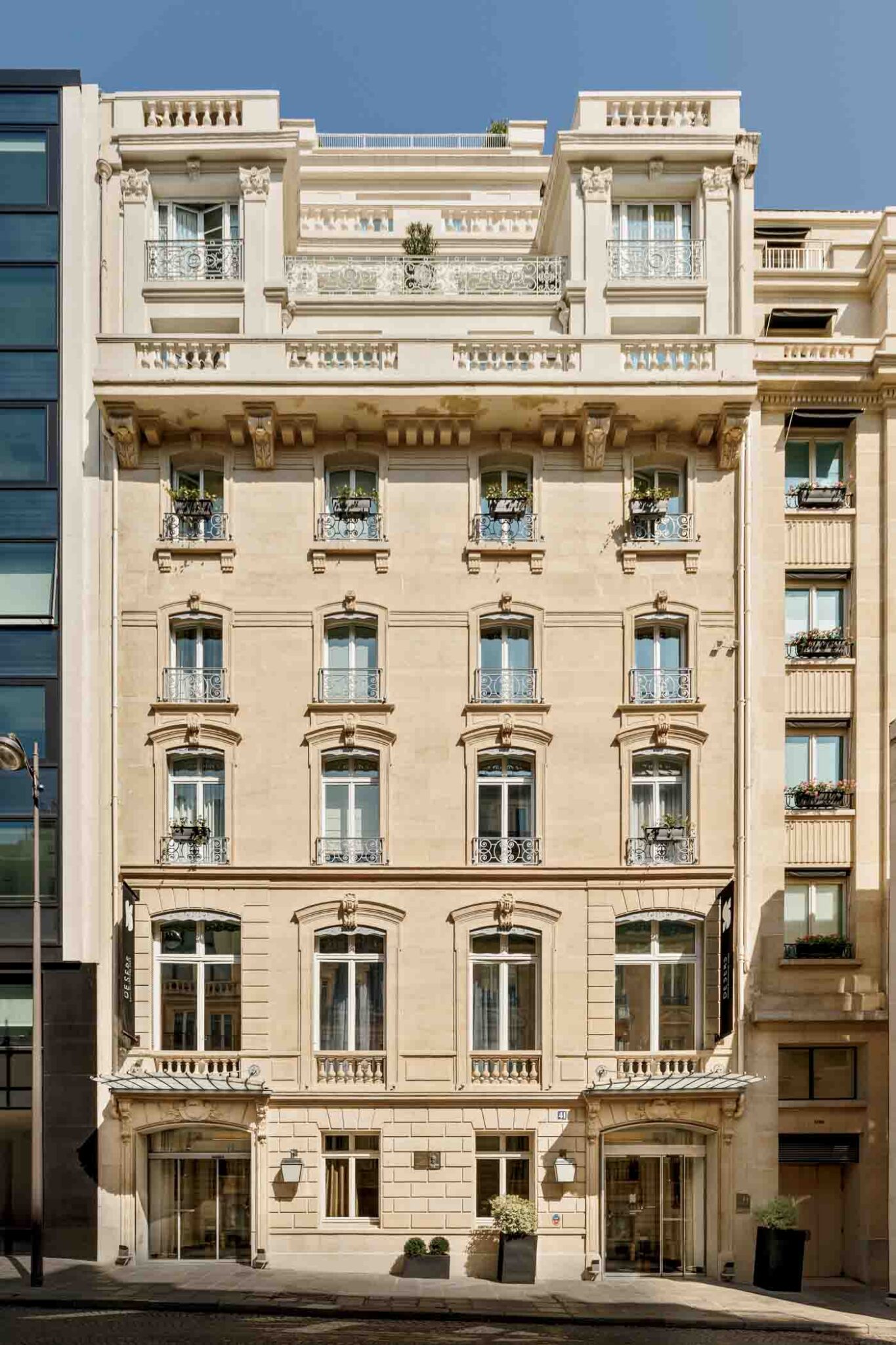
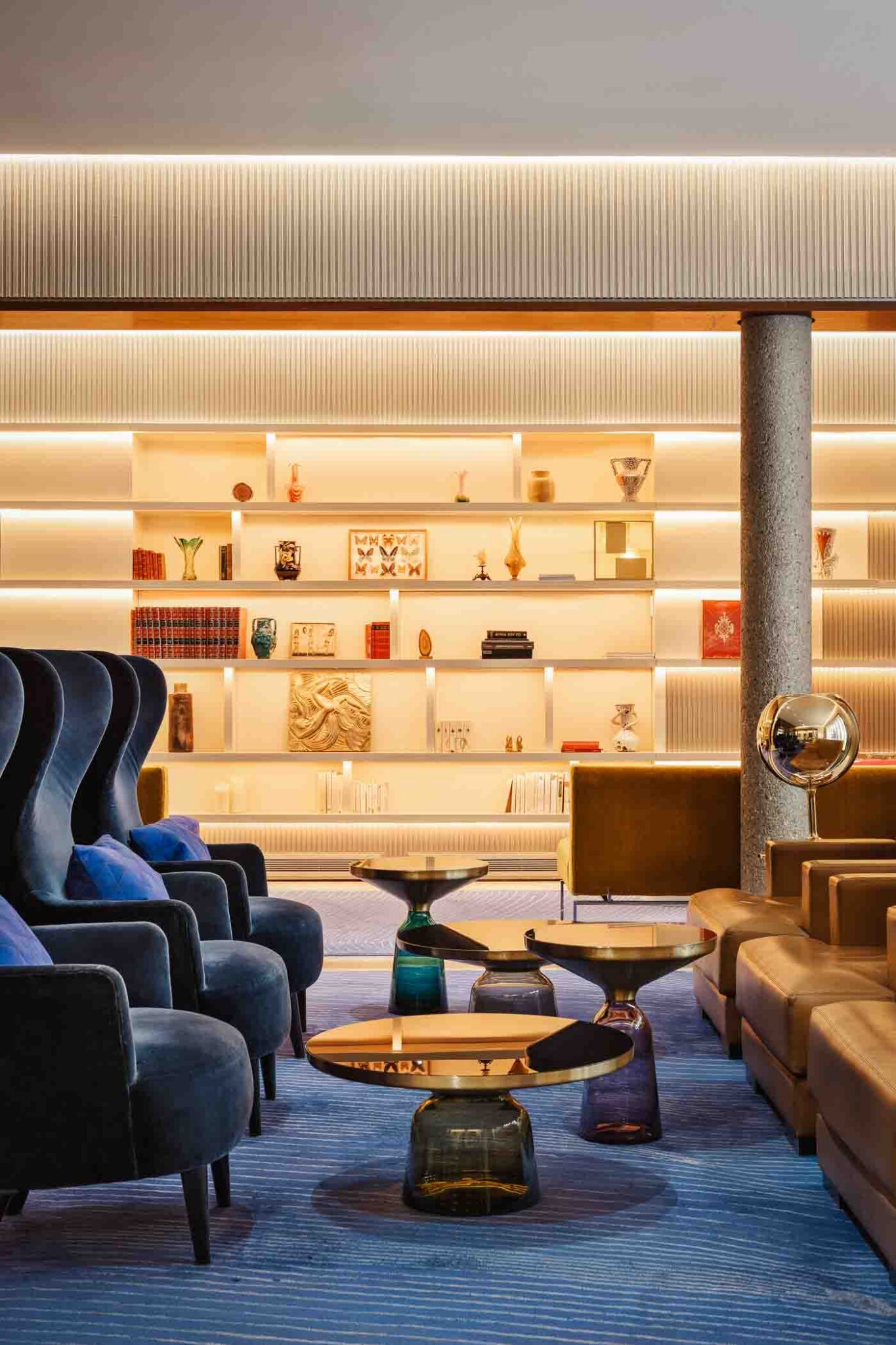
Located just off the Champs-Élysées, Hôtel de Sers resides among Paris’s most refined addresses—moments from La Galerie Dior (where impeccably dressed visitors wait patiently in a queue out front) and a concentration of other luxury fashion houses.
Once the residence of the Marquis de Sers, the classic Haussmann-style exterior houses a distinctly modern interior that retains the grandeur of the past. Steeped in classical inspiration, the building still showcases the prestige of its era: a majestic entrance once designed for carriages, a dramatic grand staircase, and a hallway punctuated by portraits of the Marquis de Sers lineage.
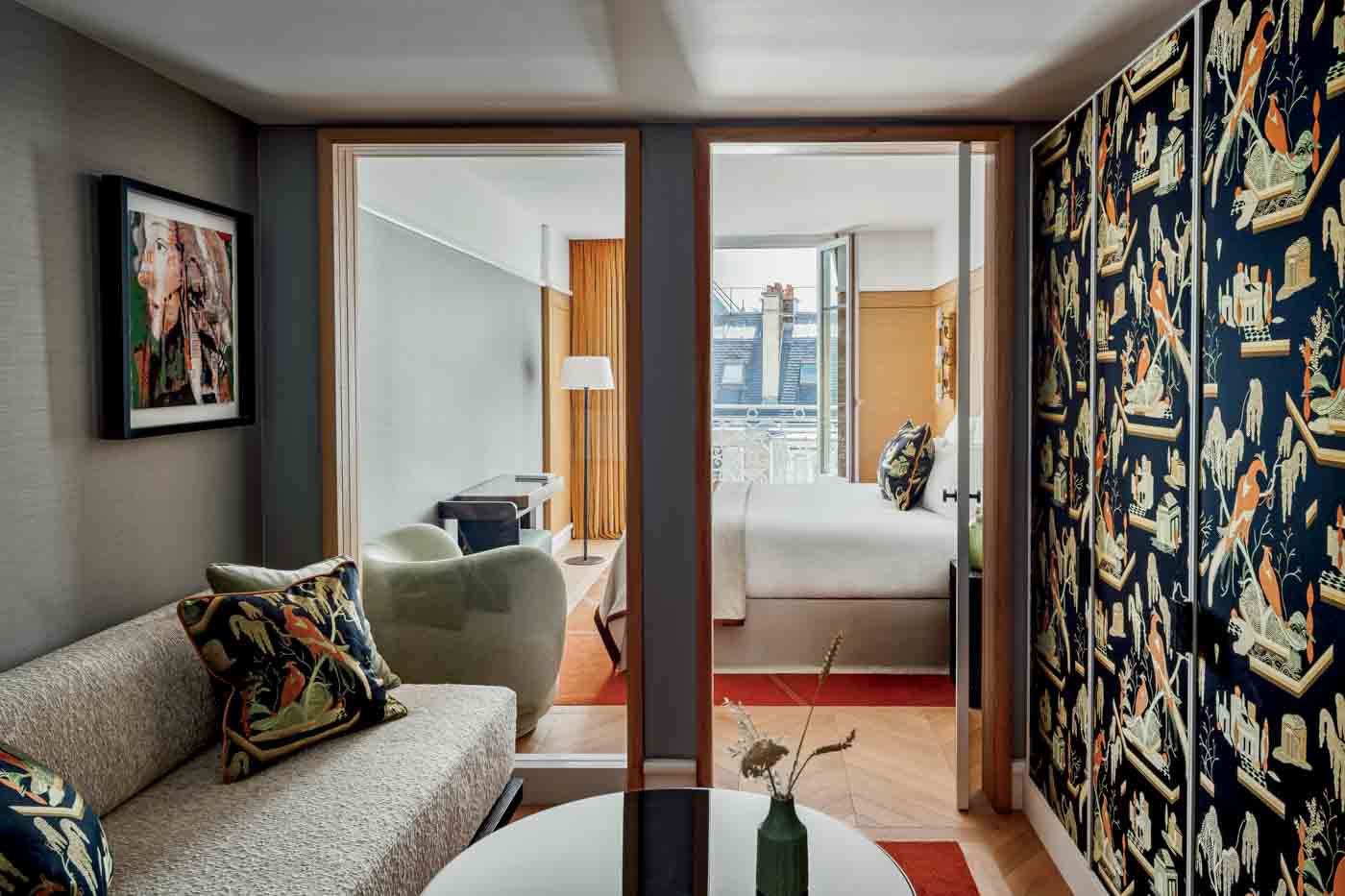
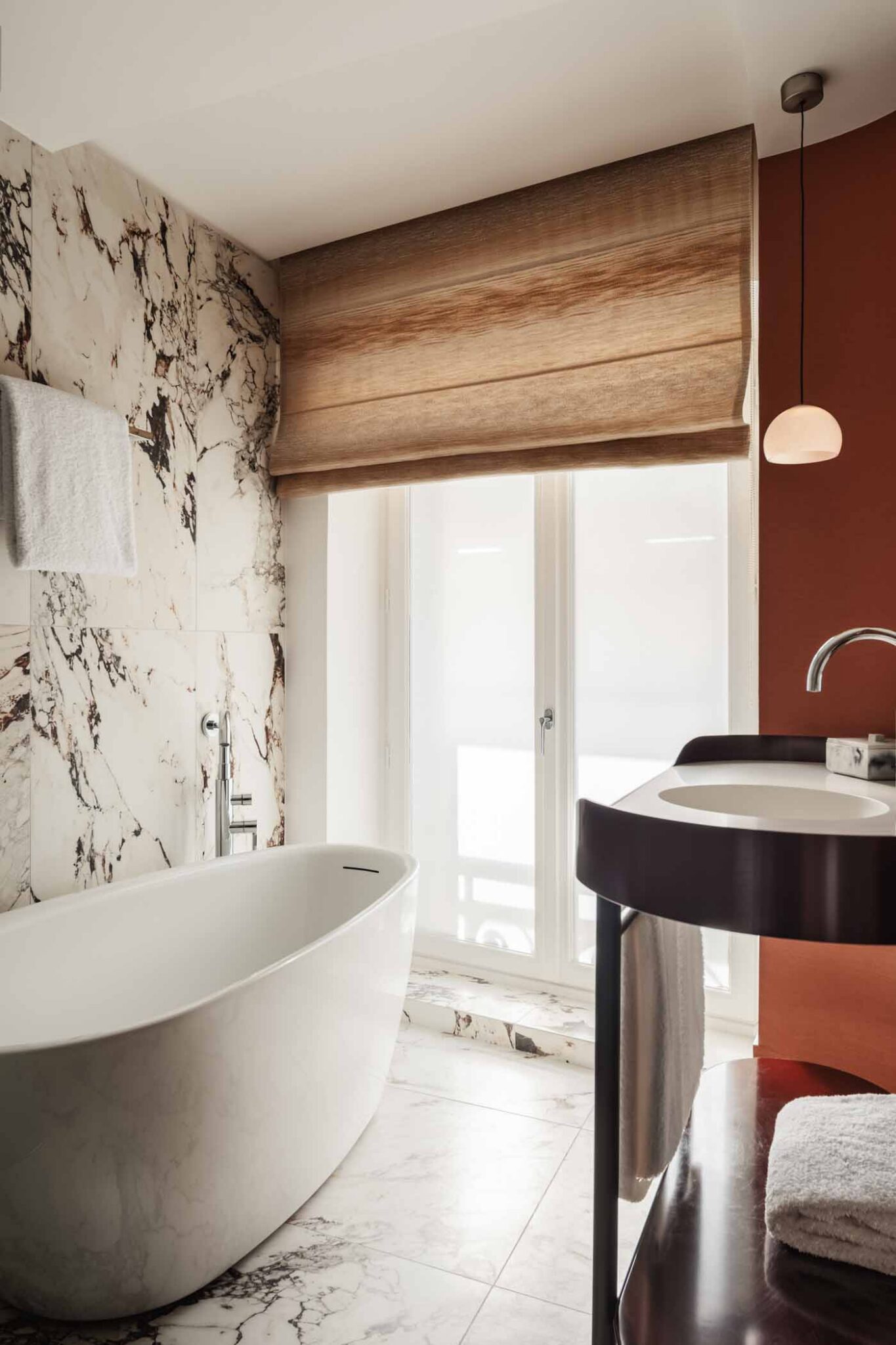
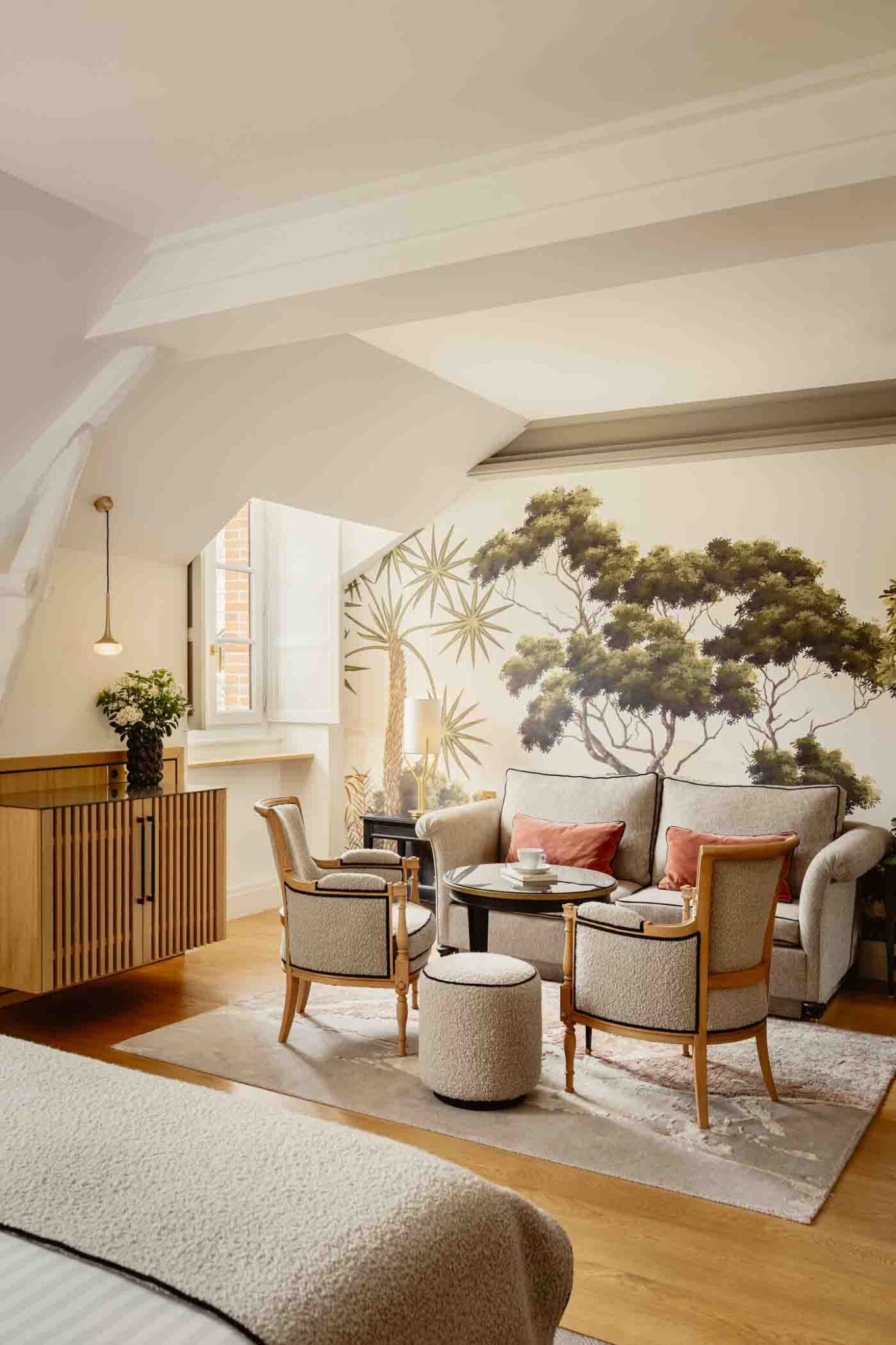
The hotel’s 43 rooms and 9 suites cultivate an atmosphere of intimate, lived-in luxury where the spirit of the 1930s meets a modern Parisian elegance. Our suite featured a separate living room, bedroom, and marble bath. Herringbone oak floors, bespoke wenge wood furnishings, vibrant wallcoverings, and sculptural lighting came together in layers, reading more like a beautifully considered apartment than a hotel suite. The bathroom, with its warm tones and natural materials, felt less like a functional space and more like a place to relax. And despite its central location, the hotel is remarkably quiet; at night, with the windows open, we were surprised by the stillness.
WALKING TOUR
Although your feet will inevitably protest the cobblestones, there is no better way to explore Paris than on foot. The city’s wide avenues, public parks, and limestone façades with wrought-iron balconies and slate-gray mansard roofs create a cinematic sense of order.
We began our first day with a stroll along the Champs-Élysées, passing luxury boutiques, including Louis Vuitton’s massive, monogrammed trunk exterior—stunning!
Nearby, the café at the Grand Palais, tucked behind sweeping colonnades of a sprawling loggia with views toward the Petit Palais, offered the most beautiful setting for lunch.
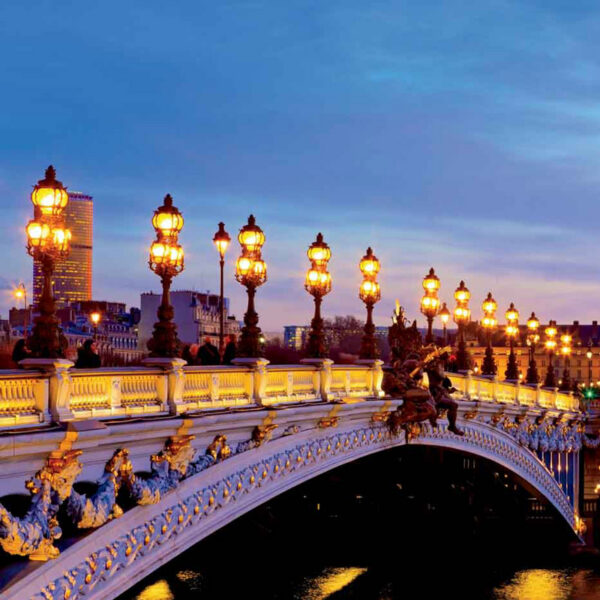
From there, we made our way to Pont Alexandre III, Paris’ most ornate bridge. Its theatrical Art Nouveau lamps, gilded sculptures, cherubs, nymphs, and winged horses frame a view stretching toward the Eiffel Tower and the golden dome of Les Invalides, the final resting place of Napoleon Bonaparte.
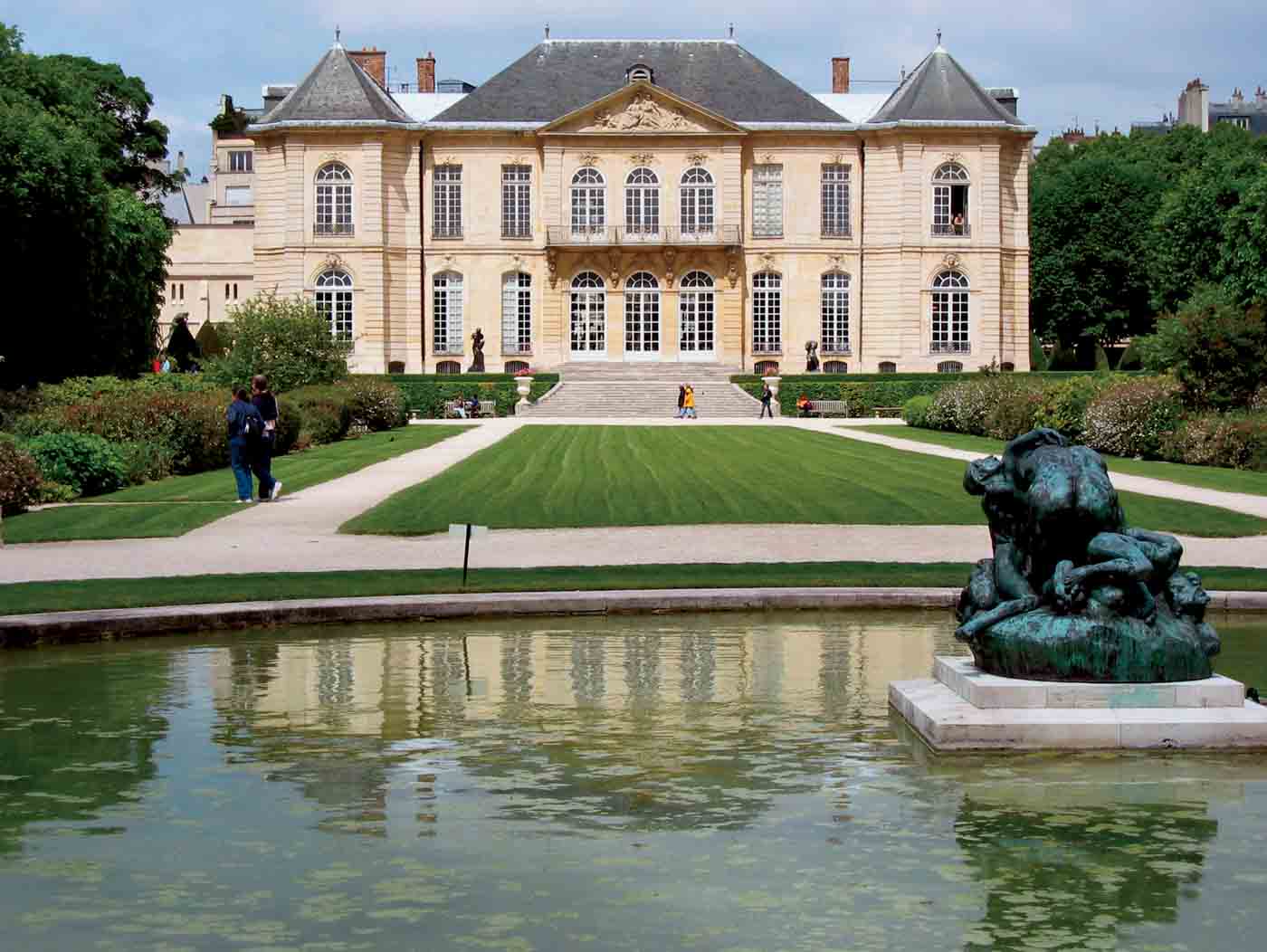
A short walk brought us to the Musée Rodin, one of my favorite places in Paris. The Thinker and The Gates of Hell anchor the front courtyard. Behind the museum is a peaceful expanse dotted with seating, where one can enjoy Rodin’s sculptures removed from the typical tourist crowds.
From there, we visited the Place de la Concorde. The city’s largest square is where Louis XVI and Marie Antoinette met their fate via the guillotine.
A walk through the Tuileries Garden offered the perfect reset. We sat for a while, watching the steady rhythm of Parisian life—children at play, couples strolling, and Pomeranians prancing; the latter reminded us of our beloved Mona back in Lake Forest.
The Quai des Tuileries provided a beautiful stretch for walking along the Seine. The city felt noticeably more energetic than on our last visit, with runners and cyclists zipping past. Over the years, the Parisian archetype has seemed to shift; the silken scarf and ever-present cigarette have been traded for trim athleisure and water bottles.
We made our way to Île de la Cité to admire the restored Notre-Dame Cathedral, with its Gallery of Kings and famed flying buttresses. I had hoped to climb the towers, but tickets were booked six weeks in advance—a lesson worth noting. The same was true for the Musée d’Orsay, which houses the world’s largest collection of Impressionist and post-Impressionist masterpieces and is an essential stop for a first-time visitor. When my daughter was young, we studied the paintings ahead of time and created a treasure hunt through the museum—an effective way to capture the attention of little ones.
Crossing to Île Saint-Louis, we stopped at Berthillon, our favorite ice cream parlor. As we enjoyed our pistachio and hazelnut cones from the exact riverside perch we had chosen over a decade earlier, we found the spot unchanged by time.
In the Latin Quarter, we visited the Panthéon, the neoclassical mausoleum where Voltaire, Marie Curie, and Victor Hugo were laid to rest. Inside, the Foucault pendulum swings steadily, a simple yet mesmerizing demonstration of the Earth’s rotation. Outside, students from the Sorbonne gathered in clusters, talking, reading, stretching out in the sun. I could see my daughter eyeing the scene, and imagining herself among them.
One of my favorite views in Paris is from this very spot—standing at the Panthéon and looking toward the Luxembourg Gardens, with the Eiffel Tower rising in the distance. As we walked through the gardens, we heard my daughter’s name called out. In a moment that felt almost scripted, five of her Vanderbilt Kappa Kappa Gamma sisters, who were also studying abroad, came into view for a joyous reunion.
Post catch-up, we headed to our last site of the day. In most major cities, I tend to avoid iconic landmarks, assuming they might feel a bit seedy or overcrowded. Yet, the Eiffel Tower never loses its impact. Whether glimpsed from afar or standing next to it (where the color reveals itself to be a warmer tone than the typically depicted matte black), there is something about it that still stirs my soul.
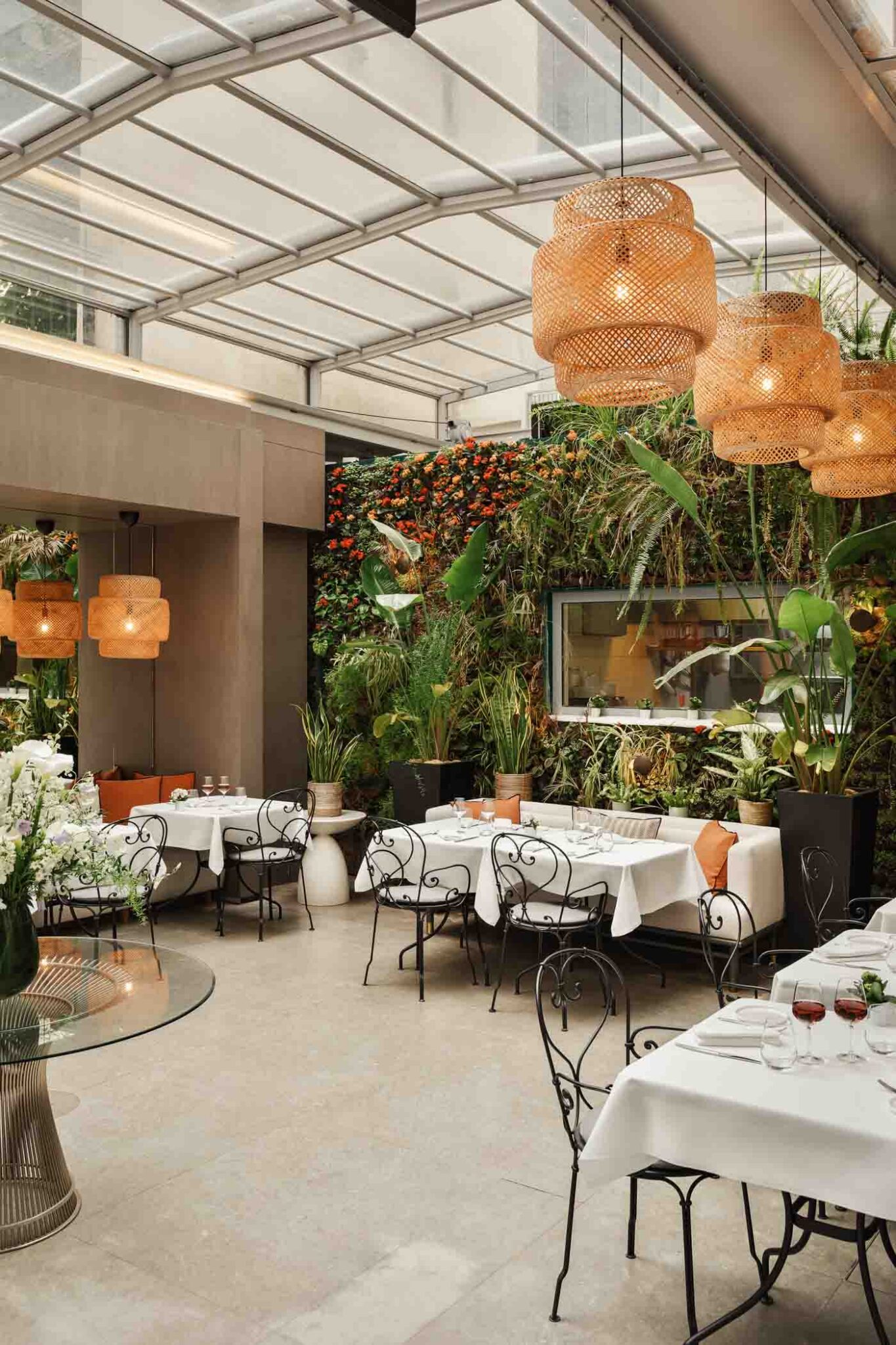
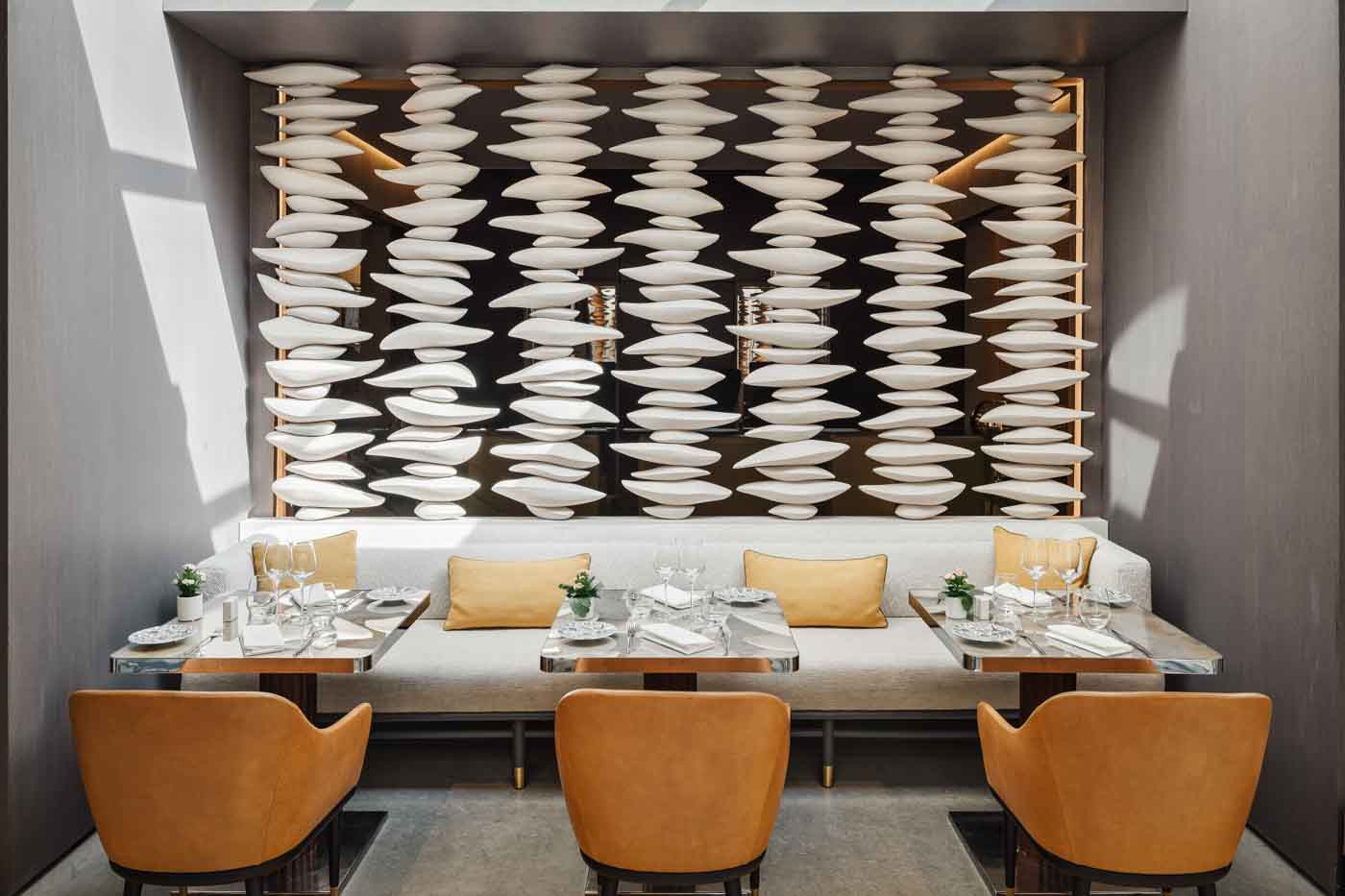
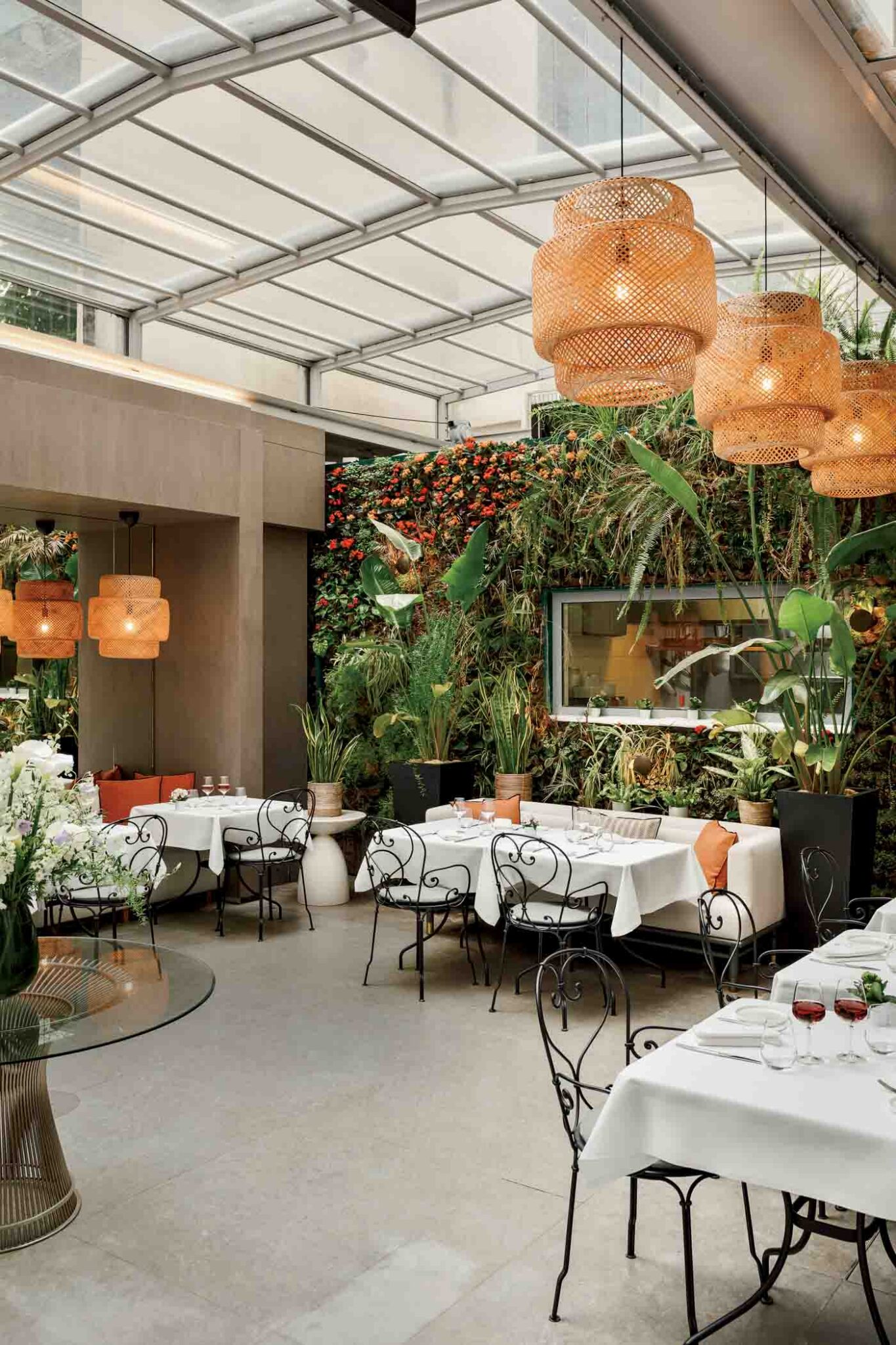
Exhausted after a day of sightseeing, we retraced our steps, passing the gorgeous storefronts of Van Cleef and Balmain. When we reached Elie Saab, we knew we were steps away from our beautiful hotel. After passing through the hotel’s portrait gallery, we arrived at The Restaurant & Bar and were seated in the garden courtyard. Beneath a glass roof, we enjoyed an artfully plated octopus carpaccio starter. I then devoured a chicken cordon bleu, while Redding enjoyed the beef fillet. Our regards to Chef Stefano Stafie whose Mediterranean cuisine with Italian accents perfectly echoes the vibrant spirit of Hôtel de Sers!
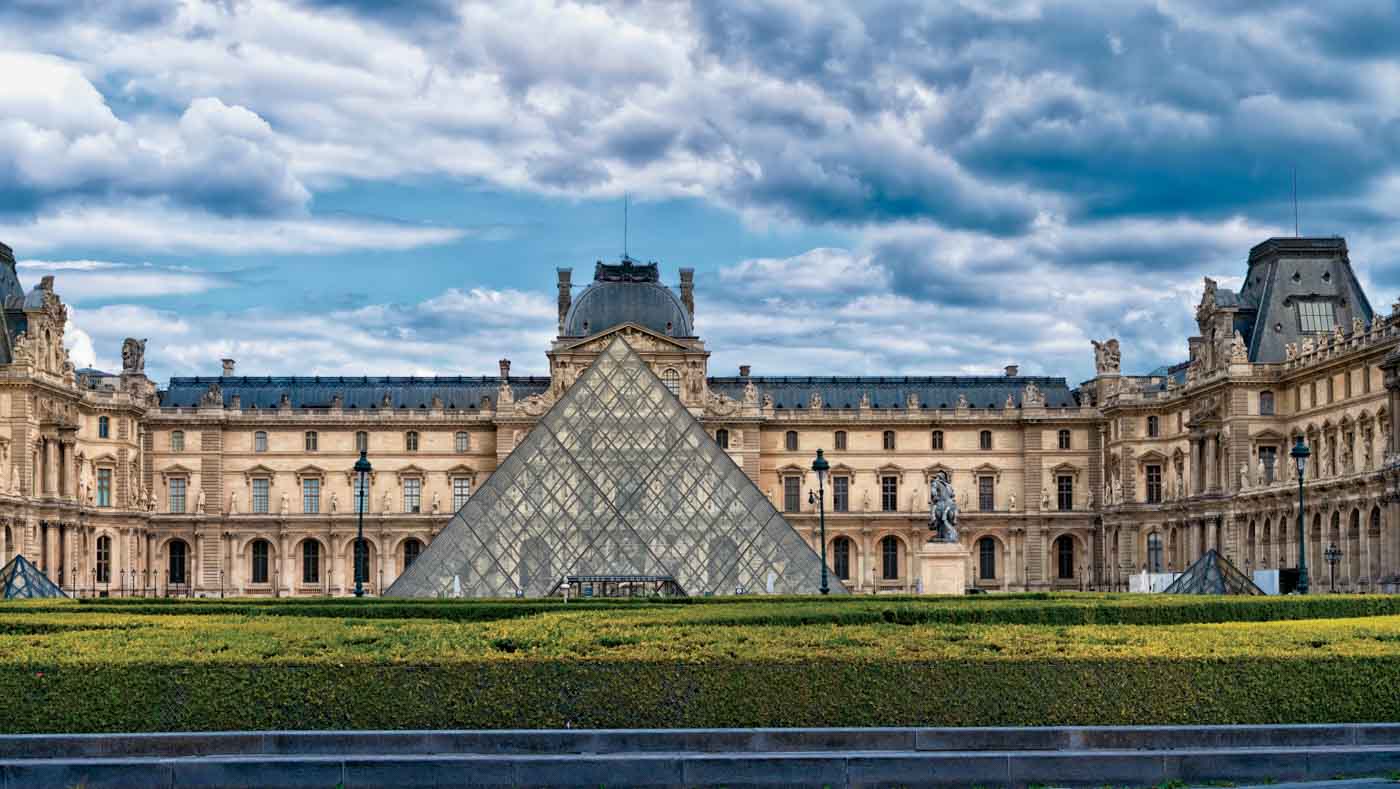
The next morning, we visited the Louvre. The vast collection can be overwhelming, so a pre-planned route is advised. We sought out several works by our favorite Italian and French artists in the Denon Wing and, of course, visited the Winged Victory, Mona Lisa, and The Wedding Feast at Cana. Our visit ended as it had 14 years ago, sitting on a bench in the Richelieu Wing’s sculpture garden, reflecting on all the treasures we had seen.
For a little post-museum tour pick-me-up, we visited Angelina’s, a historic Parisian tea house founded in 1903 and a favorite of Coco Chanel. Surrounded by Belle Époque décor, we sipped an iconic hot chocolate and enjoyed a delicate Trocadéro—a beautiful mix of milk chocolate ganache, light whipped cream, and a crunchy biscuit.
On our walk back to the hotel, we paused along the Seine. As we stood hand in hand, we realized we could see nearly everything at once: the Louvre, the Tuileries, Notre-Dame, the Grand Palais, the Eiffel Tower, and the Musée d’Orsay. Redding’s remark that “Paris feels like poetry made tangible” perfectly captured the moment. It seemed impossible that so much beauty could exist in such proximity.
Brittany
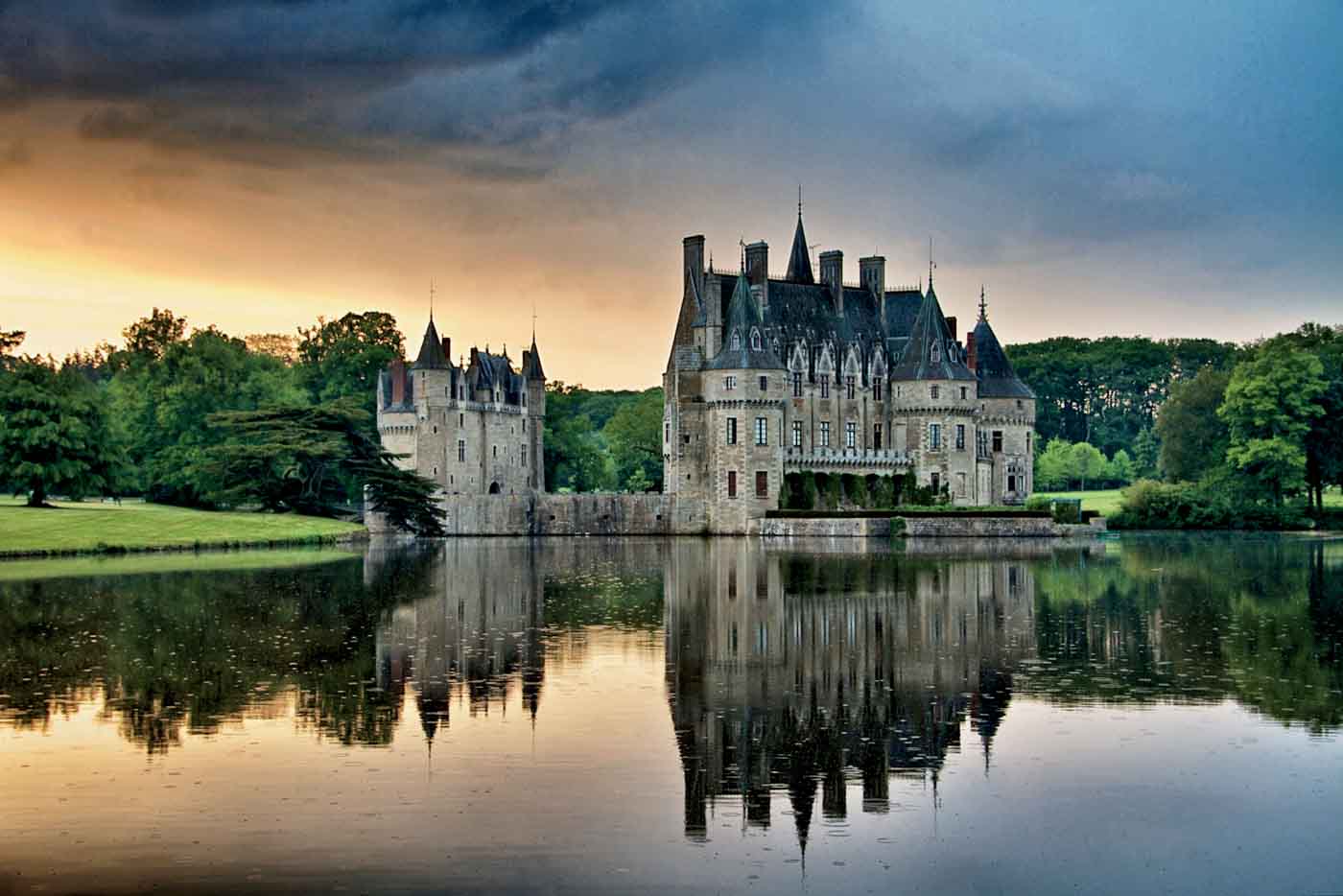
Early the next morning, we departed from Gare Montparnasse for Brittany, France’s northwesternmost region. Our home away from home would be Domaine de la Bretesche, located in Redon, a charming Breton town. This five-star Relais & Châteaux property, complete with an 18-hole golf course, spa, and forest-edge cottages, is centered around a 15th-century château that was once the residence of the Barons of La Roche-Bernard.
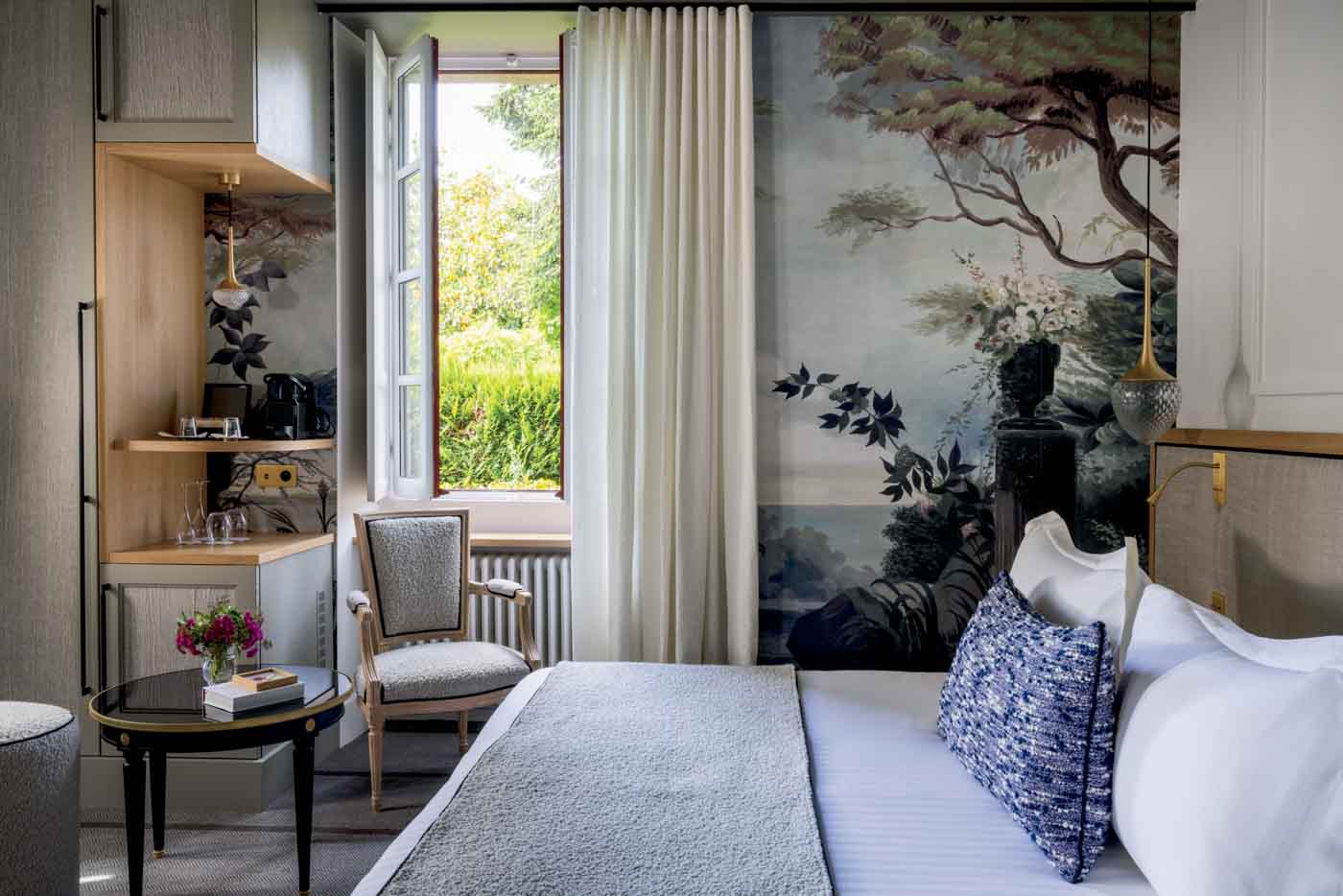
The hotel, a striking stone structure with steep slate roofs and an elegant cobblestone courtyard, is something out of a fairy tale. The design inside shifts unexpectedly modern. Opening our coral-lacquered door, we followed a gunmetal velvet-wrapped entrance hall to an expansive living space. Its windows offered views of the château, while the walls were covered in a sweeping landscape mural, making it seem as if the forest had followed us indoors.
Mornings began at Le Montaigu, a light-filled dining room overlooking the property’s lake and offering scenic views of the château. Here, the charming Elodie warmly greeted us as she took our coffee orders before we leisurely enjoyed pastries, fruit, and a generous buffet. The clientele was largely European, many of whom were accompanied by tiny dogs, so we rarely heard English, which made the visit that much more magical.
Our days were spent in the 100-year-old forest, either on foot or riding the hotel’s bicycles along a network of paths; some meandering under a dense green canopy, others opening toward the lake where swans drifted across the water. During these jaunts, we were accompanied by bird song and sometimes caught a glimpse of a chevreuil or roe deer. One could easily imagine the forest’s past as a hunting ground where gallantly dressed horsemen pursued feathered or furred prey, then returning to the château to feast and toast the day’s sport.
In the late afternoon, we would return to the indoor pool and glass-enclosed relaxation room, where we sipped “spiritual journey” tea and basked in the sun’s warmth, our tired feet resting in reflexology machines.
Lunches and dinners at the recently reimagined Le Club, a contemporary brasserie, were elegant affairs. Seated on the terrace overlooking the green or inside near the fireplace, we enjoyed cuisine rooted in Breton terroir and shaped by the estate’s extraordinary walled garden, from which vegetables, fruits, and fragrant herbs are carefully cultivated and used in the estate’s kitchen. From steak tartare to red porgy, each delicious dish felt deeply connected to its surroundings.
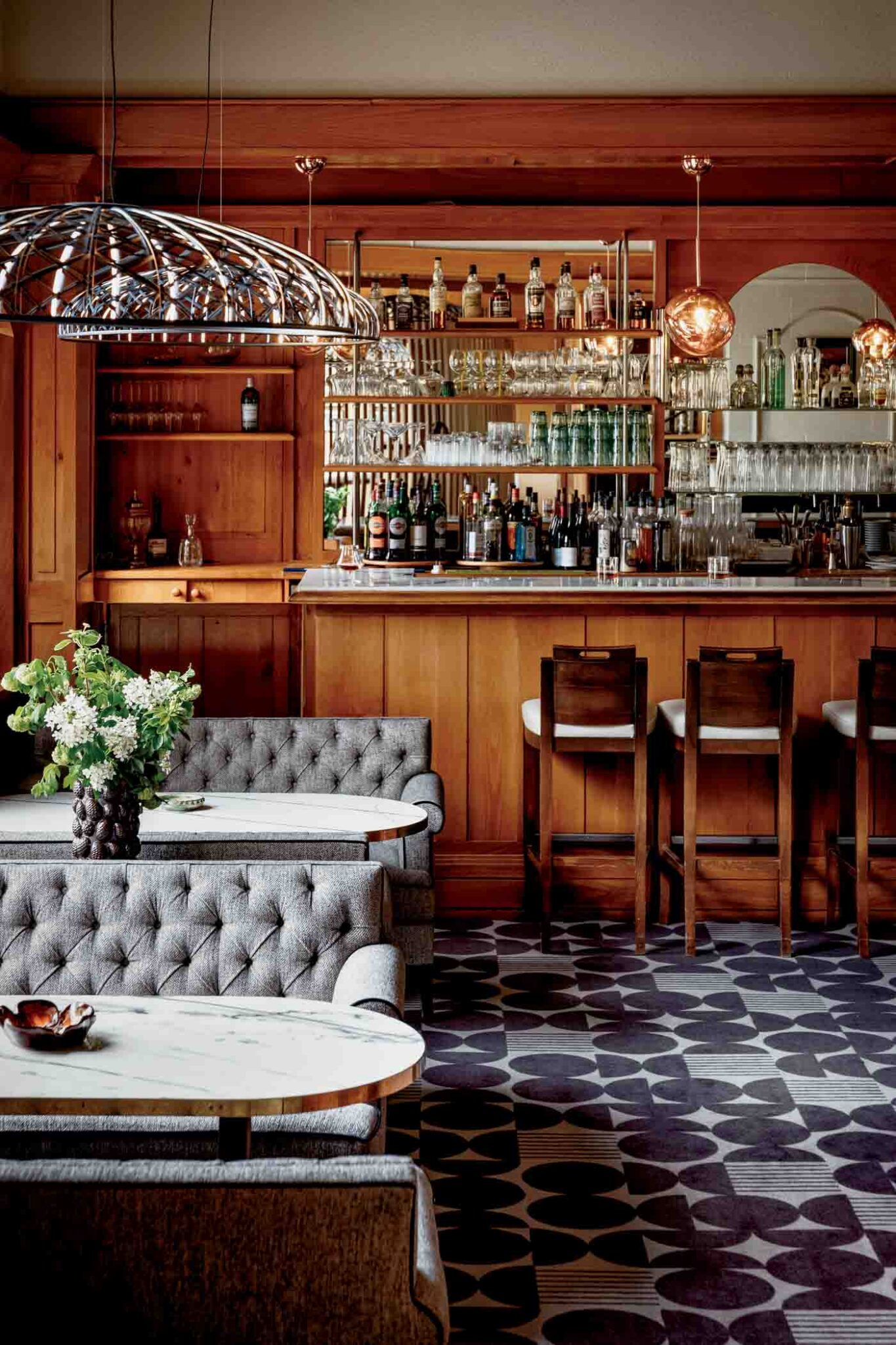
As evening settled in, we often found our way to Bar des Écuries, where former horse stalls have been transformed into intimate alcoves. Burnished leather, polished wood, herringbone brick floors, and soft, low lighting created a setting that felt both refined and cozy. The perfect place to watch the night gradually envelop the château, while enjoying a French 75.
The true beauty of travel is often found in contrast. So, it was remarkable to experience both France’s grand capital and its storybook countryside. Paris’ architecture, history, and energy captivate the mind, while Brittany’s natural wonders restore the soul. Bon Voyage!
For more information, visit hoteldesershotel-paris.com, legrandcafe-paris.fr, musee-rodin.fr, notredamedeparis.fr, louvre.fr, angelina-paris.fr, musee-orsay.fr, paris-pantheon.fr, bretesche.com.