Culture | Oct. 2026
ROOTED IN BEAUTY
By Joe Rosenthal
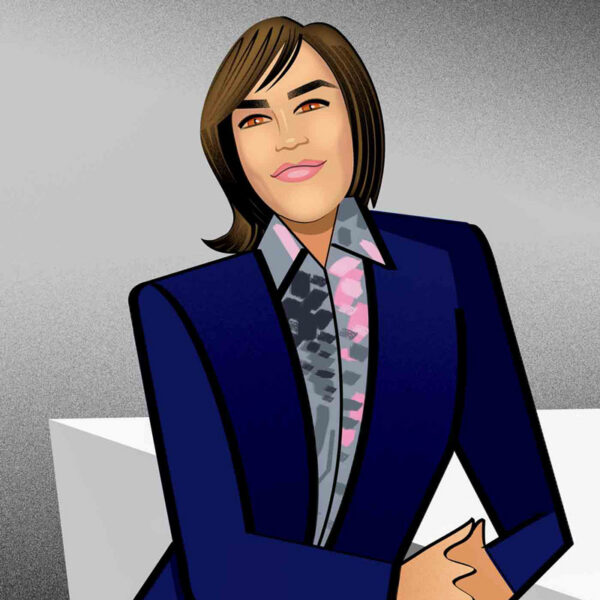
ILLUSTRATION BY ROBERT RISKO

JWC Media
a luxury lifestyle website that delivers a colorful and passionate telling of neighboring events, fashion, beauty, finance, and the pursuit of leisure.
By Joe Rosenthal
ILLUSTRATION BY ROBERT RISKO
It can be argued that the more effortless art appears, the more discipline and planning went into its creation. The same is true of the institutions that display our most important works of art. They exist not by luck or good fortune, but through their founders’ foresight and their stewards’ tireless effort and vision.
Such is the case with the Museum of Contemporary Art Chicago, which has thrived for the past 18 years under Pritzker Director Madeleine Grynsztejn. This past March, Grynsztejn announced that she is stepping down at the end of December to make way for the next generation of leadership. A bittersweet moment, but she’s certain it is the right time to pass the baton.
“The vision was to become the preeminent artist-activated, audience-engaged contemporary art museum in the country,” Grynsztejn says, sitting in her office atop the MCA against a backdrop of towering bookshelves, bathed in light from the immense windows. “First of all, we follow the artist. They are the flashlight we need to pay attention to achieve the society we wish to be. ‘Audience-engaged’ means that we seek to be as welcoming to as many people as possible.”
Inclusion has been part of the museum’s mission from the start; a welcoming spirit intended to embrace all of Chicago. Asked how she and her team have promoted inclusion, Grynsztejn swiftly recalls breakthroughs from the past two decades: a renovation that created a beautiful restaurant, Marisol, and the Commons public space, and becoming a fully bilingual Spanish-English museum.
“A very big point of pride for me is that for 10 years we have been the only contemporary art museum committed to being 50 percent women artist-represented in all our exhibitions, acquisitions, and, it so happens, staffing,” she says. That statistic is even more noteworthy against a national average that is closer to 10–15 percent.
Grynsztejn also set a goal of paying the MCA’s staff above market rates—and not just nonprofit market rates. “We are also setting precedents behind the scenes, and I find that very important,” she says. “To avoid a credibility gap, we need to be as ethical on the inside as the messages of the works of art on our walls and on our stage.”
Being credible means walking the walk when it comes to lowering the barriers to the MCA experience. “We facilitate the meeting between art and people,” she says. “And we lower that hurdle in every way. Free Tuesdays. Free admission for everyone under 18.”
For Grynsztejn, reaching out to younger audiences is mission-critical. Perhaps that passion traces its roots back to her own journey. Her family was not particularly focused on art, and she didn’t see any artwork in person until she was 12 years old on a public school field trip. That day everything changed.
“I laid my eyes on a Monet water lily painting, and I was done for. I still keep that painting with me.” She walks over to her desk and flips around a small postcard sitting right next to her keyboard. “This is the painting that changed my life.” Later, as an art history student at Tulane University, it became clear she “wanted to understand the world through the lens of art. It is the greatest way to learn about who you are, who others are, and what society is.”
Over the past two decades, Grynsztejn has helped bring countless life-changing works to MCA visitors: blockbuster exhibitions featuring David Bowie, Yoko Ono, Takashi Murakami, and Virgil Abloh. And the Ascendant Artists program, devoted to artists’ first solo shows, has featured the works of Rashid Johnson, Christina Quarles, the Propeller Group, and Michael Rakowitz, among others.
As for her departure, Grynsztejn recognizes it is time to let others build on the foundation she and her team have created. For the team to come, she has three pieces of advice: “I would say ‘listen, then lead.’ And I would say ‘mission and sustainability.’ You can’t have one without the other. And have very strong principles and lean on them in hard times.”
Regarding her future plans, she isn’t divulging them yet, but she will stay focused on Chicago’s art community. “You will see me getting close to artists again and being of service to these very important people who make our world better,” she says. “And by extension, I am going to be involved in ways that we can make Chicago a better and stickier ecosystem for artists to thrive in. A golden era of artistic production is happening right under our noses in Chicago, and we need to elevate it.”