Features | May. 2026
KEEPING IT COOL
By Contributor

JWC Media
a luxury lifestyle website that delivers a colorful and passionate telling of neighboring events, fashion, beauty, finance, and the pursuit of leisure.
By Contributor
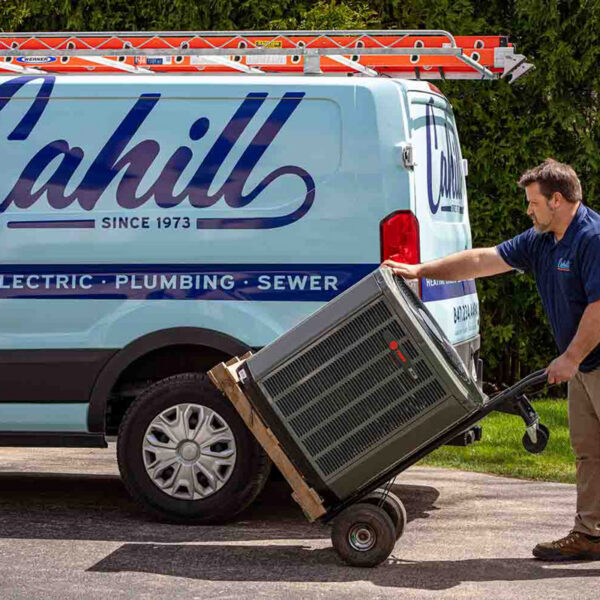
With spring in full swing and summer just ahead, homeowners are turning their attention to the rhythms of the season—refreshing outdoor spaces, planning vacations, and preparing their homes for warmer days. It is also the ideal time to schedule annual air-conditioning maintenance, says Paul Dale, operations and installation manager at Lake Bluff–based Cahill Heating & Cooling.
While air conditioning is easy to take for granted until the first stretch of truly hot weather arrives, routine maintenance plays an important role in preserving comfort, improving efficiency, and helping to prevent inconvenient midsummer breakdowns.
A standard maintenance visit includes inspection and cleaning of essential components, including motors, filters, condensate lines, and the outdoor unit. Systems that sit idle through the winter can develop issues that are easy to miss without a trained eye.
“Mice like to make homes in outdoor units, and that can cause big problems,” Dale says. “We make sure everything is clean and clear.”
Technicians also inspect wiring, check refrigerant levels, confirm the system is operating within manufacturer guidelines, and verify proper temperature drop. The goal is to make sure everything is performing as it should before summer demand sets in.
The cleaner the system, the better it performs. When equipment is burdened by dirt and debris, it must work harder to deliver the same level of comfort. That added strain can reduce efficiency, increase energy use, and create unnecessary wear on critical components.
Often, one of the earliest signs of declining efficiency is a rising electric bill.
“If your electric bill starts climbing, your air-conditioning system may be working harder than it should,” Dale says. “That usually means it is using more power to do the same job.”
That extra strain can be especially hard on the compressor, one of the most important parts of the system.
“In a clean system, the compressor operates as intended,” Dale says. “But when the system is dirty, it can struggle to remove heat properly and may eventually overheat.”
Another essential part of annual maintenance is clearing the condensate drain line. As an air-conditioning system removes humidity from the air, that moisture must drain away properly. If the line becomes clogged, water can back up into the home and potentially cause damage to ceilings, walls, or floors.
Many systems include safety wet switches designed to shut the unit down if water begins to back up. While those safeguards can help prevent a larger problem, they are not a substitute for regular maintenance.
In terms of longevity, most air-conditioning systems last about 12 to 15 years. With proper care, however, that lifespan can often be extended. Systems that go without regular maintenance are more likely to experience premature wear, reduced performance, and costly repairs.
Even well-maintained equipment may occasionally need service. Capacitors, contactors, coils, fan motors, drain lines, and thermostats are among the more common repair items. One of the advantages of routine maintenance is that small issues are often identified before they become larger, more expensive problems.
“If we find something during a maintenance appointment, basic repairs are often less expensive because we are already there,” Dale says. “That can save the homeowner the cost of another service call later.”
Maintenance visits also give homeowners a clearer understanding of when repair remains the sensible choice and when replacement may be the better long-term investment. In general, Dale says, if repair costs begin to approach half the price of a new system, replacement is often worth considering.
For some homes—particularly older homes where space is limited—high-velocity HVAC systems have become an appealing option. Because they use smaller, more flexible ducts, they can often be integrated more easily than traditional ductwork. They also allow for more even cooling by delivering air through multiple outlets in a room rather than a single larger register.
Many newer systems also feature variable-speed technology, which improves both comfort and efficiency by adjusting output as needed rather than operating at full capacity all the time.
Even with advances in equipment, annual maintenance remains one of the most effective ways to protect a home’s cooling system and preserve comfort throughout the hottest months of the year.
“Running air-conditioning without maintenance is like running a car without changing the oil or the filter,” Dale says. “It is always better to be proactive. Catching issues early can save homeowners the cost and hassle of an emergency visit and help keep the home comfortable all summer long.”
For more information, visit cahillheating.com or call 847-595-1551.