Features | Apr. 2026
DESIGN IN BALANCE
By Janis MVK
PHOTOGRAPHY BY AIMÉE MAZZENGA
Celeste Robbins at home in Barrington with Stella, wearing Alexander McQueen strapless white dress, neimanmarcus.com

JWC Media
a luxury lifestyle website that delivers a colorful and passionate telling of neighboring events, fashion, beauty, finance, and the pursuit of leisure.
By Janis MVK
PHOTOGRAPHY BY AIMÉE MAZZENGA
Celeste Robbins at home in Barrington with Stella, wearing Alexander McQueen strapless white dress, neimanmarcus.com
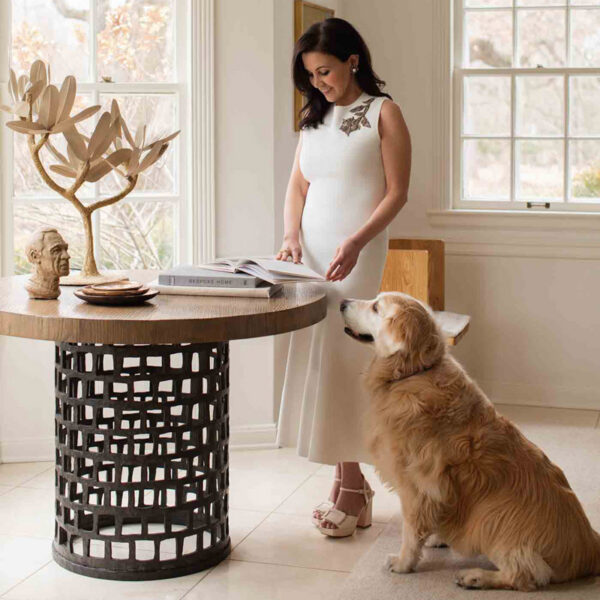
When Celeste Robbins was a little girl, she was already a builder of worlds. Blankets became roofs, chairs morphed into walls, and cardboard boxes transformed into secret rooms. These small forts became private universes shaped entirely by imagination.
Architecture as a career never occurred to Robbins. Back then, it was a male-dominated field, and not typically one young girls were encouraged to consider. It wasn’t until she became a senior in high school that her father, an engineer, and her art teacher recognized her extraordinary skills—an unusual blend of creativity and technical thinking—and encouraged her to turn imagination into reality. “Looking back, the signs of architecture were always there,” she recalls. “Discovering it gave structure and language to something I had been doing instinctively all along.”
Robbins studied the craft at Cornell University, then honed her talent in Boston before returning to Chicago to join a large firm. When she added motherhood to her repertoire, she shifted her priorities toward flexibility and a more personal connection to work, prompting her to launch Robbins Architecture and Interiors. Soon she was given the opportunity to design a home from the ground up at the foot of the Grand Tetons in Jackson, Wyoming. “It was a formative project and a meaningful collaboration with interior designer Berta Shapiro who taught me a great deal about how a home truly lives,” she says. “That experience shaped the foundation of my practice—one rooted in marrying nature and site with the nuanced wishes of each family, and with homes designed that feel both deeply personal and intrinsically connected to their surroundings.”
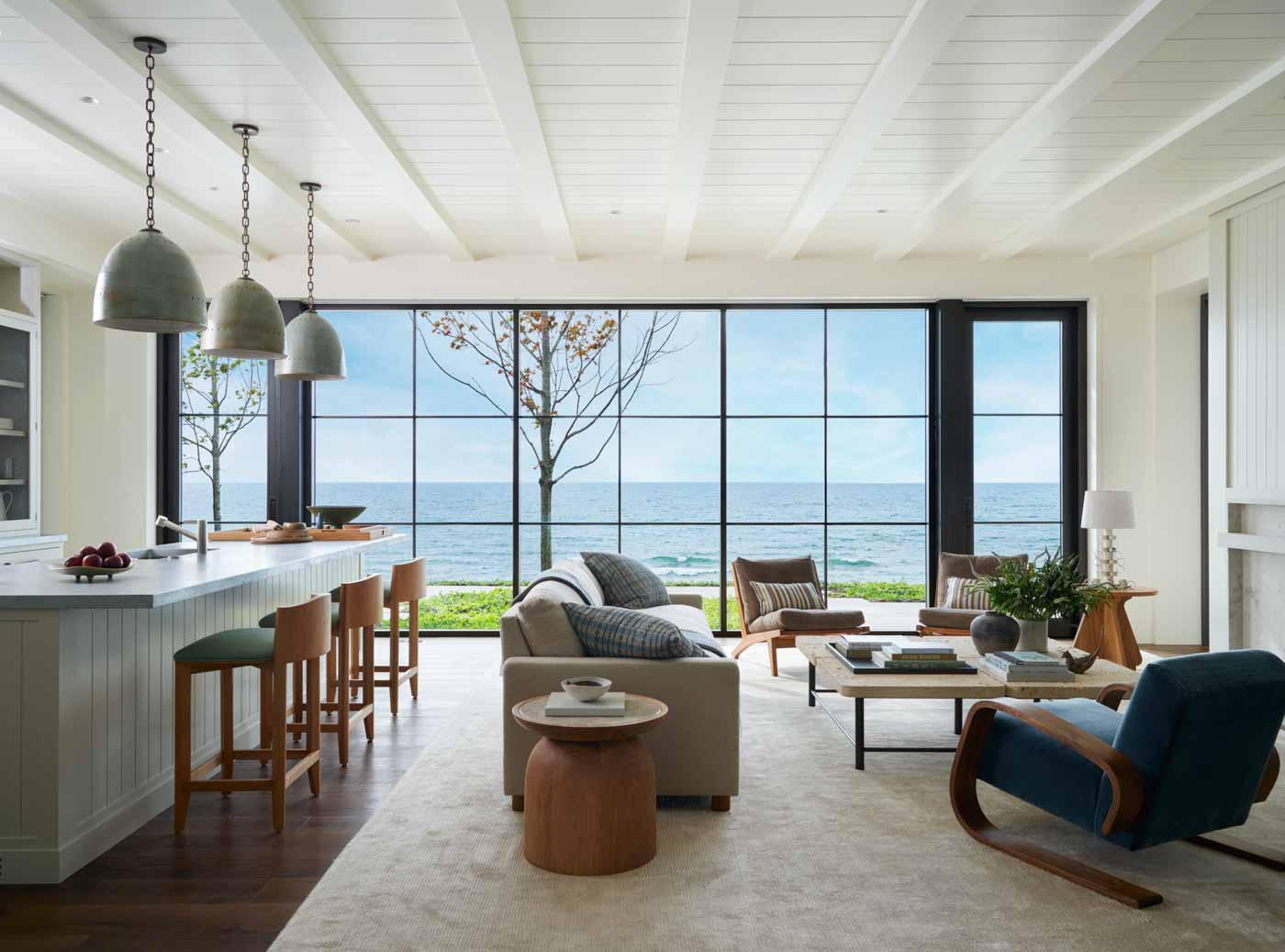
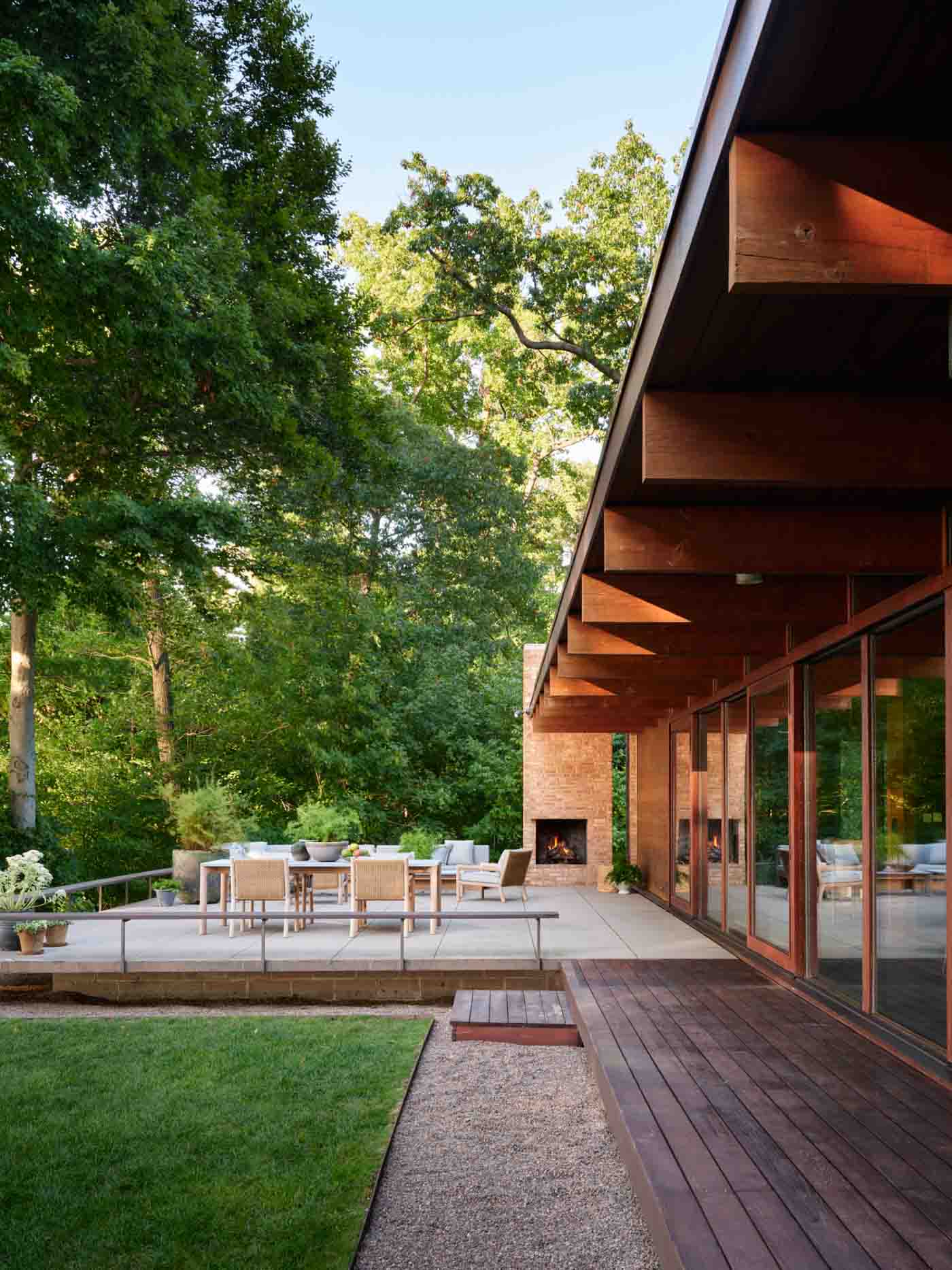
Today, she carries that doctrine with her, grounding her principles of modern architecture, applied thoughtfully to each client and each site so that every home feels warm, personal, and enduring. “Nature is always a guiding force,” she says. “Rather than imposing a fixed aesthetic, we focus on how a home responds to its environment and to the people who live there.”
That school of thought has become even more personal since her recent move to Barrington, where she was drawn in by the landscape, the space, and the opportunity for a quiet life. “I now live on 9 acres with a small pond, and that setting has been incredibly grounding,” she says. Living immersed in nature has sharpened her sensitivity to site and stillness—principles that have long defined her work. What began as a site for new construction has slowly become a house she’s grown to love. “I’m living in the home and getting to know it,” she says. “There’s a quiet architectural integrity to it that feels worth honoring.”
Living in the home has become both a personal refuge and a professional touchstone. “It reinforced the idea that good design doesn’t need to be rushed,” she explains. Living in a space sharpens her empathy for clients and clarifies what truly matters day to day. “When the time comes to renovate, the decisions will be informed not just by drawings,” she says, “but by experience, by how the house feels, how it’s used, and how architecture and interiors can evolve together in a thoughtful, cohesive way.”
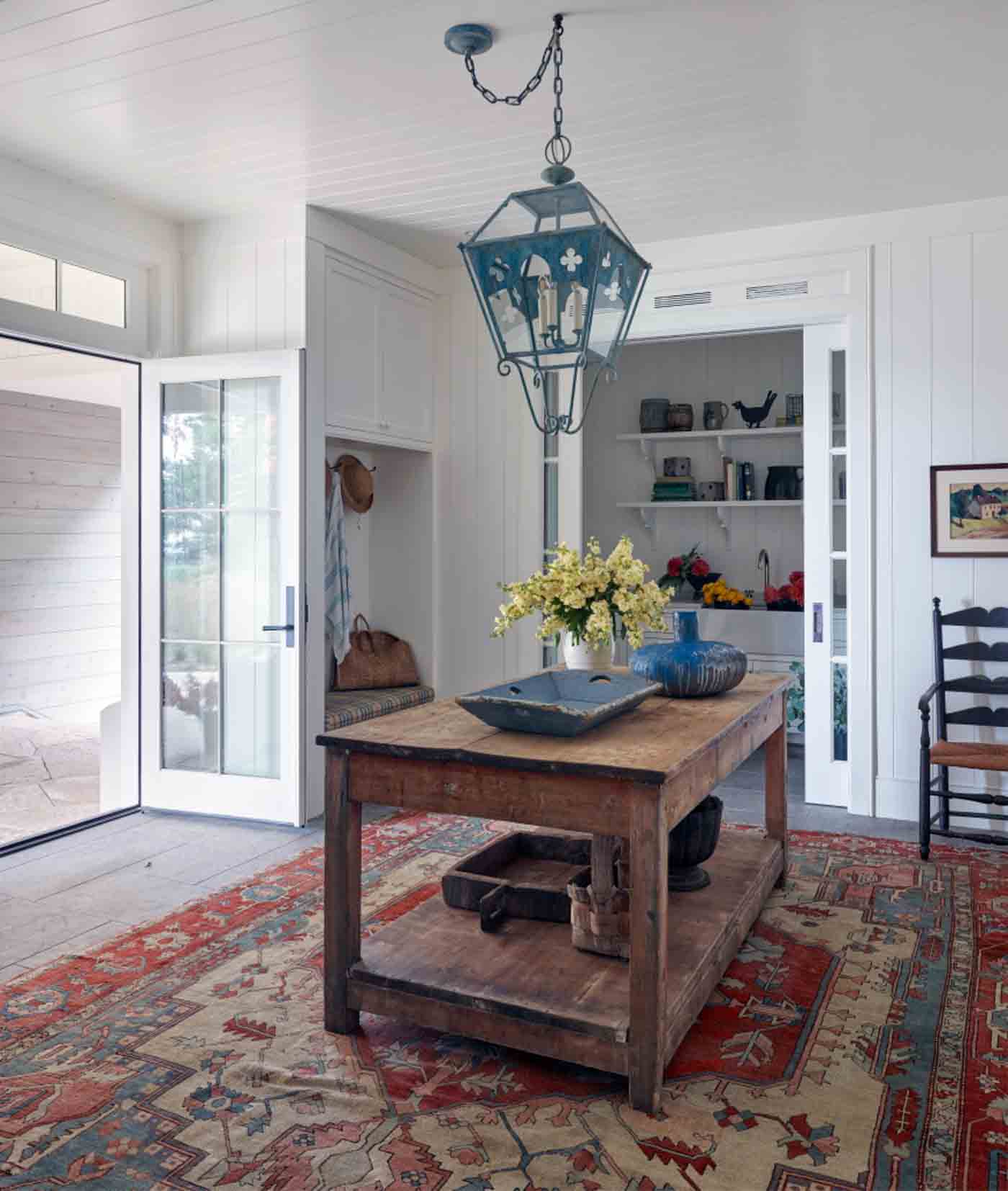
From her own home to client projects across the country, Robbins applies the same rules of balance, light, and connection to nature, integrating architecture, interiors, and landscape with precision. “A project becomes truly distinctive when there is a clear, unified idea behind it,” Robbins says. “Distinctive homes don’t announce themselves. They reveal themselves over time—through proportion, materiality, light, and the way spaces feel to live in every day.”
Her homes are known for when the exterior and interior seamlessly coalesce, revealing a quiet restraint that lets light and nature take center stage. “They tend to age beautifully and remain meaningful long after they’re completed,” Robbins notes. She emphasizes longevity and adaptability—homes that can flex with changing lifestyles, incorporate quieter sustainability and integrate design decisions that make a meaningful difference without calling attention to themselves.
Throughout her career, Robbins is focused on deepening her holistic approach. “Many of our clients are seeking a one-team, one-voice approach, and we’re intentionally growing this avenue within the firm to support that desire,” she says. “By designing the exterior and interior environment in tandem, we’re able to offer a clearer process and a more cohesive result. We’re excited about projects that allow for this level of integration as well as close collaborations with landscape architects, artists, and craftspeople.”
Robbins emphasizes, “Great residential design isn’t about excess—it’s about care. Care for how people live, how spaces feel, and how homes endure over time.” For Robbins, design is both a craft and a philosophy—a way to create homes that are intentional, deeply personal, and in harmony with the natural world around them. “Bringing architecture and interiors together allows us to create homes that are purposeful, livable, and deeply connected to place.”
Robbins Architecture and Interiors is located at 976 Green Bay Road in Winnetka, 847-446-8001, robbins-architecture.com, @robbinsarchitecture.