Features | Sep. 2026
THE RIDE OF HER LIFE
By Ann Marie Scheidler
photography courtesy of Gaucho Derby
Ainsley Cathcart. PHOTGRAPHY BY MERY PASTRANA.

JWC Media
a luxury lifestyle website that delivers a colorful and passionate telling of neighboring events, fashion, beauty, finance, and the pursuit of leisure.
By Ann Marie Scheidler
photography courtesy of Gaucho Derby
Ainsley Cathcart. PHOTGRAPHY BY MERY PASTRANA.
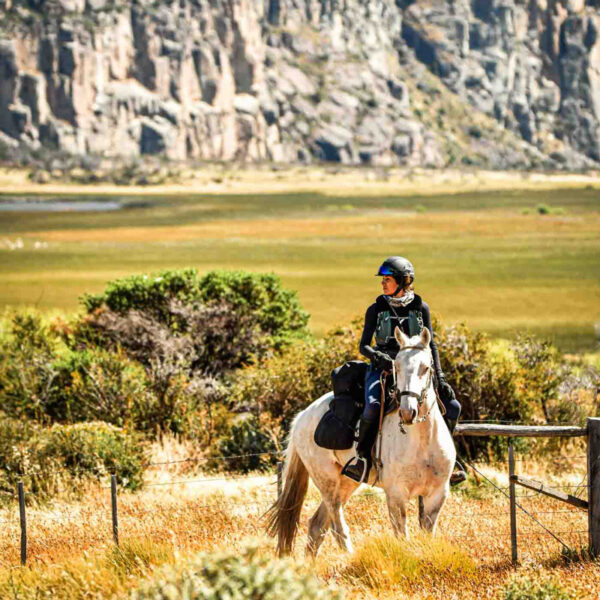
THE FIRST LESSON PATAGONIA TAUGHT Ainsley Cathcart came almost immediately.
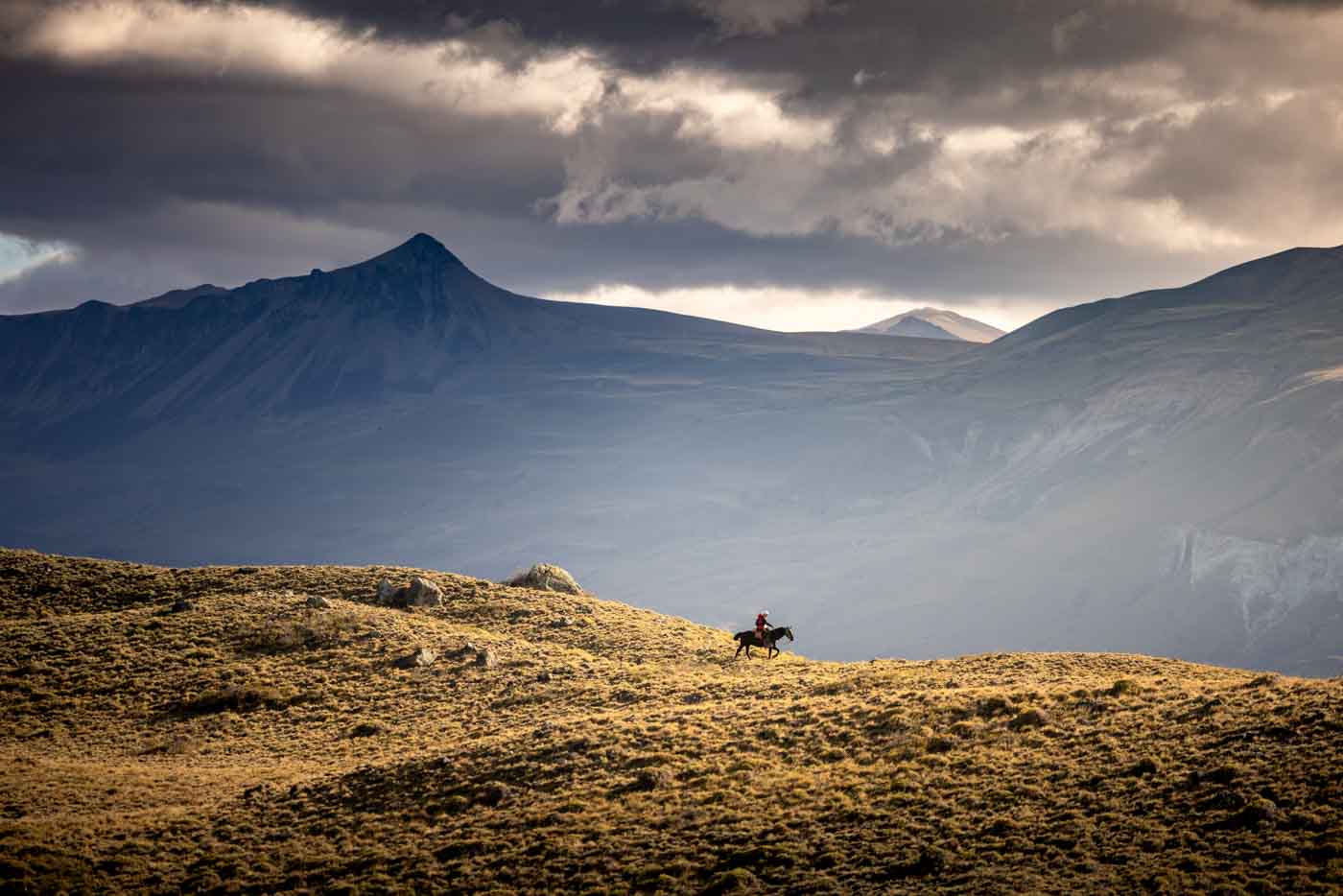
She hadn’t even reached the first veterinary checkpoint of the Gaucho Derby—a 500-kilometer endurance race across the rugged wilderness of Patagonia, Argentina—when another rider startled her horse. In an instant, the horse bolted, then began rearing and bucking. Cathcart was thrown onto the rocky ground, striking her head and reinjuring a hamstring tendon so badly she could barely walk.
“I thought, This is it. It’s over,” she recalls.
Cathcart had spent nearly two years preparing for one of the world’s most demanding equestrian adventures. Less than an hour into the race, it appeared to be over.
Then she made a choice.
“I didn’t come all this way to quit before I’d even really begun.” That decision—to simply keep moving forward—would define the rest of her adventure.
For Cathcart, however, Patagonia didn’t begin in Argentina. It began decades earlier in Lake Forest.
Although she was born in London and spent parts of her childhood in Toronto and Vancouver, it was after her family settled in Lake Forest that horses became more than a childhood hobby. Before she was old enough to drive, her mother faithfully drove her from Lake Forest High School to Liberty Farm, where Cathcart trained under respected horseman Steve Foran. Along the way, they often stopped at Lake Forest Food & Wine for turkey and Havarti sandwiches on sourdough or cooled off after hot afternoons with ice cream at Sweets.
Those afternoons—with her mother, her horse and the rhythm of life in Lake Forest—became the foundation for everything that followed.
“Lake Forest is really where I solidified my training,” Cathcart says. “That’s where my riding roots are.”
Balancing afternoons at the barn with track and field at Lake Forest High School, she quickly became one of Illinois’ top junior riders. Under Foran’s guidance, her horse finished No. 1 in Illinois in multiple year-end standings before Cathcart continued her riding career at Mount Holyoke College. While there, she competed on a nationally ranked equestrian team that won two national championships.
After college, Cathcart returned to Chicago and built an impressive career in financial crimes compliance, eventually becoming a senior vice president at Citibank before earning her MBA from Northwestern University’s Kellogg School of Management. Horses remained part of her life, offering what she describes as a reset from the pressures of corporate leadership.
“They keep you sane,” she says. “There’s something about being around horses that’s incredibly grounding.”
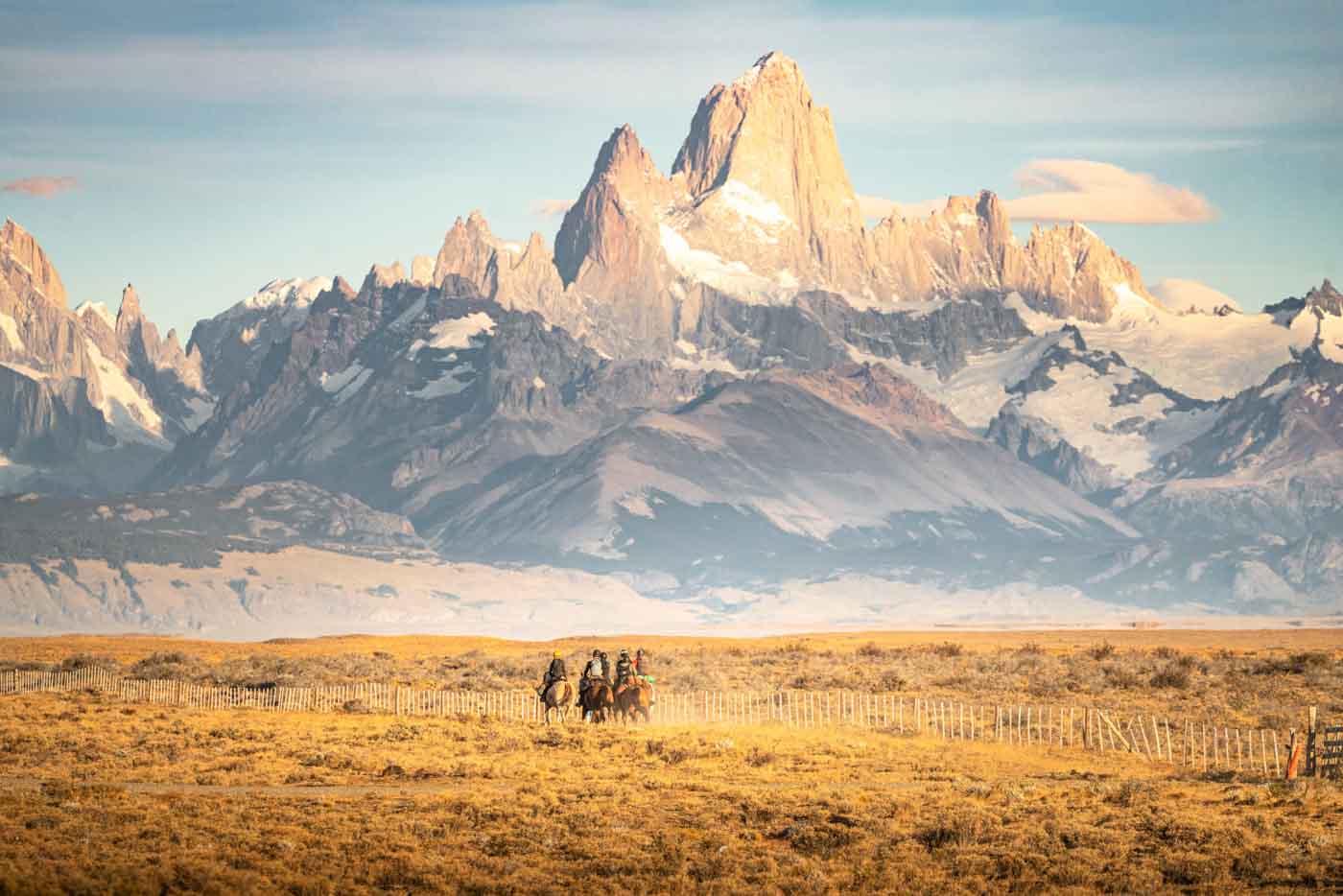
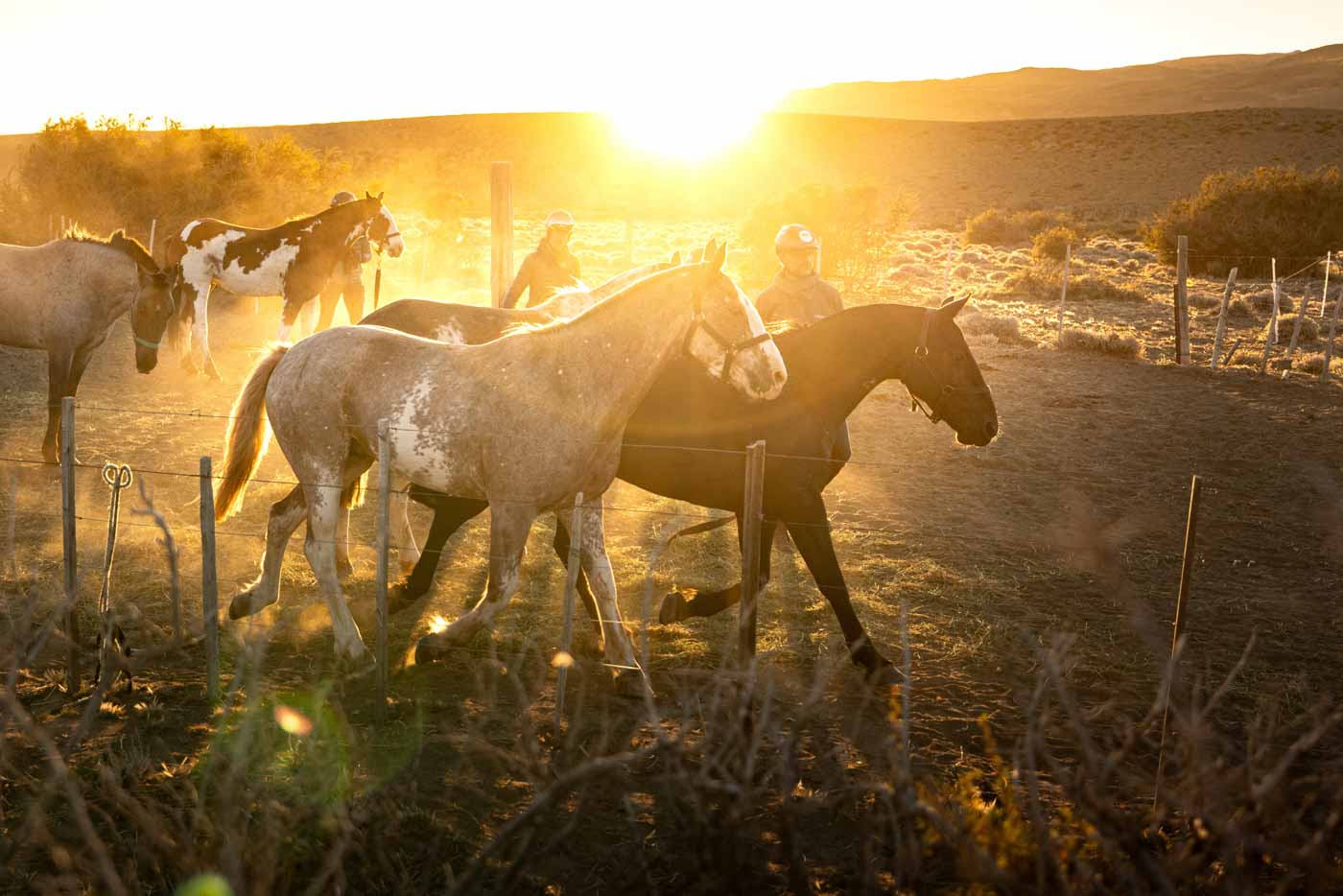
The Gaucho Derby first entered her life through photographs posted by a former college teammate. Riders crossed Patagonia’s untouched wilderness on semi-wild horses, carrying everything they needed to survive for 10 days.
“I remember thinking, ‘There’s no way I could do something like that,’” despite being an avid seeker of adventure around the world through hiking, backpacking, and travelling. But instead of dismissing the idea, she began preparing.
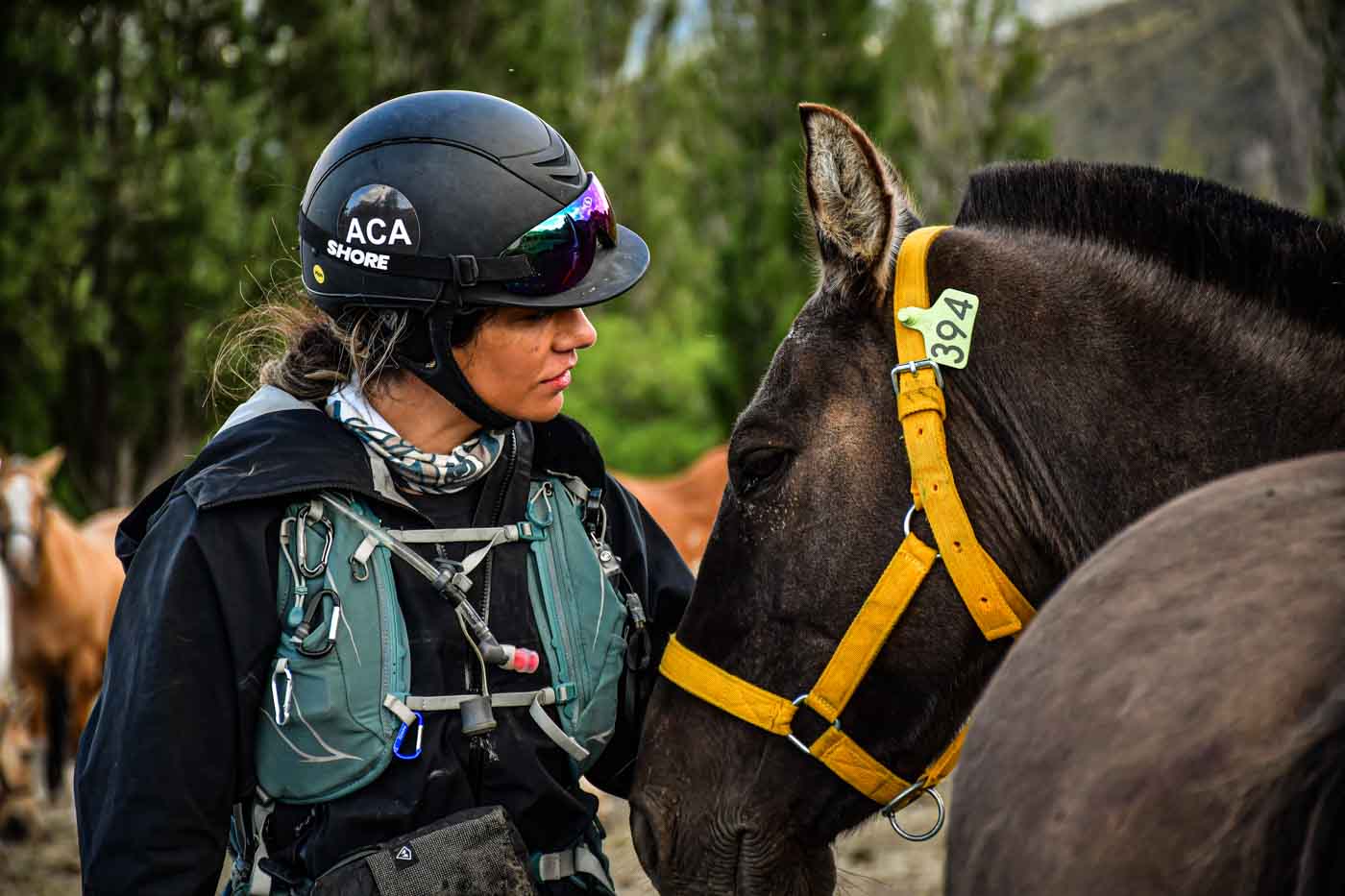
Cathcart attended endurance riding clinics, completed the Gaucho Derby Academy, studied navigation and wilderness survival, and completed a wilderness first aid course through Midwest Outdoor Skills. Instructor Prasad Gadgil also helped her refine the carefully selected 22 pounds of equipment she would carry throughout the race.
“I knew I needed to be completely self-reliant,” she says. “If something went wrong, I wanted to know I could handle it.”
The fall at the beginning of the Derby was only the beginning of things she needed to be prepared for. Cathcart battled Patagonia’s legendary winds, navigated remote river crossings, faced unexpected setbacks that tested her resolve, including delivering first aid to a severely injured rider, camping among relentless thorn bushes, and relying on instinct as much as maps. Along the way, she partnered with eight different horses, each demanding trust, patience and respect.
“No two horses were the same,” she says. “Each one taught me something different. They asked me to be fully present, to earn their trust and to give them everything I had, mentally and physically, every single day.”
The Derby demanded radical self-reliance.
“It combined grit, endurance, physical strength, mindset, and survival. Everything is up to you,” she says. “Before the race starts, you imagine every terrible thing that could happen. But as soon as you get on your horse, all of that disappears. You stop thinking. You live completely in the moment.”
Being so fully present in the moment became one of Patagonia’s greatest gifts. Surrounded by untouched wilderness stretching as far as the eye could see, Cathcart found herself experiencing something she hadn’t expected.
“I felt a communion with nature that I’ve never felt before,” she says.
“Out there, my priorities became simple: clean water, food, shelter, my health, and the wellbeing of my horse. And somehow, I didn’t feel like I had less—I felt like I had everything.”
About halfway through the race, she arrived at an estancia and discovered something she hadn’t experienced in days: an outdoor sink with running water and a bar of soap.
“I can’t even describe how excited I was,” she laughs. “For soap!” realizing how much gratitude she had for the everyday comforts we take for granted.
What surprised Cathcart most wasn’t how different Patagonia was from the show ring—it was how much they had in common. The small habits she’d practiced for years under Foran and later refined by Mount Holyoke equestrian coach CJ Law—checking tack, handling a lead rope safely, reading a horse’s body language and staying mentally present—became essential in a place where every decision affected both rider and horse.
“The Derby magnified all those little horsemanship habits that can seem so ordinary,” she says. “Out there, they mattered.”
By the time Cathcart crossed the finish line beneath the dramatic peaks of Mount Fitz Roy, she realized the greatest reward had little to do with completing one of the world’s toughest endurance races.
“When it comes down to it, it was just me competing against me,” she says. “At the end, it wasn’t about where I placed at the finish. It was who I became in the process.
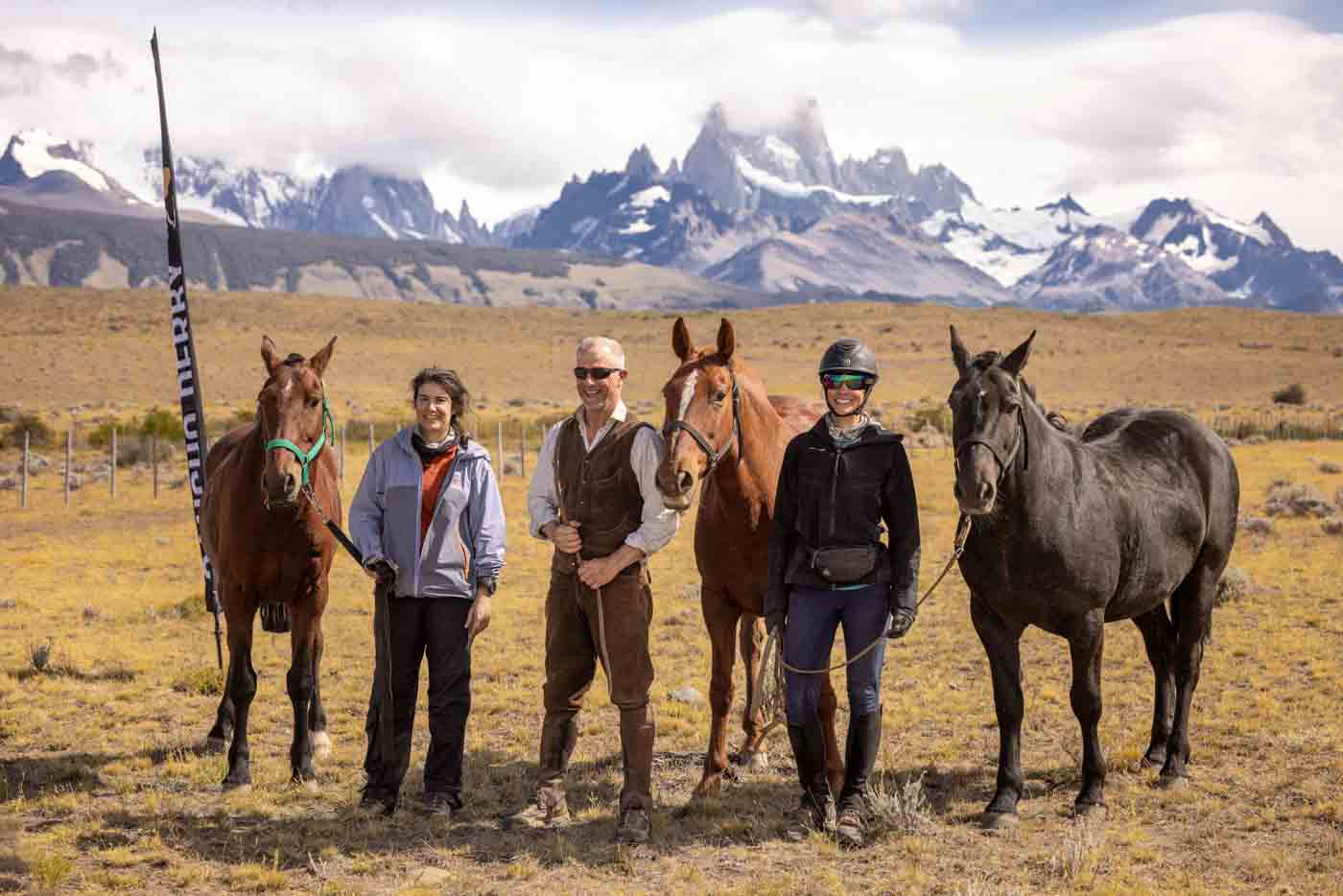
To learn more about the Gaucho Derby, visit equestrianists.com/gaucho-derby.