Art & Artist | Apr. 2026
THE NEXT ACT
By Thomas Connors
PORTRAIT PHOTOGRAPHY BY JUSTIN BARBIN
Writers Theatre facade

JWC Media
a luxury lifestyle website that delivers a colorful and passionate telling of neighboring events, fashion, beauty, finance, and the pursuit of leisure.
By Thomas Connors
PORTRAIT PHOTOGRAPHY BY JUSTIN BARBIN
Writers Theatre facade
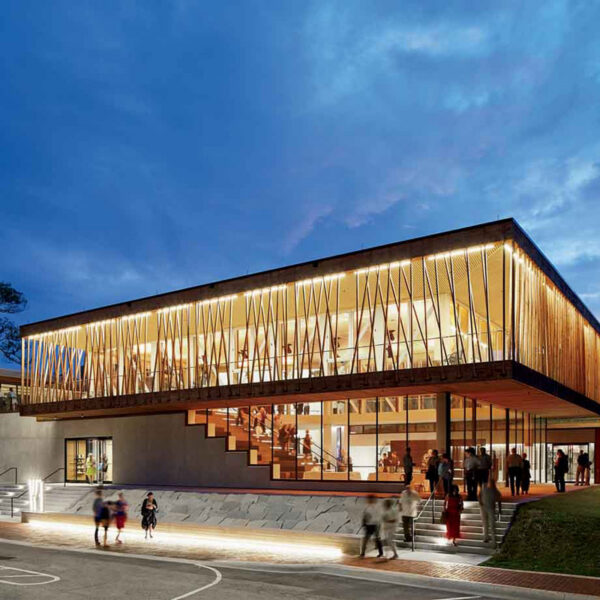
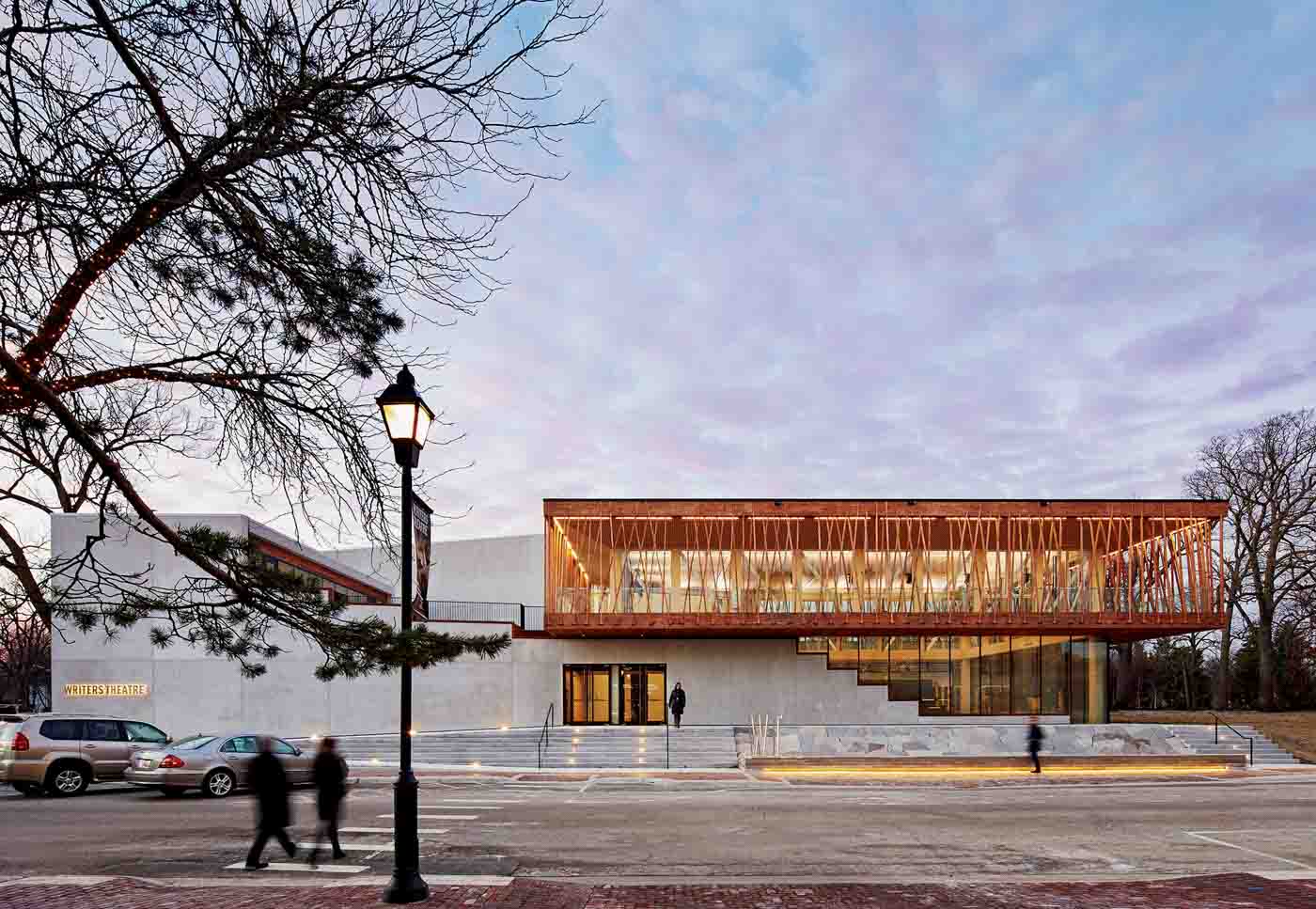
For those who remember Writers Theatre from its days at the back of Glencoe’s Books on Vernon, it’s hard to believe that the company has been in its current digs for a decade now. Designed by renowned Chicago architect Jeanne Gang, with a 250-seat thrust stage and a 99-seat flexible black box accessed through a double-height, glass-framed lobby that opens the building to the outdoors, the space has allowed the always admired organization to expand its creative ambitions with programming that ranges from August Wilson’s Ma Rainey’s Black Bottom and Stephen Sondheim’s Into the Woods to Brian Friel’s highly acclaimed Translations.
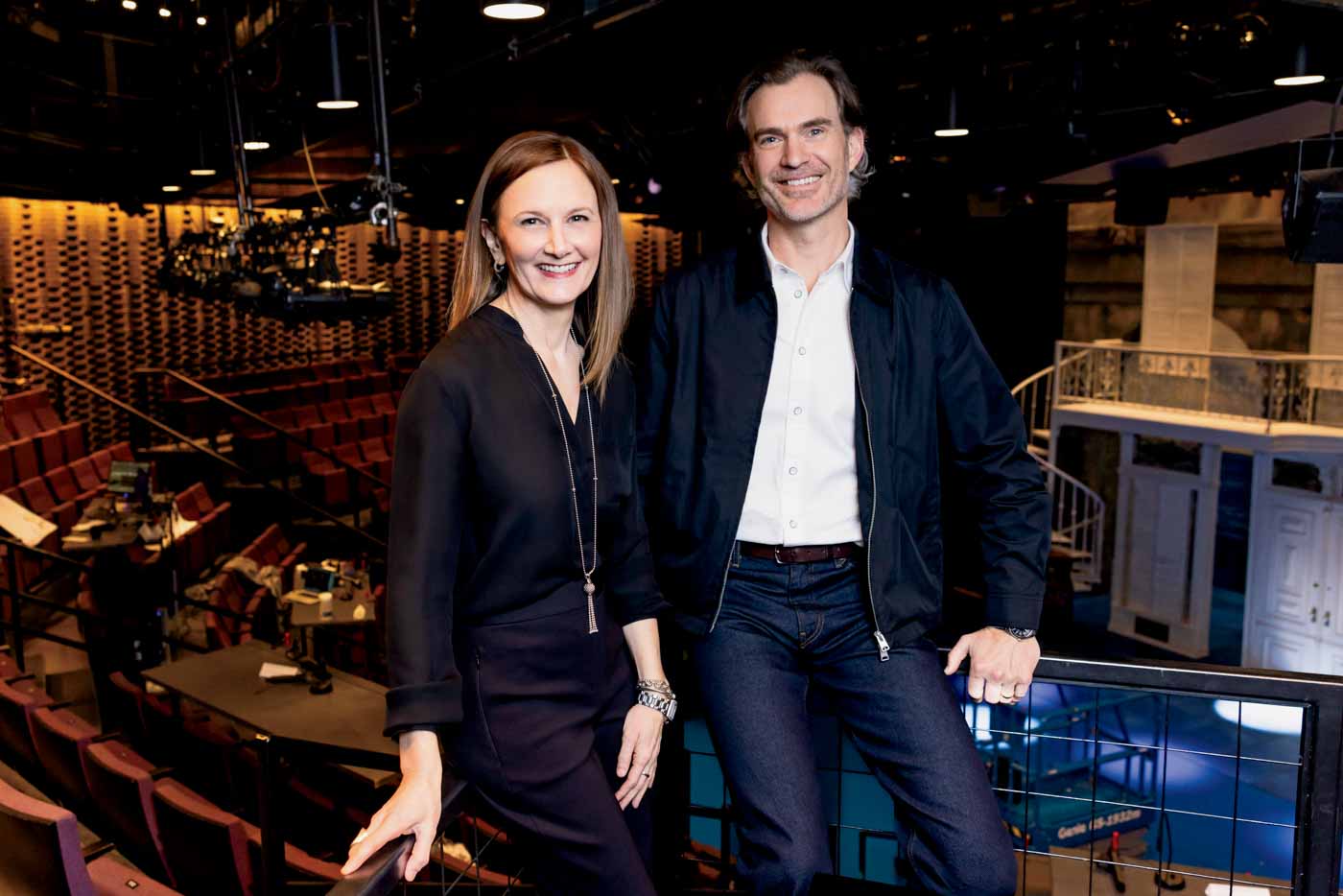
“It’s hard to overstate how transformative the building has been,” states Executive Director Kate Lipuma. “It’s let us say yes to projects that would’ve felt out of reach before. Suddenly, we had the space, the technical capabilities, and the flexibility to think bigger, without losing the intimacy that defines us.”
In celebration of this milestone, Writers goes all out this summer with its largest and most costly production ever, a staging of Tom Stoppard’s multi-award-winning play Leopoldstadt (June 4 -July 19). Helmed by Stoppard expert Carey Perloff, who has directed a number of Stoppard’s works, including productions of Leopoldstadt at Boston’s Huntington Theatre Company and the Shakespeare Theatre Company in Washington, D.C., the show chronicles 50 years of a Jewish family’s life in Vienna, beginning in 1899.
With nearly two dozen actors, hundreds of costumes, and 75 wigs, the show is not an inexpensive proposition for any theater company; Writers raised an additional $1.1 million to bring the play to the North Shore. “What was incredibly moving was how strongly the community responded,” shares Lipuma. “There was a real sense of shared purpose, that this was a story worth telling, worth telling now, and that Writers Theatre was the right home for it.”
Noting that Writers opened its new facility in 2016 with another Stoppard play, Arcadia, she adds, “Leopoldstadt represents the culmination of what this building—and the last 10 years—have made possible.
“The breakthrough for making Leopoldstadt producible in the U.S. was when Carey and Tom figured out a new way to approach the casting that made it both more economical and improved the clarity of the storytelling,” says Alexandra C. and John D. Nichols Artistic Director Braden Abraham, who has known Perloff as a friend and colleague for some time. “Their first attempt with Huntington Theatre in Boston last year was a real triumph, and once that happened, Kate and I talked about how maybe it was possible for us to produce it at Writers. Once we made the decision and Carey agreed to come direct it with us, this time with an all-Chicago cast, it came together pretty quickly.”
Born Tomáš Sträussler in Czechoslovakia, Stoppard and his family fled the country in 1939 as the Nazis rolled in, landing in Singapore. In 1945, his mother, now a widow, married an Englishman she had met while living in India with her two sons, and the following year, the foursome settled in Nottingham. Stoppard didn’t become fully aware of his Jewish heritage until he was in his 50s, and Leopoldstadt is an indirect reckoning of that history.
“It is Stoppard’s final play and one of his most emotionally moving and personally resonant,” relates Abraham. “And an epic achievement narratively, spanning more than five decades, from the late 1800s through the 1950s. It follows a Jewish family as they assimilate into Viennese society at the height of its influence as a city that gave rise to so much of the intellectual and cultural life we now think of as modern. And then they face the horrors of the Nazis.”
What begins as a portrait of assimilation becomes a meditation on memory, identity, and what survives when everything else is lost.
Although a significant undertaking, this production is very much in keeping with Writers Theatre’s fundamental commitment to excite and challenge audiences and artists alike.
“Making theater in this beautiful building is like someone giving you the keys to a really nice sports car,” says Abraham. “You’re not going for a spin around the block. You’re taking it out on the freeway and finding out what it feels like to fly. That’s basically how I’ve approached programming. Let’s push the limits a bit, expand our reach, and experiment where we can. Productions like Natasha, Pierre, & the Great Comet of 1812, and Leopoldstadt show some of that direction. But so do smaller-scale productions, like Every Brilliant Thing, Two Sisters and a Piano, and Job. We’re also going to continue to invest in programming for the very young. And I’m still committed to the classics, complemented with a larger investment in new work, such as Madhuri Shekar’s Dhaba on Devon Avenue, about a family-run Indian restaurant fighting for survival. So, it’s not just about going bigger. It’s about finding new ways to surprise the audience.”
For more information, visit writerstheatre.org.