Features | Dec. 2025
THE MAKING OF A HOLIDAY CLASSIC
By Joe Rosenthal
photography by Katrina Wittkamp
styling by Theresa DeMaria

JWC Media
a luxury lifestyle website that delivers a colorful and passionate telling of neighboring events, fashion, beauty, finance, and the pursuit of leisure.
By Joe Rosenthal
photography by Katrina Wittkamp
styling by Theresa DeMaria
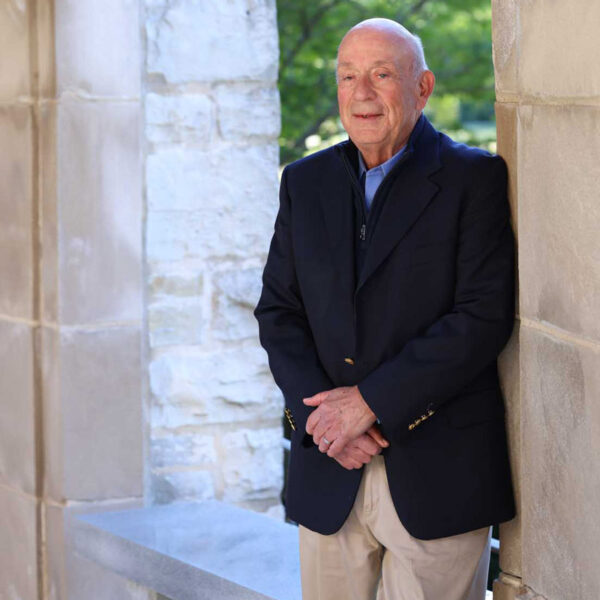
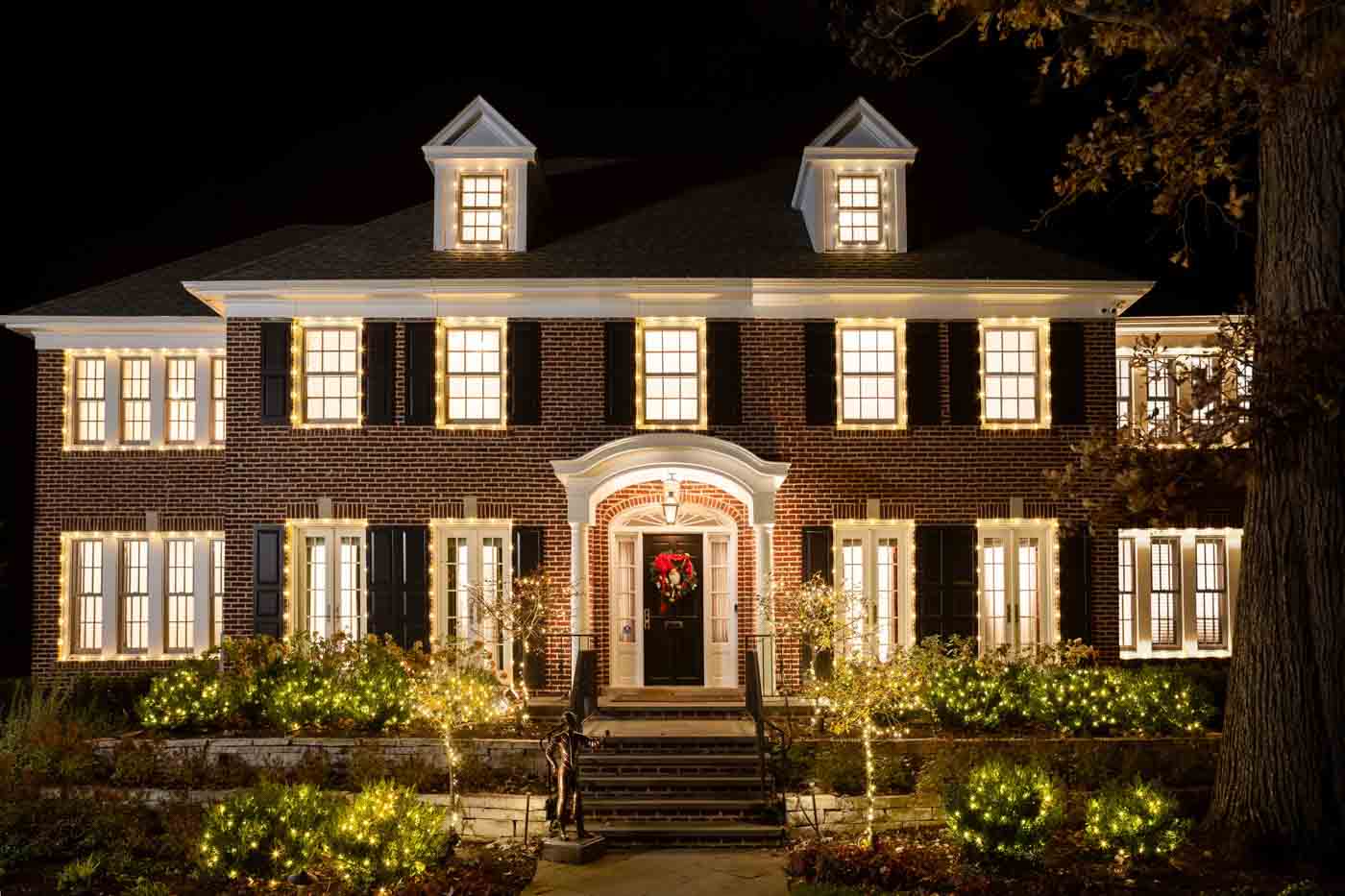
WITH ITS BRICK FACADE, curved driveway, prominent dormers, and large complement of windows, the Georgian Revival home at 671 Lincoln Avenue in Winnetka had a curb appeal that immediately tugged on John Abendshien’s heartstrings. It looked like the perfect place to raise a family. And on top of the home’s charm, the leafy suburb offered a walkable village, great schools, lovely parks, and friendly neighbors.
“We pulled up and looked at this one and I said, ‘that’s our home.’ Something about it just pulled me in,” he recalls.
And so, with little hesitation and considerable excitement, he and his then-wife, Cynthia Demps, signed the paperwork and moved in with their 6-year-old daughter, Lauren, in January of 1989.
As everyone on the North Shore now knows, fate had much more in store for the young family. Think of it as the butterfly effect, with the wing-flapping coming courtesy of none other than movie legend John Hughes.
It’s a story with enough plot twists to be a film in its own right. With the perspective of years and the gift of time following his retirement from a career in health care planning, Abendshien finally put the unique tale down in print, releasing Home But Alone No More just in time for another season of families gathering by the Christmas tree for a traditional showing of the holiday classic Home Alone.
It’s a brisk and thoroughly enjoyable read that brims with stories featuring entertainment royalty and insightful nuggets from Abendshien, whose other book is the 2018 tome Health Care in the Next Curve (catering to a decidedly different demographic, the author notes with a laugh.)
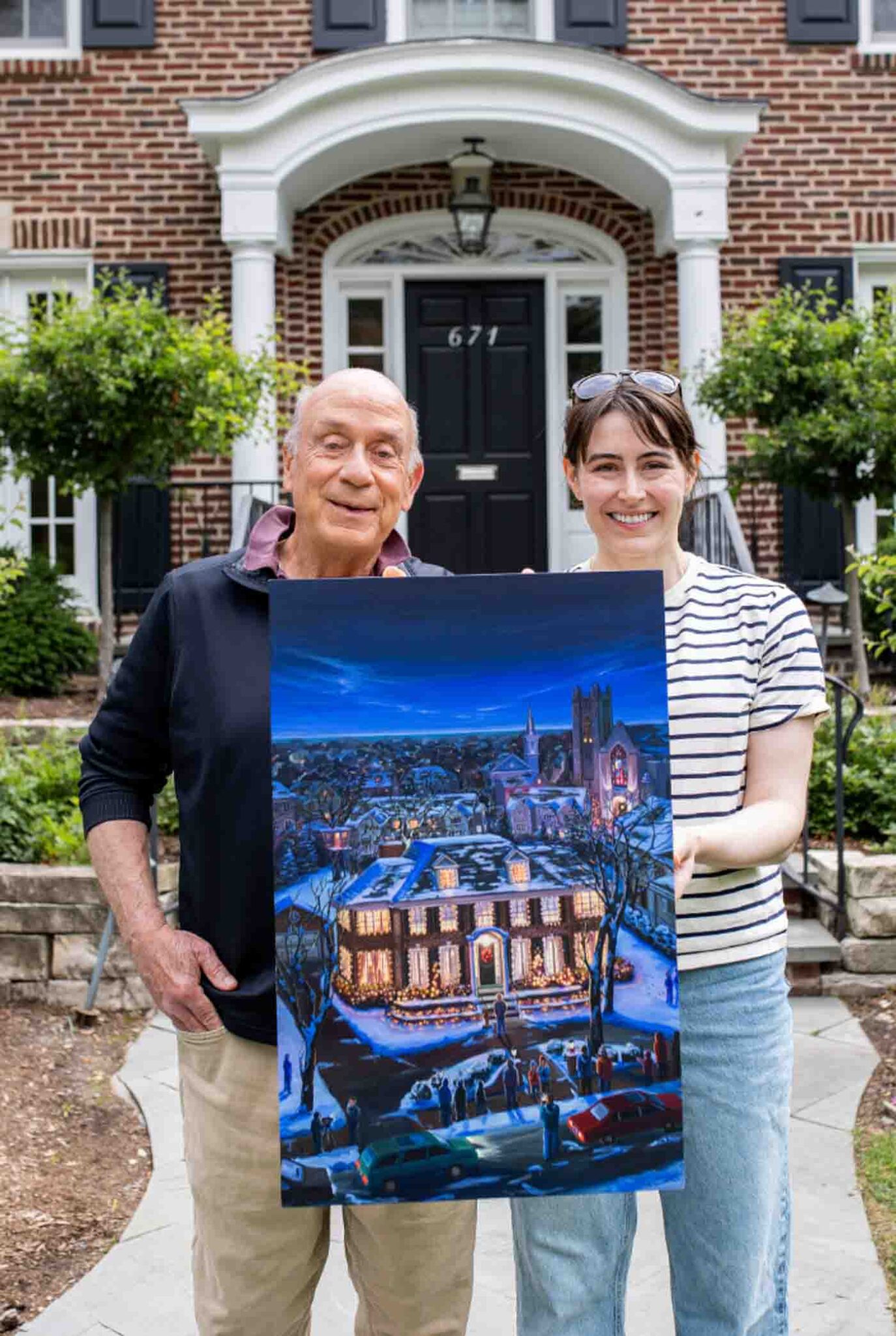
The new book covers everything you’ve ever wanted to know about cinema’s most famous home—from why it was chosen to how it was modified to why it captured the hearts of millions. And it features delightful illustrations by Julia Hagen, a Northfield friend of the Abendshien family who’s best known for her “Every Last Stand” series of paintings depicting classic hot dog joints in Chicago.
Although the film has become a global cultural touchstone, the story of the Home Alone house was nothing if not a slow build.
Abendshien first crossed paths with Hughes’ filmmaking team in the mid-‘80s. He and Cynthia were living in Evanston at the time, and his neighbor’s house was featured in Sixteen Candles. The shoot (and film) went exceptionally well, and the crew came back to the college town on another mission—this time for Uncle Buck.
The location scout, Jacolyn Bucksbaum, knocked on the Abendshiens’ door, with the thought of possibly featuring their home in the upcoming film. Unfortunately, the young family was about to move to their aforementioned new home in Winnetka. The scouts looked at the new house, but it wasn’t quite right. A few months later, they came back, thinking the home might work for National Lampoon’s Christmas Vacation. Again, a miss. And then, again, came another knock on the door.
This time, director Chris Columbus had come along with Jackie, looking like “a kid who’d found that Christmas would come twice that year,” according to Abendshien. Within a couple of weeks, in December of 1989, the Abendshiens had a contract in hand for $65,000 for usage of the home for 14 weeks for a film called Home Alone. It wasn’t enough money to alter life plans, but a fine pay day for what they thought would be a fun little adventure. The Abendshiens would even live in the house during the shooting.
The long path to a location agreement was just the beginning of the hurdles for Home Alone. Before the cameras started rolling, the project changed hands between Warner Bros. and 20th Century Fox due to a budget dispute. There were casting issues, as Daniel Stern held out for more pay before finally signing on to his iconic role alongside fellow “Wet Bandit” Joe Pesci. And then, there was the script.
Abendshien had been given a copy so that he’d know what was planned and his immediate reaction was as lukewarm as cocoa left sitting on the mantle. The story was improbable and full of pranks and pratfalls. It certainly wasn’t screaming “all-time classic.” In fact, as Abendshien puts it in the book, “I thought the script was nuttier than a squirrel convention.”
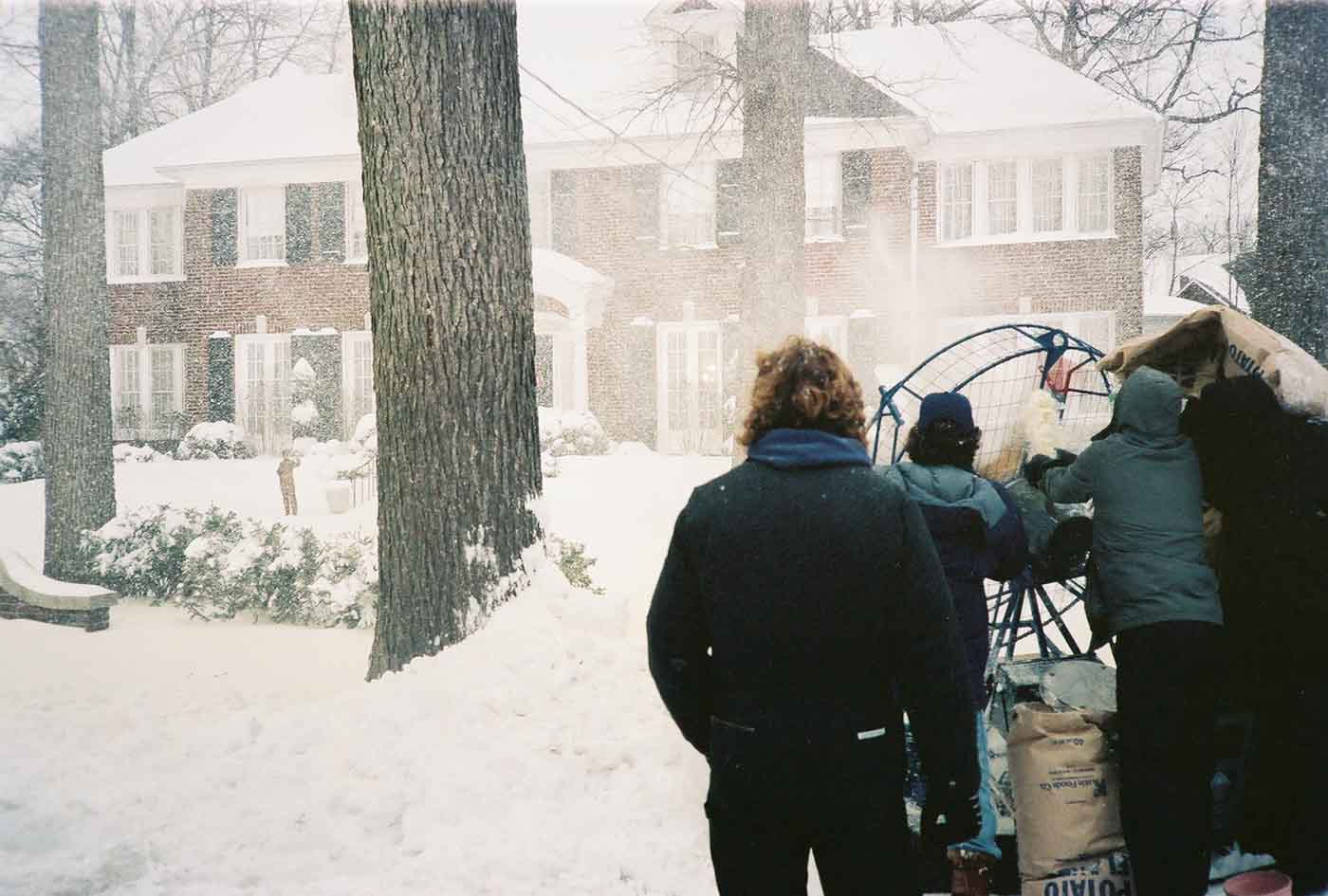
Setbacks aside, the cameras ultimately did begin to roll and the Abendshien family had front-row seats as the rough start began to morph into a well-oiled production. It was clear that the casting was pure gold, and their chemistry was unmistakable.
Macaulay Culkin brought the perfect blend of mischief and charm, Catherine O’Hara somehow made the crazy plot twists believable, John Heard hit the right notes as a likable if distracted dad, and Pesci and Stern were nothing short of legendary as scary but bumbling crooks.
“There was a real teamwork to the whole thing,” Abendshien says. “I could even sense as the filming was going on how the actors were into it.”
As Abendshien recalls it, everything just started to click and it became apparent that they were witnessing something special—right under their roof—even if the blockbuster nature of it all wasn’t clear until he saw the final product at the premiere party and its “genius behind it” became evident.
From their vantage point in their second-floor “movie cave,” the family bore witness to the cinematic history. Abendshien’s observations are detailed with loving care in the book, and there are many standout moments.
The famous sled-down-the-stairs stunt turned into a harrowing experience when stuntman Larry Nicholas completely overshot the landing pad and crashed with a thud on the front lawn. Abendshien was about to call 911 when Nicholas brushed himself off and declared he was ready for another take. There was cinematographer Julio Macat operating in the pre-CGI era with a tiny camera designed for medical procedures so that he could capture unique angles and movements.