Features | Oct. 2026
SOFT POWER
By Michelle Crowe
PHOTOGRAPHY BY KATRINA WITTKAMP
STYLING BY THERESA DEMARIA
Jen prepares for the Face Your Fears gala in a jumpsuit by Louise, Paris.

JWC Media
a luxury lifestyle website that delivers a colorful and passionate telling of neighboring events, fashion, beauty, finance, and the pursuit of leisure.
By Michelle Crowe
PHOTOGRAPHY BY KATRINA WITTKAMP
STYLING BY THERESA DEMARIA
Jen prepares for the Face Your Fears gala in a jumpsuit by Louise, Paris.
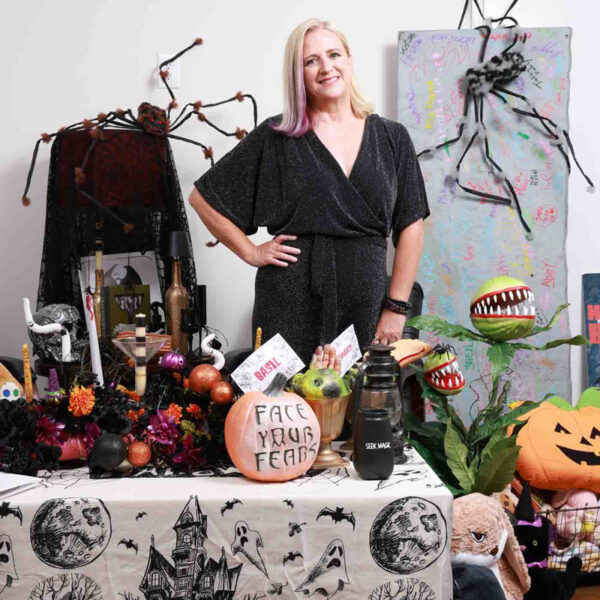
Anyone who knows Jen Dean is unable to hold back a smile at the mention of her name. Compliments about her sense of humor, imagination, warmth, and get-it-done spirit spill forth immediately.
It makes perfect sense, then, that the organization she founded would begin with one of childhood’s most tender relationships: the bond between a child and a beloved stuffed animal.
The inspiration came from Dean’s own family. When her middle son, Leo, was one year old, he chose a stuffed dolphin during a birthday trip to Shedd Aquarium. Unable to pronounce “fish,” he called it Seesh, and the two became inseparable. His brothers had treasured companions of their own: Cole loved Lamby, while Tyler had Maxwell the dog.
When Leo’s sitter tried to give him a backup Seesh, he took one whiff and handed it back. “Nope. That’s not Seesh. That can be his cousin, though.”
Years later, Dean wrote Seesh, A Love(y) Story, which was published in a motherhood anthology. Speaking about it at book clubs, she discovered something larger.
“Everyone has a Lovey story,” Dean says. “They are universal symbols of unconditional love and support, and all children deserve those feelings of safety, comfort, and love.”
That realization eventually grew into The Lovey Project, which Dean founded in 2015. The Illinois nonprofit works with children ages 3 to 13, along with their families and communities, to support mental wellness through programming, events, resources, creative play, and, of course, Loveys.
“Stuffed animals are so much more than comfort items,” Dean says. “Throughout childhood, they can encourage creativity, confidence, and companionship, provide sensory grounding and reduce stress, and help foster empathy and responsibility. “And they never judge us.”
The concept feels especially resonant now. Children are growing up in a world shaped by screens, constant stimulation, and pressures they may not yet have the language to describe. The Lovey Project aims to offer real-world, non-digital experiences that help children and families develop tools for confidence, mindfulness, resilience, focus, and creativity.
The organization does not provide therapy. Instead, its goal is to support emotional well-being before problems become crises while helping connect families with professional resources when they need them.
The softness is intentional, but the work has real reach. In 2025, The Lovey Project raised $101,556 and distributed more than 1,000 Loveys, books, and wellness resources to children locally, nationally, and internationally. Its community partners have included Mercy Home for Boys & Girls, DuPage PADS, and Hephzibah Home, and its volunteer and donor network grew by more than 40 percent.
“The universal need for comfort, support, and love crosses all socioeconomic boundaries,” Dean says. She recalls The Wire writer and creator Ed Burns observing that while you can rescue a child, you cannot rescue all children.
“I remember immediately thinking, ‘Well, dammit, you can certainly try!’” Dean says. “That has been our motivation for growing The Lovey Project as much as possible.”
The organization’s playfulness allows children—and adults—to approach serious ideas without entering a clinical setting. Its Daily #LoveyHug offers quick messages of encouragement, while Lovey Stories invites families to share the funny and meaningful histories of cherished toys.
Then there is Lovey Lost and Found. When one child lost his beloved stuffed Buffalo on vacation, Dean’s team created LOST LOVEY posters, contacted area lost-and-found groups, and searched for him. They also located an identical Buffalo and sent it to the child with a note explaining that his Buffalo was having an adventure and had sent a friend to care for him until he returned.
“The young boy was overjoyed,” Dean says. “His mom said they all cried and felt so much better. It still gives me goose-bumps.”
That same blend of whimsy and purpose led to The Lovey Project’s largest fundraiser, Face Your Fears, which has its own roots in the Dean family.
For Leo’s fifth birthday, Dean created a miniature haunted house and Halloween games in the family garage. “He loved it but told me we could do so much better,” she says. “So we did.”
The haunted houses became an annual tradition and grew along with Leo. By his junior year of high school, he had designed a 22-room, 1,900-square-foot attraction that drew hundreds of visitors and raised more than $16,000 for The Lovey Project. The work also helped him earn a scholarship to Savannah College of Art and Design, where he now studies themed entertainment design.
When Leo left for college, the haunted house left home, too. The Lovey Project transformed it into the Face Your Fears fundraising ball, which raised more than $100,000 in its inaugural year.
This year’s theme, A Gothic Gala in the Court of Curse’d Shadows, draws inspiration from Edward Gorey to create what Dean describes as a “haunted Great Gatsby” evening of decadent decay. The organization hopes to raise $250,000 through the event and its related raffles and auction.
And Dean is already imagining something bigger. The Lovey Project is developing plans for a permanent home for children of all ages and backgrounds, currently called Project: Launchpad. An investor package, architectural renderings, and location scouting are underway, with the goal of raising enough money by the end of 2027 to acquire land and open the building by 2030.
Those plans trace back to remarkably small beginnings: a stuffed dolphin chosen at Shedd Aquarium and a homemade haunted house in a Hinsdale garage.
The Lovey remains at the heart of it all: a tangible reminder that comfort matters and that no child should have to navigate frightening or unfamiliar moments without something dependable to hold.
“There is something beautifully uncomplicated about a Lovey. It does not ask a child to explain, perform, or pretend to be fine. It simply stays close.”
And perhaps that is where resilience begins.
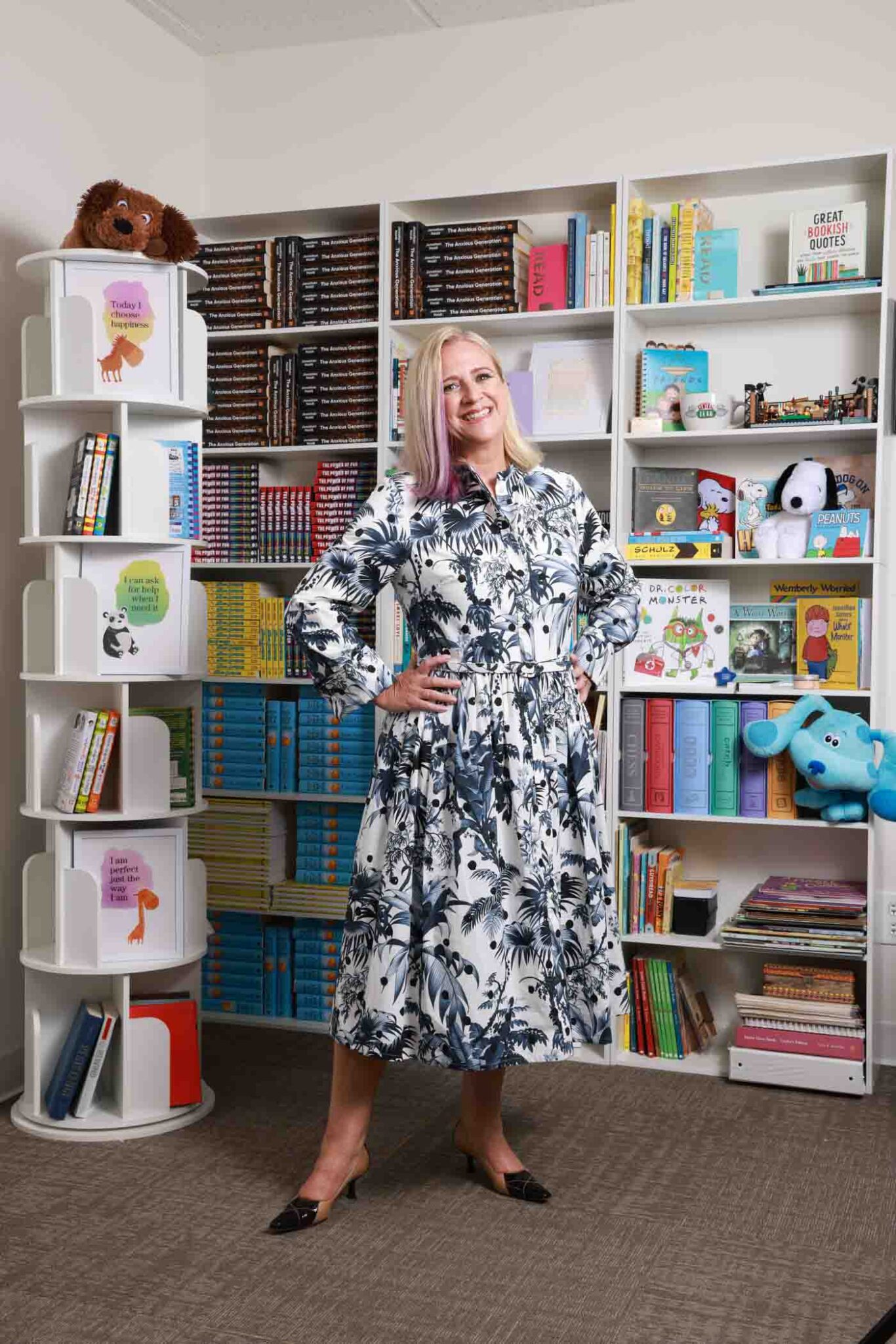
For more information about programs, volunteering, and tickets to the Face Your Fears Ball at The Lodge at Katherine Legge Memorial Park on October 30, visit theloveyproject.org.