NOURISHING THE PATH TO PREGNANCY
By Monica Kass Rogers
PHOTOGRAPHY BY MARIA PONCE
STYLING BY THERESA DEMARIA
HAIR & MAKEUP BY LEANNA ERNEST
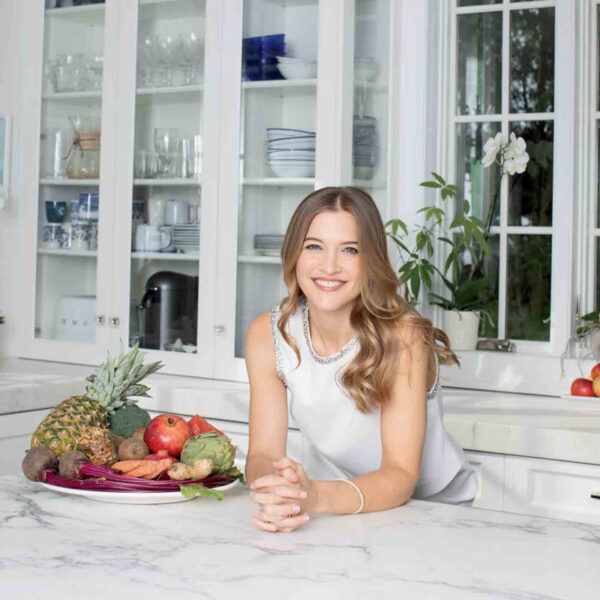
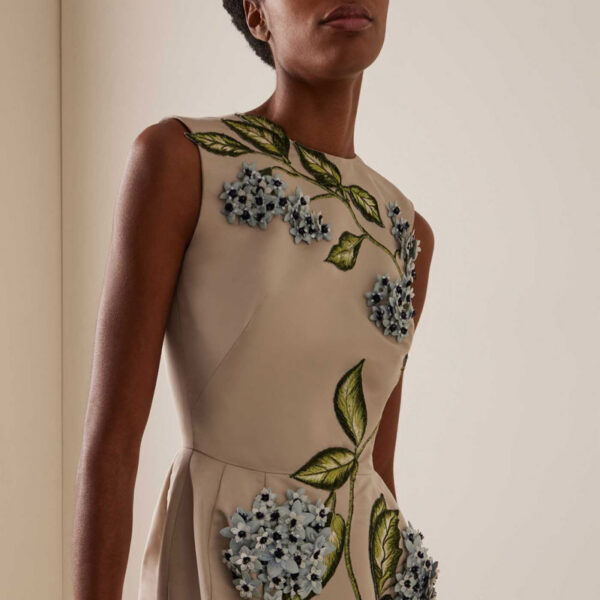
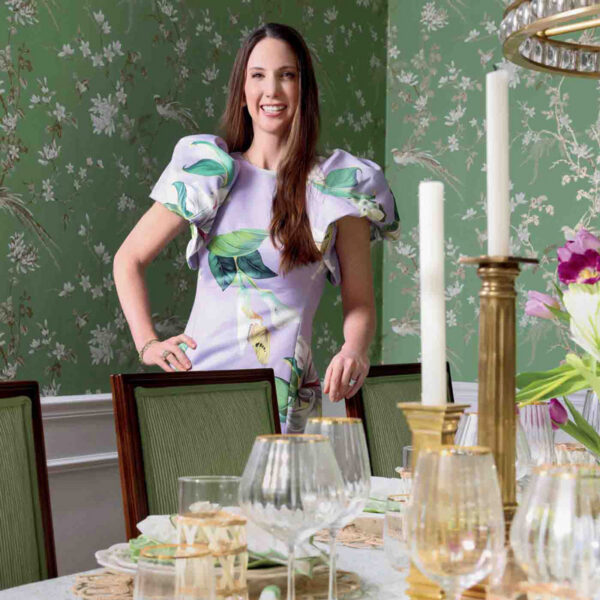
Food Therapist Rachelle Mallik wearing alice + olivia, Neiman Marcus Northbrook
By Monica Kass Rogers
PHOTOGRAPHY BY MARIA PONCE
STYLING BY THERESA DEMARIA
HAIR & MAKEUP BY LEANNA ERNEST
Food Therapist Rachelle Mallik wearing alice + olivia, Neiman Marcus Northbrook

A woman seeking help from reproductive dietitian Rachelle LaCroix Mallik was desperate for expert nutritional guidance. She’d been trying to conceive for more than a year and, with every failed IVF cycle, had become more fixated on what she should or shouldn’t eat. Stressed by a growing list of supplement recommendations and the pressure to make the right choices, “she just wanted to stop overthinking food, and to simplify with meal planning she could actually stick to,” Mallik recalls.
In the months that followed, Mallik helped her client align her eating patterns with a research-backed, anti-inflammatory approach centered on vegetables, fruits, whole grains, legumes, nuts, and seafood. She also guided her through the maze of social media misinformation, separating credible insights from baseless claims. And she refined the woman’s supplement list, keeping only those supported by solid research.
“By the time she began her next IVF cycle, she felt more confident in her food choices, less overwhelmed by mixed messages, and clearer on how to support her body throughout treatment,” Mallik recalls. “All positive things.” Even better? The client conceived and went on to have a healthy pregnancy and baby. For Mallik, owner of Winnetka-based The Food Therapist, stories like these are what prompted her to become a dietitian specializing in reproductive health. Her mission: to provide evidence-based nutritional guidance as a therapeutic tool for people in their childbearing years.
The seed was planted years earlier, when Mallik was a pre-med graduate working as an IVF patient coordinator at the Weill Cornell Center for Reproductive Medicine and Infertility in New York. Guiding thousands of patients through the uncertainty of fertility treatment deeply impacted Mallik. “There were so many factors outside their control,” she says. Yet, armed with an undergraduate degree in nutrition, Mallik recognized that people could control their food and lifestyle choices, and these choices could help relieve stress, improve conception odds, and enhance overall well-being.
Wanting to deepen her knowledge of nutrition’s role in fertility, conception, hormonal health, and postpartum wellness, Mallik returned to school to complete her dietetics training and became a Registered Dietitian.
She founded her practice in 2017, centering her work on health-promoting behaviors and intuitive eating rather than restriction. “The weight-inclusive care I offer emphasizes health-promoting behaviors rather than focusing solely on weight or weight loss,” Mallik explains. “This approach respects body diversity, reduces weight stigma, and recognizes that weight and health are not the same thing.”
This represents a meaningful shift from weight-centric conceptions of health. “The American Medical Association has said that BMI alone is not a reliable way to assess health and that other markers should be used,” she notes. In fertility care, weight and BMI may be associated with outcomes, but high-quality studies have not shown that short-term weight loss before IVF improves success rates.
Instead, Mallik focuses on identifying habits that may be hindering a client’s health, like consuming sugary drinks, lacking sufficient fiber or balance in their diet, or chasing the latest nutrition fad. Those fads and unsubstantiated claims spread with dizzying speed on social media. “People hear things like, ‘You have to eat McDonald’s French fries after retrieval,’ or that they need to eat pineapple core or drink pomegranate juice every day,” says Mallik. “It’s the Shiny Object Syndrome. There’s no research showing these foods improve IVF outcomes, but when people are struggling to conceive—especially after years of treatment—they’ll try anything.”
While some fads are harmless, others can encourage harmful behaviors like restrictive eating, avoidance of social situations, or unnecessary spending on ineffective supplements. To counter this, Mallik’s guidance is grounded in a robust body of scientific evidence rather than “just cherry-picked studies,” she emphasizes. “We know that anti-inflammatory and Mediterranean-style diets are linked to shorter times to conception and improved IVF outcomes. That may seem boring, but adding trendy ‘fertility foods’ and supplements won’t help if you’re not eating enough or meeting your body’s needs for macronutrients and micronutrients—the vitamins, minerals, proteins, fats, and carbohydrates required to support the reproductive system.”
To help clients build this foundation, Mallik created “Fertility Foundations,” a course that breaks down how to create a nutrient-dense, fertility-supportive diet. In addition to her one-on-one counseling, Mallik is a leading voice in reproductive dietetics. She regularly speaks at major forums, including the Academy of Nutrition and Dietetics Food and Nutrition Conference and the American Society for Reproductive Medicine Scientific Congress, and she serves as the reproductive content expert updating clinical nutrition guidelines used across the industry.
“Reproductive dietetics is an emerging field,” she observes. “Especially the preventative, fertility-specific side of prenatal health. I’m doing all I can to help grow the field so doctors appreciate the intrinsic value of nutrition in reproductive health, and so that more dietitians can feel confident making evidence-based recommendations. More people deserve access to this support. Reproductive dietitians can have a meaningful impact on people’s paths to building their families.”

For more information, visit rachellemallik.com.
Sign Up for the JWC Media Email