Indulge | Sep. 2026
NANNA FENTON’S TOMATO RELISH
By Monica Kass Rogers
photography by Monica Kass Rogers

JWC Media
a luxury lifestyle website that delivers a colorful and passionate telling of neighboring events, fashion, beauty, finance, and the pursuit of leisure.
By Monica Kass Rogers
photography by Monica Kass Rogers
For a good while now, my lovely friend Felicity and I have been exchanging letters—her from Queensland, Australia, and me, from here on the North Shore. Lately, we’ve been sharing stories from our childhoods, describing details that are commonplace in our locales, but seem exotic to one another. It’s a lot of fun.
Unlike my snowy Chicago Christmases, for example, Felicity’s holidays in Australia were hot, dry, and high summer. These included a 6-week school break when Felicity and friends ran free but carefully near the gum trees which, she tells me, “had spitfire caterpillars that gave nasty stings.” The season was also full of fresh tomatoes and other produce from her Nanna Fenton’s garden.
So, you can imagine my delight in receiving Felicity’s recent letter including her grandmother’s sweet and spicy tomato onion relish recipe.
While it’s a classic in Australia, I was surprised to find that the relish has a slightly different flavor profile than the tomato relishes grannies made at Ladies Guild luncheons here.
Researching, I learned that while they share British roots, Australian tomato relish and American tomato relish evolved in different directions. From the late 19th century through much of the 20th century in Australia, tomato relish was historically made with malt vinegar—called “brown vinegar” in homemaker’s recipes. Also, it was seasoned with mustard powder, curry powder, and cayenne pepper. That, compared with relishes American cooks of the same era made with apple cider vinegar and baking spices such as clove, cinnamon and allspice.
Comparing them, malt vinegar is more savory than apple cider vinegar. And the mustard/curry/cayenne combo in Australian relish is a bright and zippy change from clove and cinnamon. Interestingly, Nanna Fenton softened that a bit with her inclusion of chopped apple in her recipe.
I loved the result. But if you prefer a fruitier result, you can substitute apple cider vinegar for the malt vinegar entirely.
One important note: When you taste the relish after first making it, the flavors will seem extremely bold. That’s because you must let the relish rest for a few weeks after canning before eating it. The vinegar will become less aggressive, and the flavors of the ingredients will meld and mellow for a balanced sweet and spicy tang.
Felicity and her family like the relish with roast beef sandwiches. It’s also good with cheese and crackers, or piled high on a burger.

INGREDIENTS
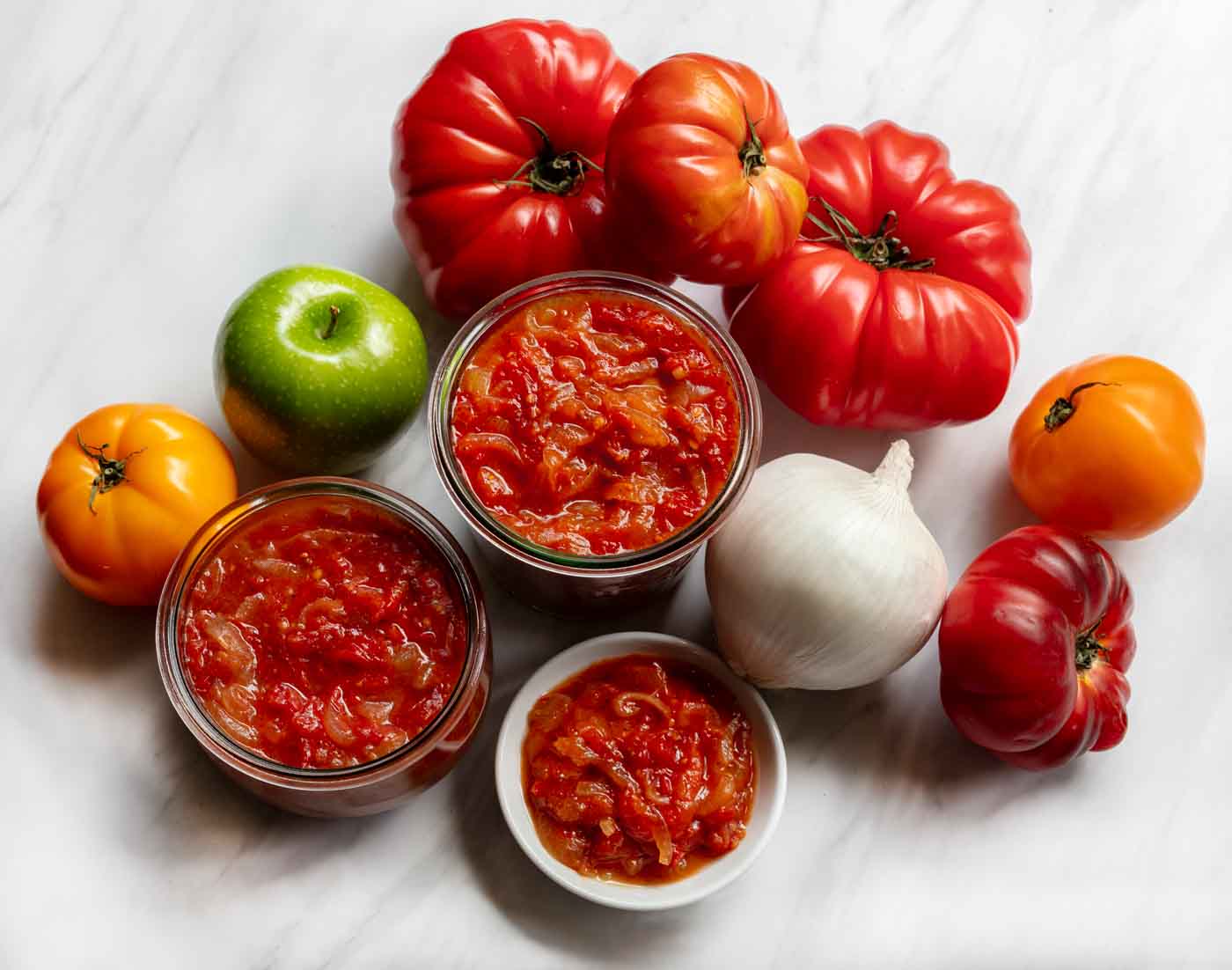
• 3 pounds ripe tomatoes, peeled and chopped
• 1 pound white onions, peeled and finely chopped
• 1 tablespoon salt
• 1 pound (2 ¼ cups) sugar
• 2 cups brown (malt) vinegar
• 1 Granny Smith apple, peel and core discarded, chopped
• 2 tablespoons flour
• 1 ½ tablespoons dry mustard powder
• 1 tablespoon curry powder
• ¼ teaspoon cayenne pepper
INSTRUCTIONS
Place tomatoes and chopped onions in a bowl and sprinkle with salt. Let stand overnight. Drain liquid and discard or save the liquid to drink. (Chilled and spritzed with fresh lemon, the liquid makes a lovely tomato juice cocktail!)
Place tomatoes, onions, sugar, vinegar, and chopped apple in a heavy bottomed pot over medium heat and heat to boiling. Reduce heat and simmer for ½ hour. Mix flour with spices. Add a bit of the simmering juice to the flour/spice mixture and stir to make a smooth paste. Stir the paste into the relish and cook an additional 15 minutes until thick. Bottle the relish in sterilized jars and follow canning instructions to make shelf stable. Place jars in cupboard or fridge. Allow relish to rest for several weeks to allow flavors to mellow before eating.