Features | Oct. 2026
LIFE’S WORK
By Joe Rosenthal
PHOTOGRAPHY BY SAMANTHA BANKS
Rick Heidner

JWC Media
a luxury lifestyle website that delivers a colorful and passionate telling of neighboring events, fashion, beauty, finance, and the pursuit of leisure.
By Joe Rosenthal
PHOTOGRAPHY BY SAMANTHA BANKS
Rick Heidner
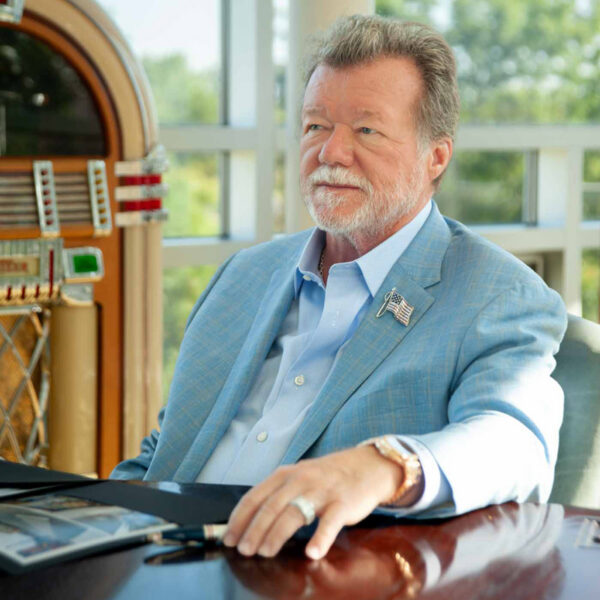
As the son of a single mother who was struggling to earn $100 a week, Rick Heidner began his work life at 6 years old as a way to make family ends meet. He and his older brother, David, were determined that they weren’t going to let youth stand in the way of escaping poverty’s grip.
“My brother and I had four paper routes at 6 and 7 years old. We had two paper routes before school, and two routes after school,” he says. “Then we became full-time maintenance people at 11 and 12. We’d shovel snow for everybody up and down eight city blocks. Big blocks. You’re talking about Armitage to North Avenue, both sides of the street.”
Heidner also had to collect his earnings back then— $1.50 per customer. It was a small amount, but every dollar mattered when he saw how the stress affected his mom. He remembers how she cried when a $95 muffler repair upended their monthly budget. The lack of family security—and the schoolyard teasing he experienced as a result—made a lasting impression on the young boy, and became the propellant for his relentless work ethic and penchant for finding opportunities around him that others were slower to see.
Echoing their early snow-shoveling partnership, Heidner, his brother, and a friend founded the convenience store chain J.J. Peppers when Rick was 24, and he parlayed that success into the Ricky Rockets chain of fuel centers and the video gaming terminal operator Gold Rush Gaming. Heidner also owns Prairie State Energy and oversees a real estate portfolio of nearly 280 properties. The family company is based in Hoffman Estates, employing approximately 800 people across the portfolio.
“I’ve always explained to people that my life is [like] I’m playing 30 chess games at one time,” Heidner explains. “They’re all butted up against each other. And if I move one piece here, it can affect that game way over there. The blessing God gave me is I’m good with numbers. I could figure out a deal in two or three minutes.” (“People have different skills, you know?”)
In a consequential and highly public chess move late last year, Heidner threw his hat into the ring in the Illinois gubernatorial race. His decision to enter the Republican primary was driven by the same energetic desire for progress that fueled his business success and was decided by a kitchen table vote with his family, who knew that politics are no small matter.
“My heart and my soul kept drawing me in,” Heidner recalls. “And then finally I was talking to my family about it, and we basically voted as a family.” The family was initially split down the middle, but eventually everyone came around to support his bid.
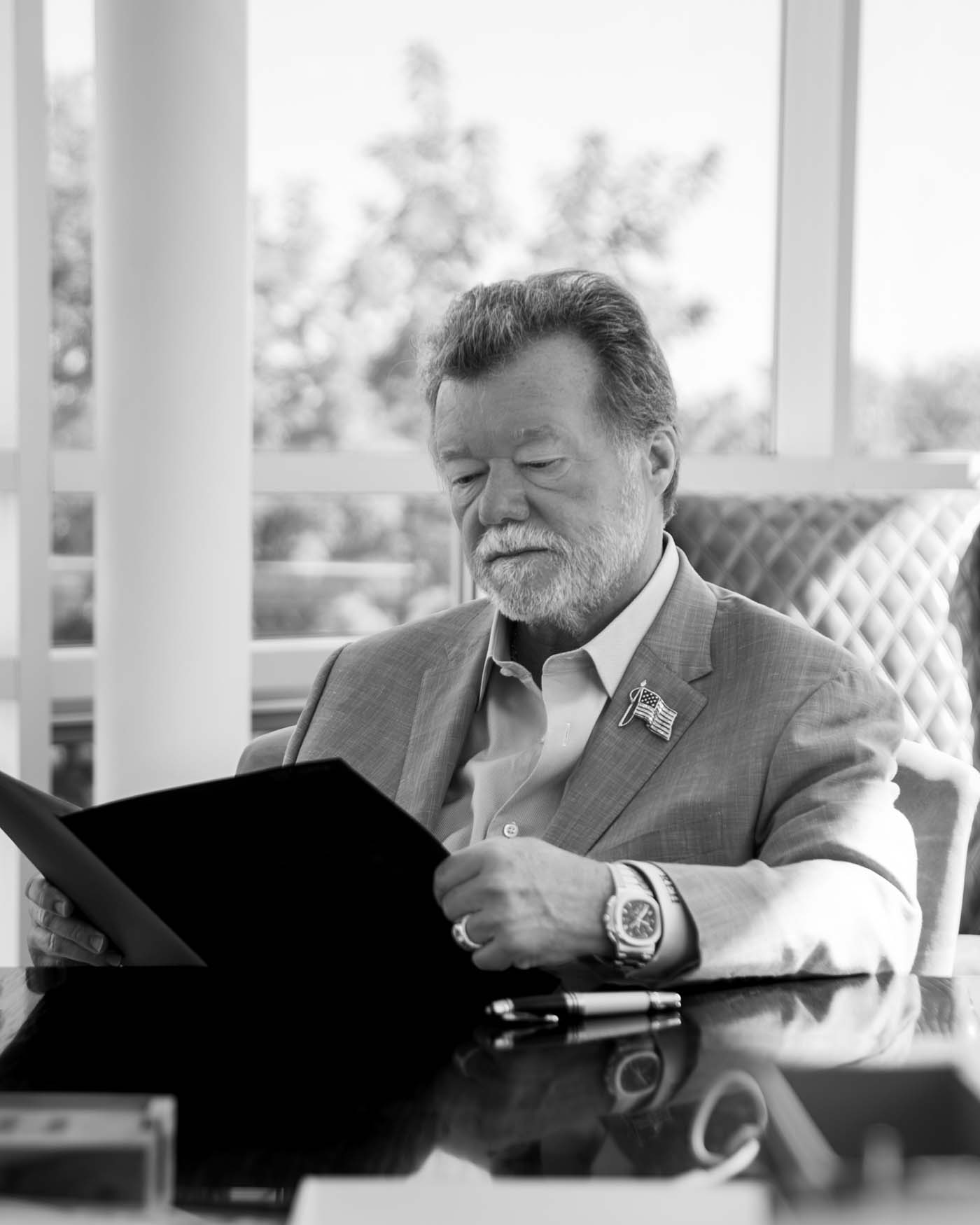

Heidner lost the primary in March. To hear him talk about it, it was a stinging loss that drained him of energy— and his bank account wasn’t spared, either.
“I [wish I] would’ve started earlier,” he says, reflecting on the campaign. “I wish I would’ve spent more money. I wish I would’ve won. I would’ve given Pritzker a run for his money. He didn’t want to be on a debate stage with me. I was heartbroken. I didn’t realize how hard I was gonna take it.”
Heidner says he won’t run again, and on a business front, anything he’d get involved in now “would have to make a lot of sense.” Given what he’s accomplished in an array of industries, the 65-year-old Barrington Hills resident can be forgiven for being diligent in placing his latest bets and plans.
“People ask me, ‘will you run again?’ And I can’t see me ever running again. I’ll be 70. And I don’t wanna do that. I’ve actually gone the opposite way since I lost the primary. You know, I started planning to really think about semi-retiring.”
Like many high-achievers in business who reach a certain age, Heidner is now turning his attention to other matters—his family (he and his wife, Alisa, have five kids ranging in age from 18 to 35), their five grandkids, their German Shepherds (they have seven, the offspring of their beloved late Duchess; they share the pups with their children), and travel.
“I just wanna relax. I wanna stop thinking,” he says. “I never, ever stop thinking. 24/7. I’m up in the middle of the night. I got up last night at 1:30 a.m. and worked till 3:45 a.m., and then laid back down and got up at 6:15 a.m. with the dogs.”
Part of the prescription for that, which is perhaps unsurprising given Heidner’s background in fueling centers, involves the open road.
“I went and bought a smaller RV,” he says, his excitement palpable. “I have a big 40-footer now, but they’re hard to drive. So, I bought a smaller one with a big area in the back so [we can take the dogs] and go.”
This moment is also about giving back. Philanthropy has been a core value for the Heidners for decades. They contribute to the Anthony Rizzo Family Foundation, St. Jude, and Shelter Youth and Family Services in Arlington Heights, among others. Heidner’s involvement in the latter is illustrative of how he and Alisa operate. Twenty-odd years ago, Shelter needed space for a resale shop to fund their operations, and Heidner offered them a storefront in one of his buildings. The relationship deepened, and over time it evolved into ongoing backing for the organization and significant investments in its infrastructure.
“I had a rule: I was giving two or three times as much to charity as I would give politically. So, whatever I gave politically, I made sure that I tripled it.” Heidner realized along the way how his charity work wasn’t only helping those he donated to, it was helping him: “I was like ‘this is selfish because I feel so good.’”
Heidner’s company also revitalized and runs The Arboretum of South Barrington, an open air mall with a concert venue. His daughter, Chase, works on a variety of initiatives there, including Project H.O.P.E. House, a mental health and suicide prevention nonprofit supported by the family.
In fact, all of Heidner’s five kids are involved in his companies, making the business a true family affair. It wasn’t part of a master plan, but the pieces fell into place organically. A bit like Heidner’s career these past 60 years.
“I never knew how to go to New York and become elite,” Heidner reflects. “It was one deal at a time. One mortgage at a time. One tenant at a time. And I did it.”
One newspaper. One sidewalk. One mortgage. One mother who didn’t waver in her love and support for her sons. And one perfect moment for taking stock and charting the next chapter.