Art & Artist | Sep. 2026
IT’S STILL LIFE
By Monica Kass Rogers
PHOTOGRAPHY COURTESY OF LAURA LETINSKY
Laura Letinsky

JWC Media
a luxury lifestyle website that delivers a colorful and passionate telling of neighboring events, fashion, beauty, finance, and the pursuit of leisure.
By Monica Kass Rogers
PHOTOGRAPHY COURTESY OF LAURA LETINSKY
Laura Letinsky
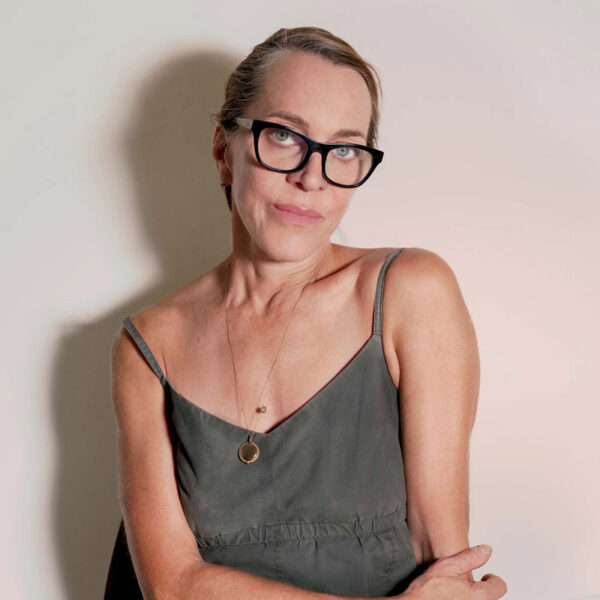
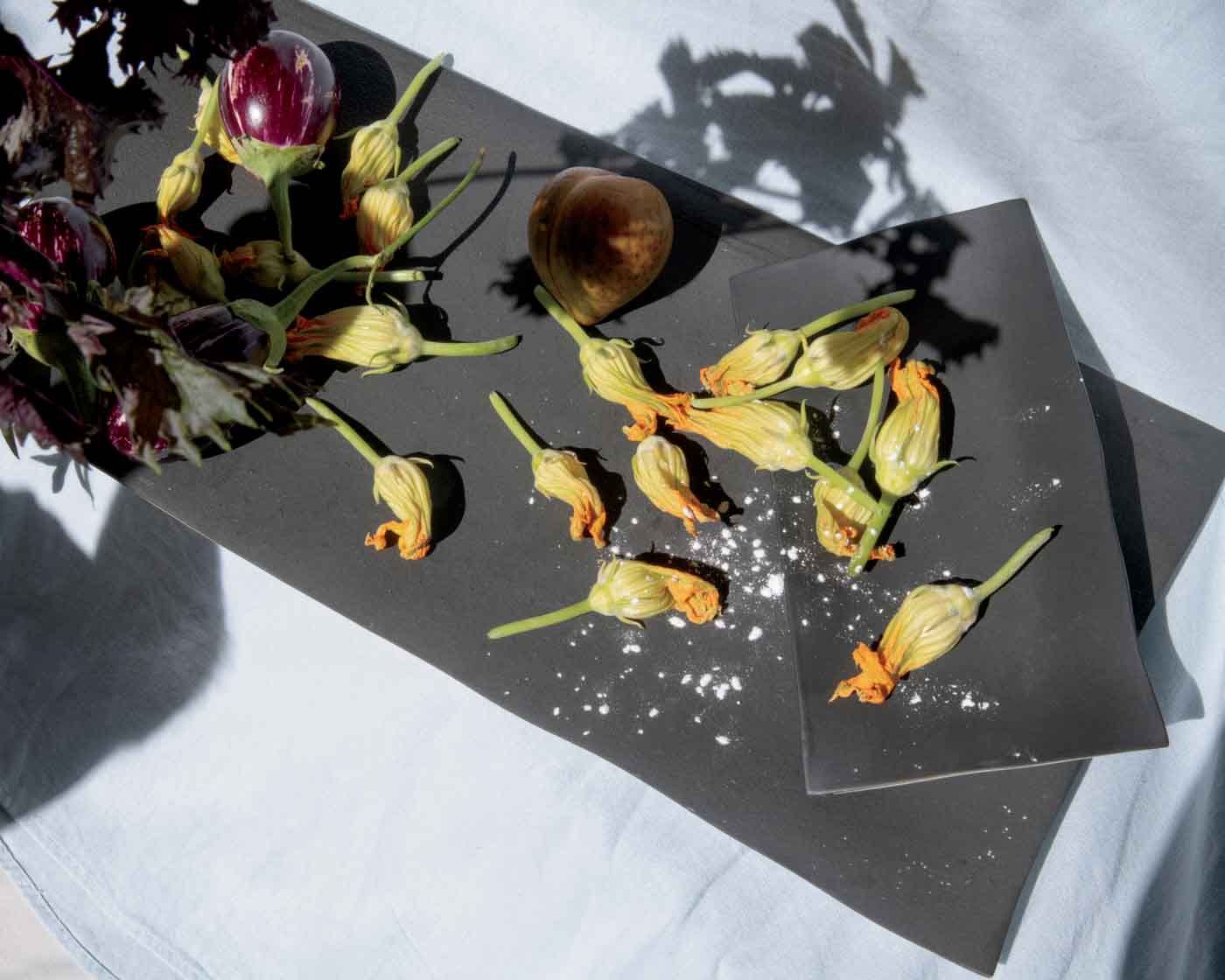
Looking at a still life by artist and educator Laura Letinsky is an exhilarating experience.
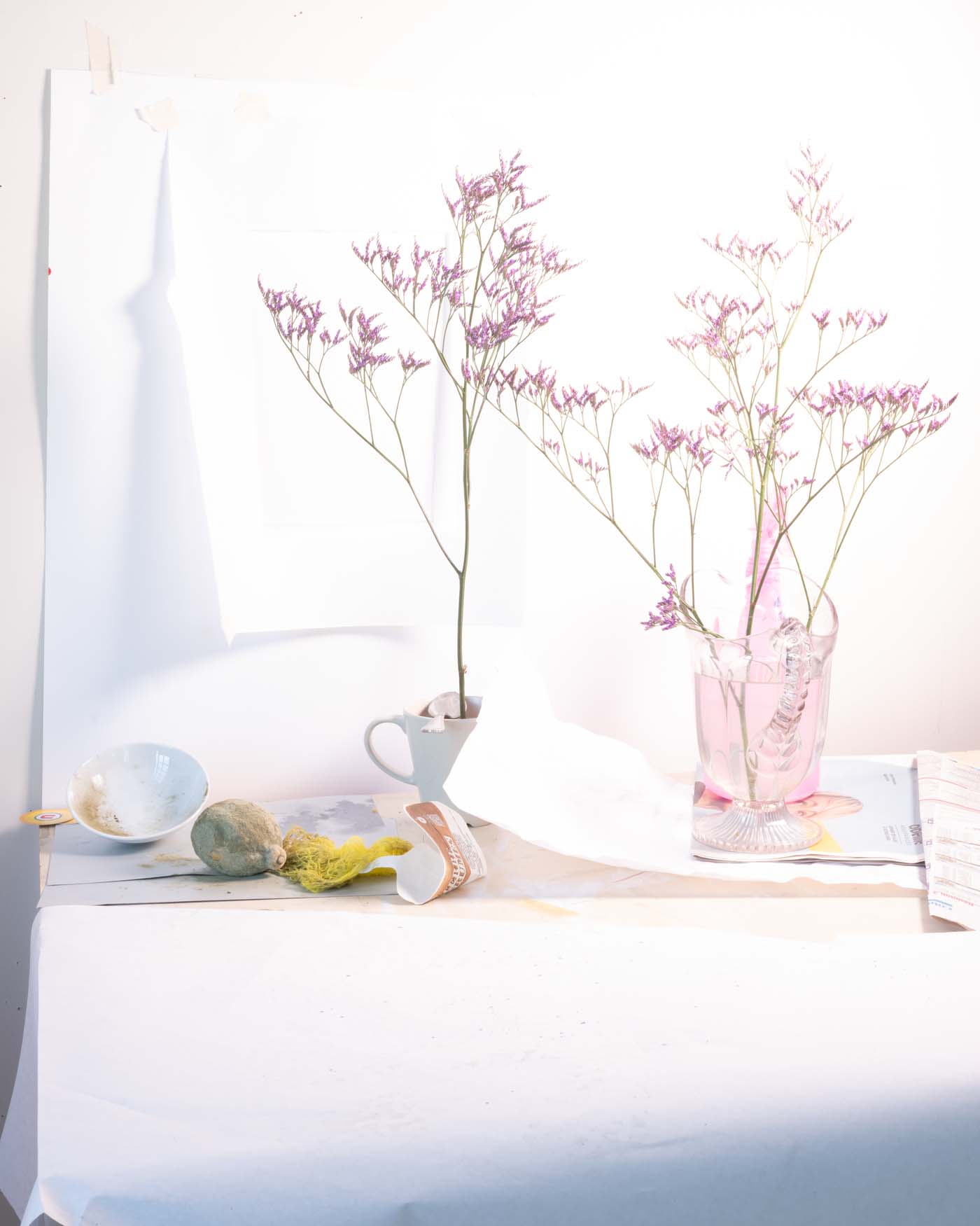
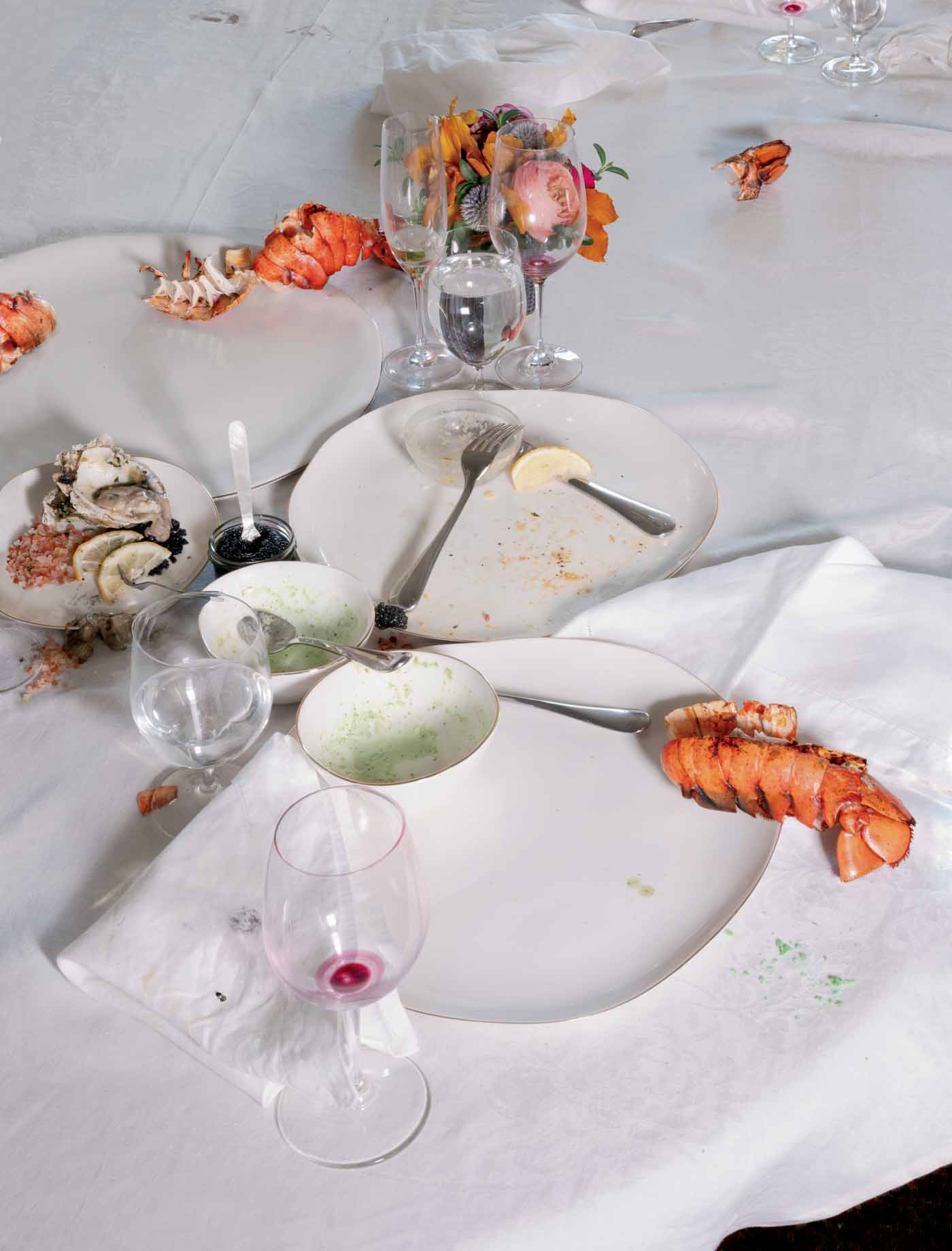
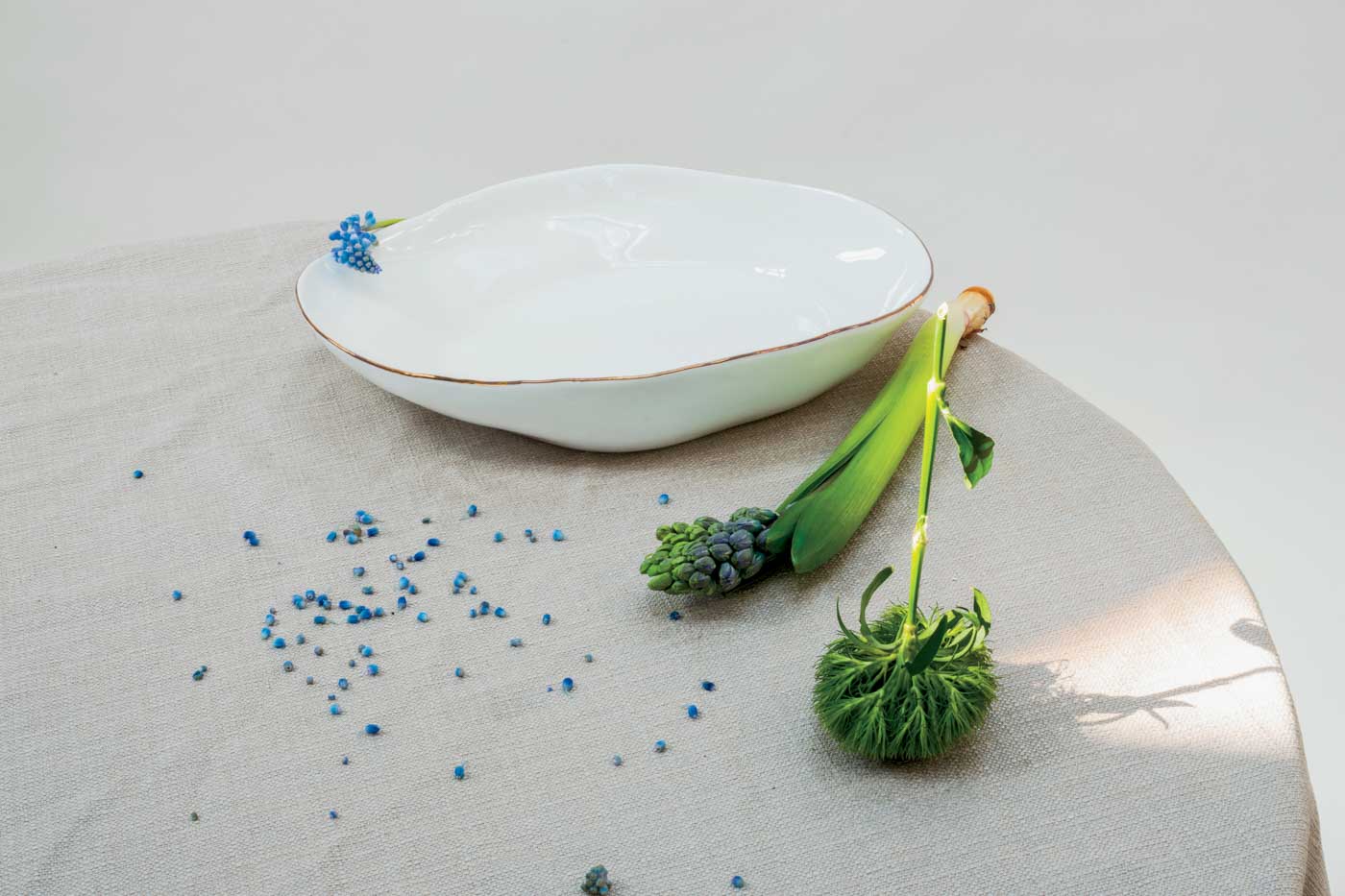
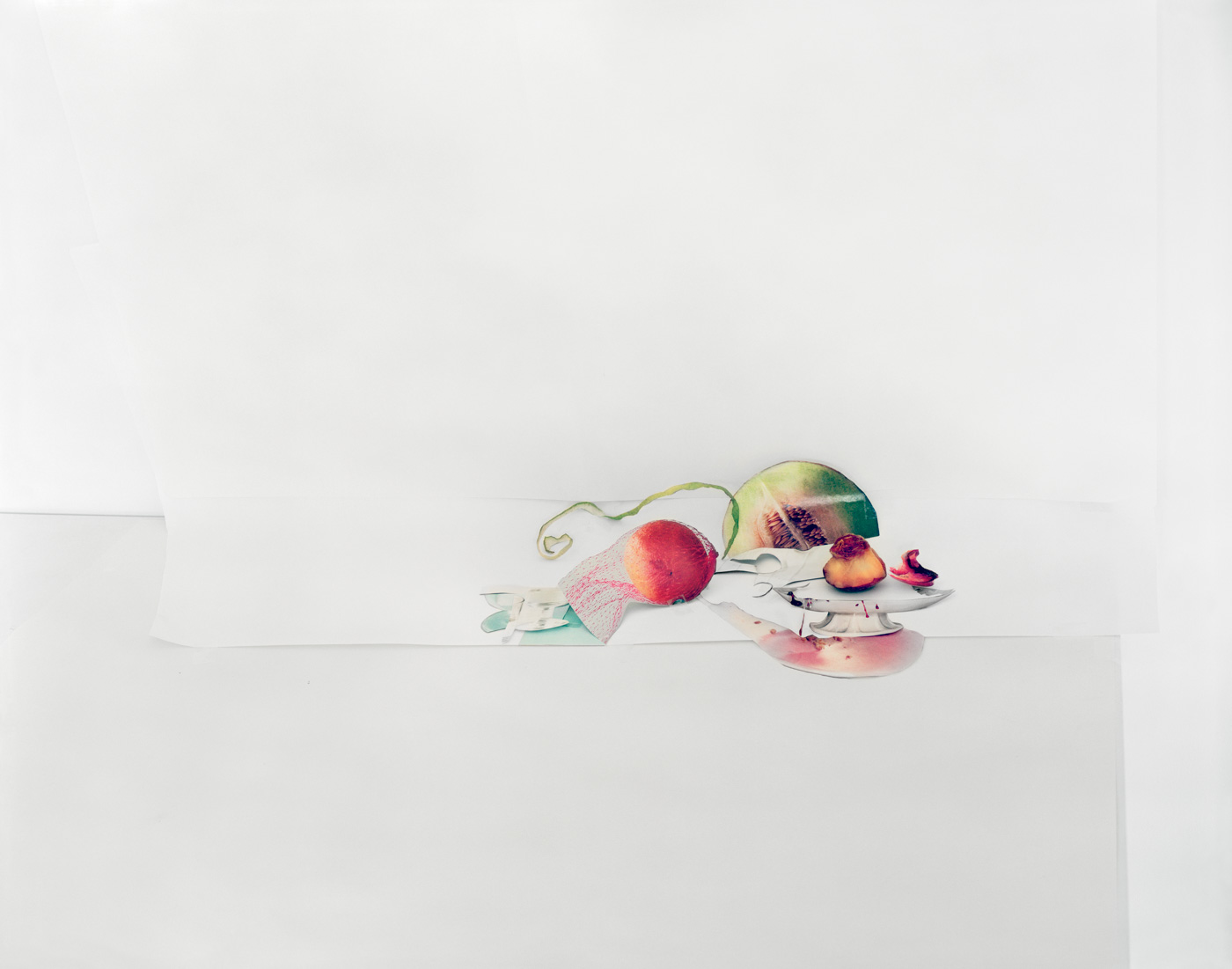
First drawn by the compositional precision and quality of light, as you look deeper, you notice the fragility and precarity of each arrangement. The porcelain cup balanced on edge. The currant-strewn saucer tipped over a glass. Cheese knives totter, vases tilt, and cutting boards slide. With stained linens, squashed fruit, torn paper, and wilted flowers woven throughout, the photographs mix casual ephemera with cherished long-lasting objects. You find yourself lingering in the stillness of each “after party” moment, intrigued more by the story behind the mess than the material perfection.
This is absolutely Letinsky’s intent.
“By focusing on scenes that embody the ‘after’ moment is to honor what I understand as the ‘real’ of the photograph,” says Letinsky. “What we wish to hold onto as well as what we can’t rid ourselves of.”
Instead of creating imagery that encourages viewers to chase what is new and shiny—that which breeds obsolescence and derides an appreciation for what endures, “In my photographs, as in my life and work, I not only accept but revel in the world as it is,” she shares.
As French literary theorist Roland Barthes famously wrote in his final book Camera Lucida, all photographs are inherently “after.” They don’t just show what was in front of the camera; they testify that these objects existed—that the photographed moment occurred and has already passed.
For decades, Letinsky has explored this “after” concept in her practice as an acclaimed visual artist and educator at the University of Chicago’s Department of Visual Arts. But there’s much more to the work beyond that.
“I try to utilize the compulsive beauty that is photography while insisting on making the photograph what is beautiful versus the things that are pictured,” she says. “By photographing very ordinary, even undesirable objects, it is the transformation the photograph performs that makes the image beautiful, not a fantasy of ownership that typifies most mainstream photography. It’s my hope that my photographs enable viewers to see the stuff of their daily lives as extraordinary and to be appreciated.”
As evidenced by her current title as Professor, Director of Graduate Studies, and Director of Study Abroad in Paris and Beijing, Letinsky is in a busy, transitional time.
Photographs from her ongoing Who Loves the Sun series—now in a new exhibit at UP Gallery in Hsinchu, Taiwan—are pinned to one wall. A dozen of the books featuring her work are stacked on a table in the middle. Plants of all varieties enliven the room. And at the back of the room, cups, plates, vases, and other porcelain vessels created for her Molosco dinnerware business fill tables and shelves.
Letinsky is preparing for a trip to China, where Molosco, the company she founded in 2011 and relaunched in 2022 with artist Max Li, is based. “We are now developing Molosco Privée, an individualized palette of glazes,” she explains. “We’re doing the glaze testing in Jingdezhen, the birthplace of porcelain, where the technology and knowledge for this is incredibly rich.”
Thinking about the China trip, plus the three-month art program she developed and will be teaching at the University of Chicago’s Paris Center this fall, as well as future retirement, Letinsky has much on her mind.
“Where will I put all of this one day?” she muses, stroking the long tail of a potted plant as one might caress a beloved house pet.
Letinsky’s love for tending plants, along with skills such as cooking and sewing, reflect her view that art and life are intertwined.
“My vegetable growing, clothes-making, cooking, et al., feed me, and thus my work. It’s an ecology, a circuitry.” This philosophy was born during her childhood in Winnipeg, where, growing up with an architect father, seamstress-and-gardener grandmother, and a mother who was an accomplished cook and gardener, Letinsky always felt “making” was a pleasure, not a chore.
“While I didn’t necessarily love weeding the garden with my mom, the conversation, the perennial-ness of the work and its rewards were vital aspects of our family relationships,” she recalls. “And this I cherish. Meals and their preparation were opportunities for exchanging stories of the day, gossip, kvetching, etc.”
There was a magic in life’s routines that the artist still carries with her. “It gave me a perspective that sustains me. I can revel in the glamor and glitz of a successful art career, but also, the solidness of my kids, dirt under my nails from my garden, and sharing a meal with loved ones.”
After earning BFAs in photography and ceramics from the University of Manitoba in 1986, Letinsky received her MFA from Yale University’s School of Art in 1991, before joining the University of Chicago faculty in 1994. While studying Dutch-Flemish still life paintings, she began exploring how Northern European Renaissance artists looked at domesticity, as it was characterized as feminine and thus, as less important, and then began creating photographic still life works that explored the tension between these views and larger social structures.
But in 2009, overwhelmed by the proliferation of smartphone images that she felt “demonstrated repetition, not revelation,” Letinsky stopped making pictures for a year and turned to ceramics, which gave her a fresh avenue for translating ideas, feelings, and observations.
Her first project was a reaction to a glossy Barneys’ advertisement for a collection of exquisite porcelain dishes. “I wanted those dishes, but absolutely didn’t need them,” she remembers. “So, I decided to quell that desire by crafting my own perfect set of porcelain dinnerware.”
That personal quest soon evolved into Molosco. Letinsky sees the company as conceptually and aesthetically cohesive with her art in that it is about and for the home. “For every day and yet precious,” she explains. “An appreciation of life and of living in its perfect imperfection.”
Molosco porcelain is wonderfully delicate, reflecting the fact that fragility is an important aesthetic language for the artist.
“It’s a feminist, realist position,” she explains. “Years ago, I became cognizant of how assertion, certainty, strength, and vigor—qualities associated with male patriarchy and hegemony—were qualities celebrated in art. Counter to that, I’m invested on so many levels in dialogue, tentativeness, questioning, the pivot, delicacy, and fragility as equal to those other more socially privileged qualities.”
Looking ahead, Letinsky is excited about the continued evolution of Molosco, including upcoming collaborations with chefs and the launch of Molosco Privé, a custom collection of Molosco, with interior designer Deb Lund as its ambassador. She is also looking forward to gallery exhibitions for her photos and fine art ceramics and hopes to maintain the sense of surprise and delight that has buoyed her thus far.
“There’s no holding on to what was, so I’m considering the how and what and where not as a finality but a different phase. For much of my life there were clear hurdles or markers, but now the roadmap is less clear. The question now is how to reckon with both the tangible and what I can’t possibly anticipate. I’ll always make. Of this, I’m sure.”
For more information, visit molosco.com and lauraletinsky.com.