Contributions | Aug. 2026
GROWING GOOD
By Janis MVK
PHOTOGRAPHY PROVIDED BY CHICAGO BOTANIC GARDEN
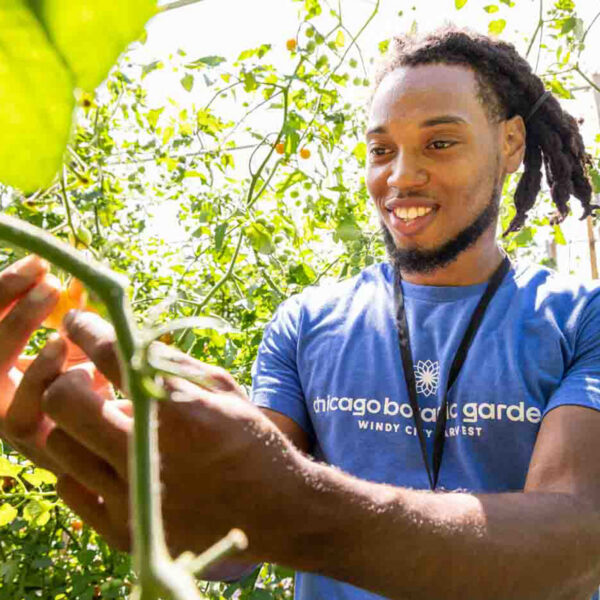
A Corps program participant harvests tomatoes at Rodeo Farm, located in Chicago’s Little Village neighborhood on the West Side.

JWC Media
a luxury lifestyle website that delivers a colorful and passionate telling of neighboring events, fashion, beauty, finance, and the pursuit of leisure.
By Janis MVK
PHOTOGRAPHY PROVIDED BY CHICAGO BOTANIC GARDEN
A Corps program participant harvests tomatoes at Rodeo Farm, located in Chicago’s Little Village neighborhood on the West Side.
The Chicago Botanic Garden has long been a place of beauty, respite, and wonder. But for its members, the connection runs deeper than a visit—it puts them at the center of work that genuinely matters.
Two programs lead the charge.
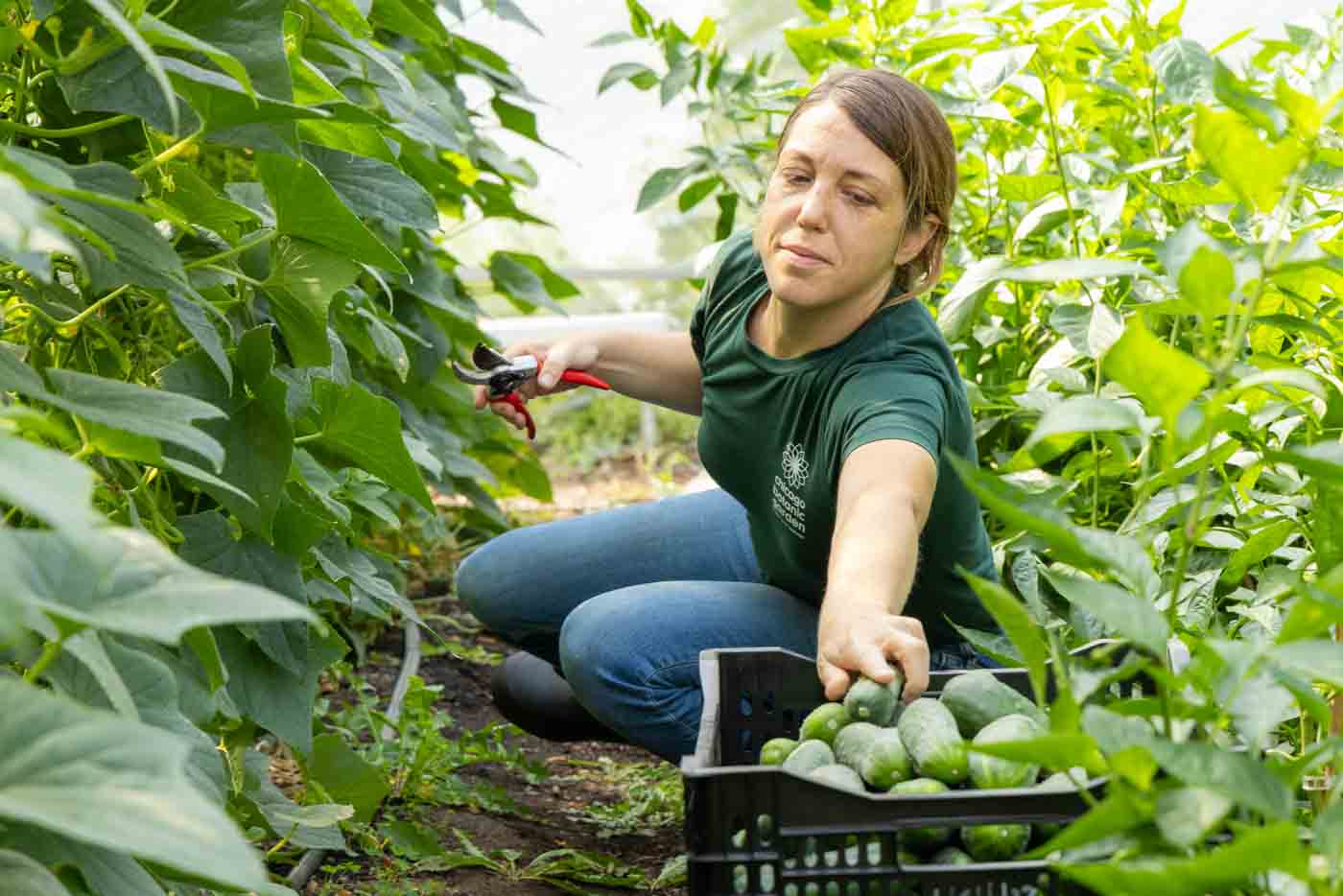
Windy City Harvest, the Garden’s urban agriculture program, is doing something remarkable across Chicago’s West and South Sides, transforming neglected land into a network of urban farm sites that helps build healthier communities through access to locally grown fresh produce, youth enrichment and teen employment opportunities, and job training that translates to steady incomes and building generational wealth.
“Our programming is focused on supporting a Chicago where people have consistent access to fresh, healthy food, and the economic opportunities to truly thrive,” says Carmen Vegara, Vice President of Community Partnerships, Windy City Harvest. “Over time, the work has moved beyond simply growing food to helping people build transferable skills and bring urban agriculture knowledge back to their families and communities.”
Since 2013, Windy City Harvest programming has helped more than 30 small farm businesses take root. An example of a participant whose career pathway has been supported by Windy City Harvest is an individual who entered the Apprenticeship program as a beginning farmer and is now running their own farm business growing culturally meaningful crops. With support from a land access partner, they are expanding their operation onto a larger property and working toward long-term land ownership.
“When there is physical transformation of vacant land into an urban farm, it’s a visible signal that neighborhoods are worth investing in,” says Britt Calendo, Program Director, Windy City Harvest. “That shift creates a different sense of possibility.”
The Garden’s therapeutic horticulture programming, which brings the quiet joy of growing and nurturing plants, has become a force for well-being for thousands of participants each year.
“Throughout history, the benefits of engaging with plants and nature have been recognized and prescribed,” says Alicia Green, Coordinator of the Garden’s Buehler Enabling Garden. “Today, research increasingly supports the theory that interaction with plants and nature is important, if not critical, to human health and well-being.”
And the benefits ripple outward.
That same spirit of possibility drives the Garden’s Negaunee Institute for Plant Conservation Science and Action, where scientists and ecologists are working to protect the plants and habitats from the dual threats of biodiversity loss and climate change. The relationships between species in the natural world—pollinators, wildlife, people—are more fragile than most realize.
“Each time a plant species disappears, we lose the relationships it formed with pollinators, wildlife, plants, and people,” says Kay Havens, Chief Scientist and Negaunee Vice President of Science. “With fewer species and fewer relationships, our remaining native landscapes struggle to provide for our most basic needs.”
In partnership with the Forest Preserves of Cook County, the Negaunee Institute is working to help grow the native seed they need to restore 30,000 acres of prairies, woodlands, and wetlands by 2040—a goal as hopeful as it is urgent.
That is where the Garden members come in. Visiting the Farm on Ogden in Chicago’s North Lawndale neighborhood, where Windy City Harvest’s headquarters are located, and shopping its market puts resources directly into the hands of the farmers and entrepreneurs the program supports. Participating in volunteer opportunities to restore habitats brings the Negaunee Institute’s mission to life in a tangible, personal way. And a gift to either program extends the Garden’s reach into the communities and ecosystems that need it most.
“Climate change has made our work more important and urgent than ever before,” says Havens. “But if we all work together, we can achieve a future where we’re actively repairing the damage we’ve done to the planet.”
The Chicago Botanic Garden is, of course, a beautiful place to visit. It is also one of the most impactful institutions in the region, and its members are part of that story every step of the way.
Chicago Botanic Garden is located 1000 Lake Cook Road in Glencoe, 847-835-6801, chicagobotanic.org, @chicagobotanic.