Features | Jan. 2026
ELEVATED EASE
By Contributor
WORDS BY SHANNON SHARPE
PHOTOGRAPHY BY RYAN MCDONALD
STYLED BY CATE RAGAN
Timeless dining room

JWC Media
a luxury lifestyle website that delivers a colorful and passionate telling of neighboring events, fashion, beauty, finance, and the pursuit of leisure.
By Contributor
WORDS BY SHANNON SHARPE
PHOTOGRAPHY BY RYAN MCDONALD
STYLED BY CATE RAGAN
Timeless dining room
Susan and Ryan Laurenti never planned to completely renovate their Hinsdale home. They’d done some minor updates after purchasing it—modernizing the kitchen, updating the primary bedroom and bathroom—and they were just looking to do another small change. The couple envisioned transforming the unused attic space above their garage into a dedicated office and workout room. An architect had already begun exploring how the upper level could be reconfigured when Susan reached out to designer Diana Wagenbach for her input.
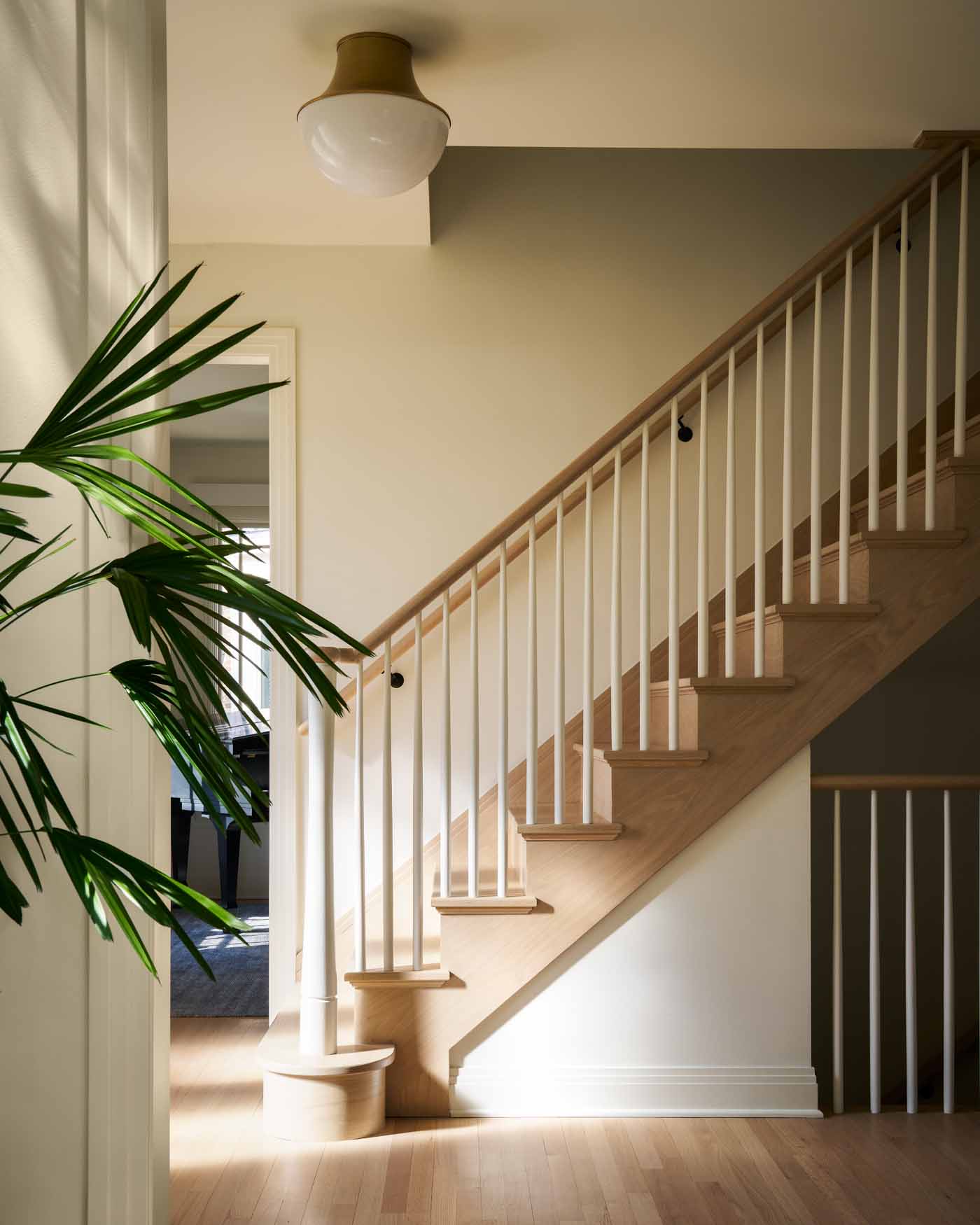
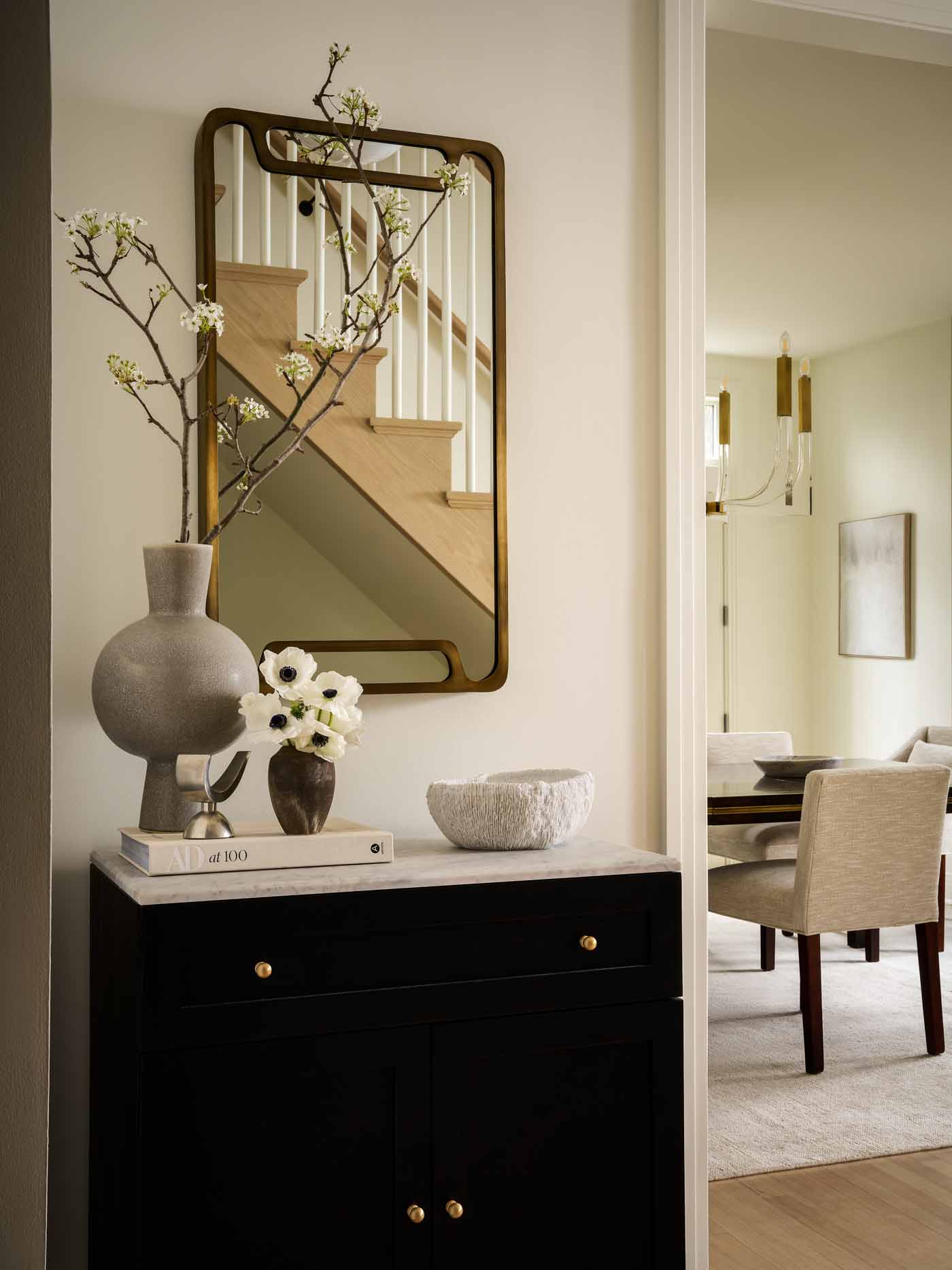
When Wagenbach walked the home, she sensed the attic wasn’t an isolated issue. The house had odd transitions, blocked circulation and generous square footage that was underutilized. “There was so much wasted space upstairs,” she says. “Fixing one area without looking at the rest wasn’t going to give them the outcome they wanted.” Thankfully, the Laurentis were open to Wagenbach’s rethinking of the whole home, which included aligning its volumes, smoothing its flow and refining the staircase.
Besides the structural changes, Wagenbach considered how to bring in Susan’s interior leanings—“I love a Southern grandma’s style,” Susan laughs—while bringing a sophisticated atmosphere to the home. “She wanted the style to feel more elevated,” the designer says. Instead of leaning into bright tones or busy motifs, Wagenbach translated those preferences into muted colors, tailored silhouettes and layers of texture—an interpretation that brought the personality Susan loved into a more modern, quietly sophisticated expression.
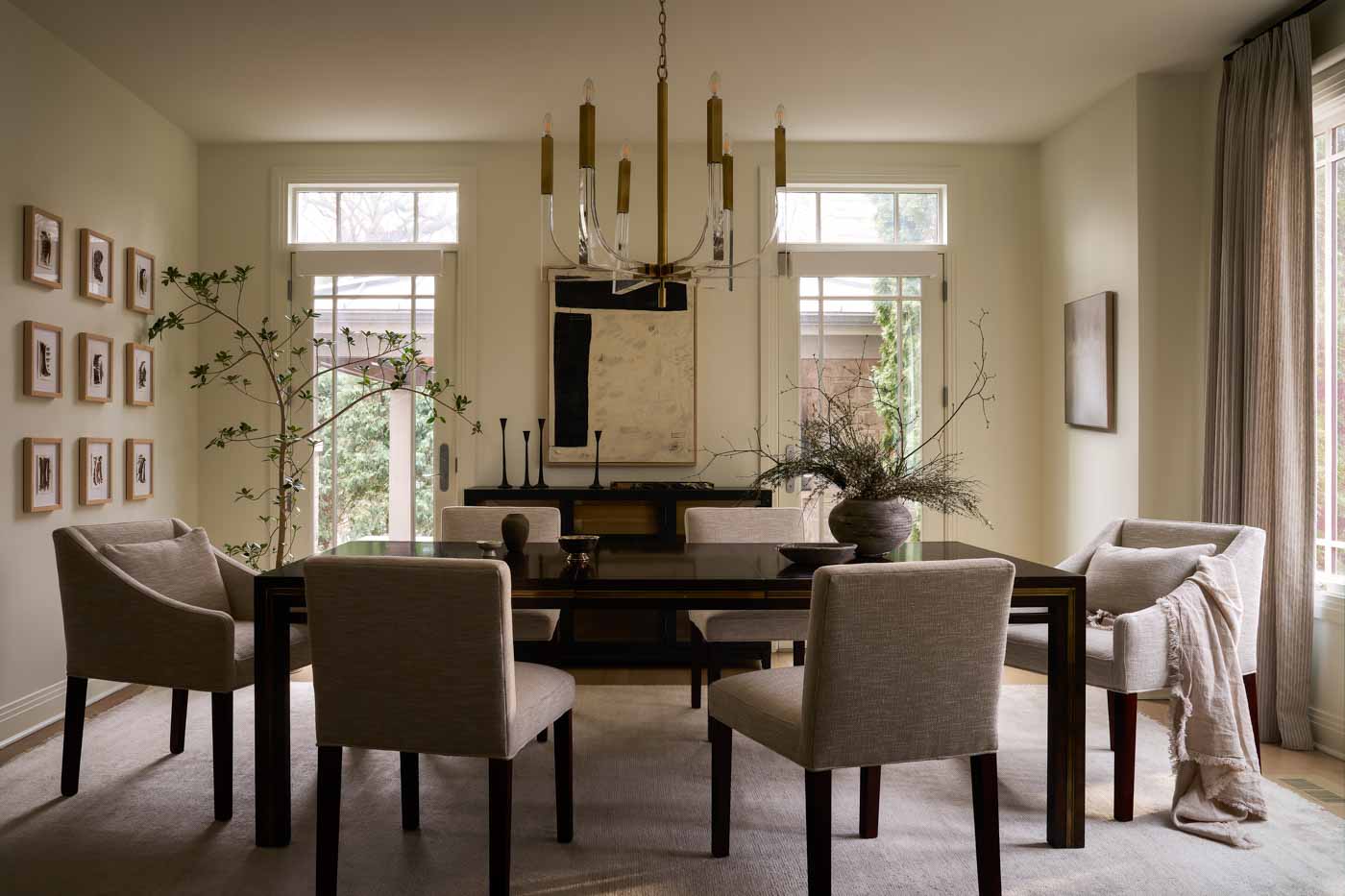
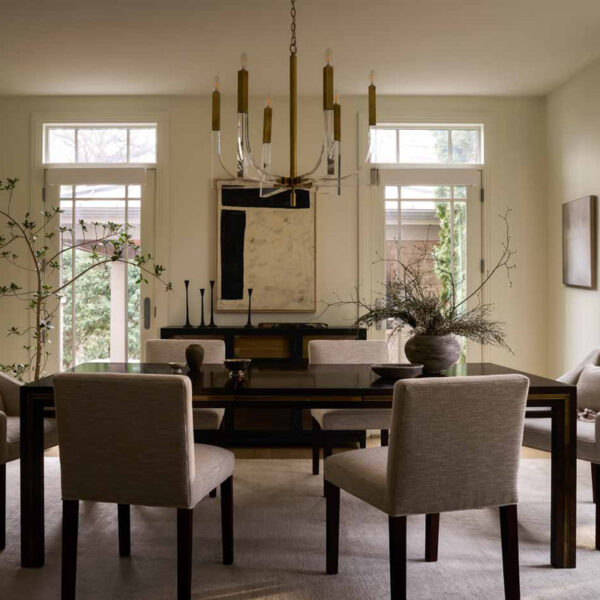
The dining room didn’t require a dramatic overhaul—the Laurentis already had a beautiful table and a light fixture worth keeping—but Wagenbach refined the space so it worked the way the family lives. Susan often takes work calls at the table, and their oldest son regularly spreads out his school projects, so comfort mattered as much as aesthetics. “I’m a big believer dining room chairs have to be comfortable,” Wagenbach says. “And for them to be comfortable, they have to be upholstered.” This guided her choice of Rowe dining chairs in a performance fabric, that now soften the room for everyday use. She also layered in artwork that brings warmth without overwhelming the space: a painting by Chelsea Feld anchors one wall, while nine smaller works—created in collaboration between Wagenbach and local artist Maureen Claffey—adds subtle texture and color on the adjacent wall.
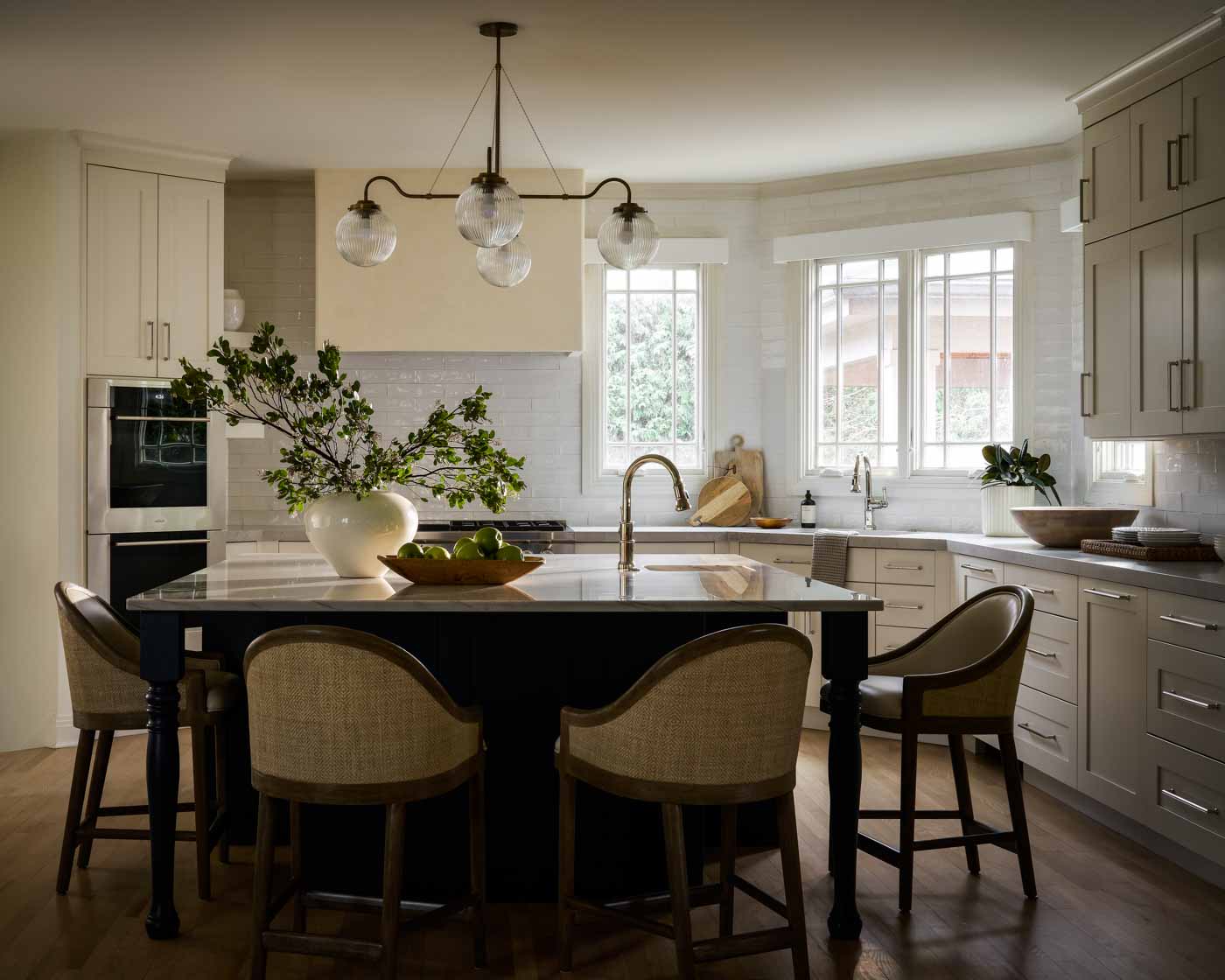
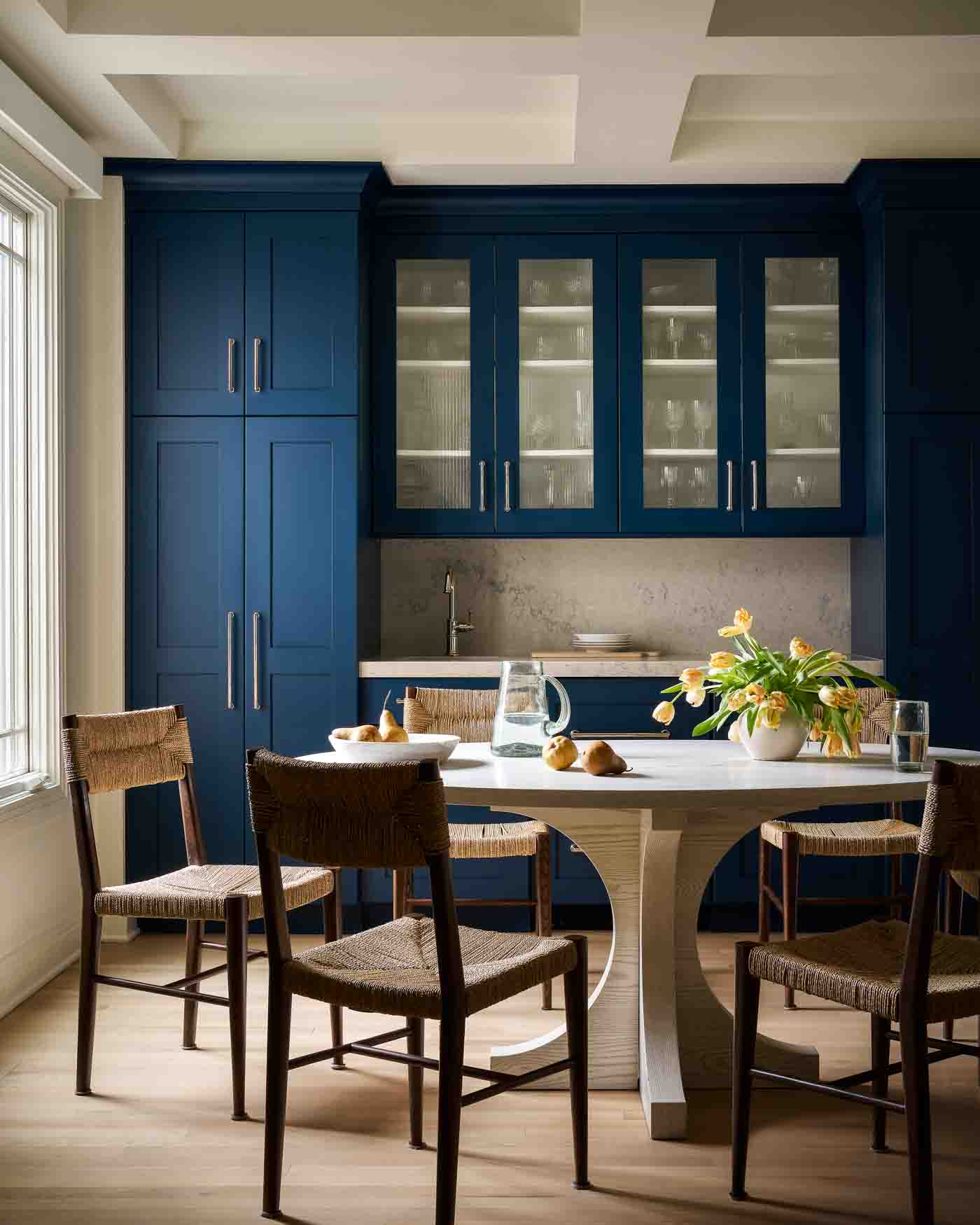
The true core of the home though is the family room and the adjacent kitchen—the latter that, with its relatively recent refresh and charming cobalt blue cabinetry, Diana barely had to touch besides cosmetic changes. She coated the island in that same shade of blue, updating plumbing fixtures, replaced the hood and brought in a chandelier from Lucent Lightshop and Palcek counter stools.
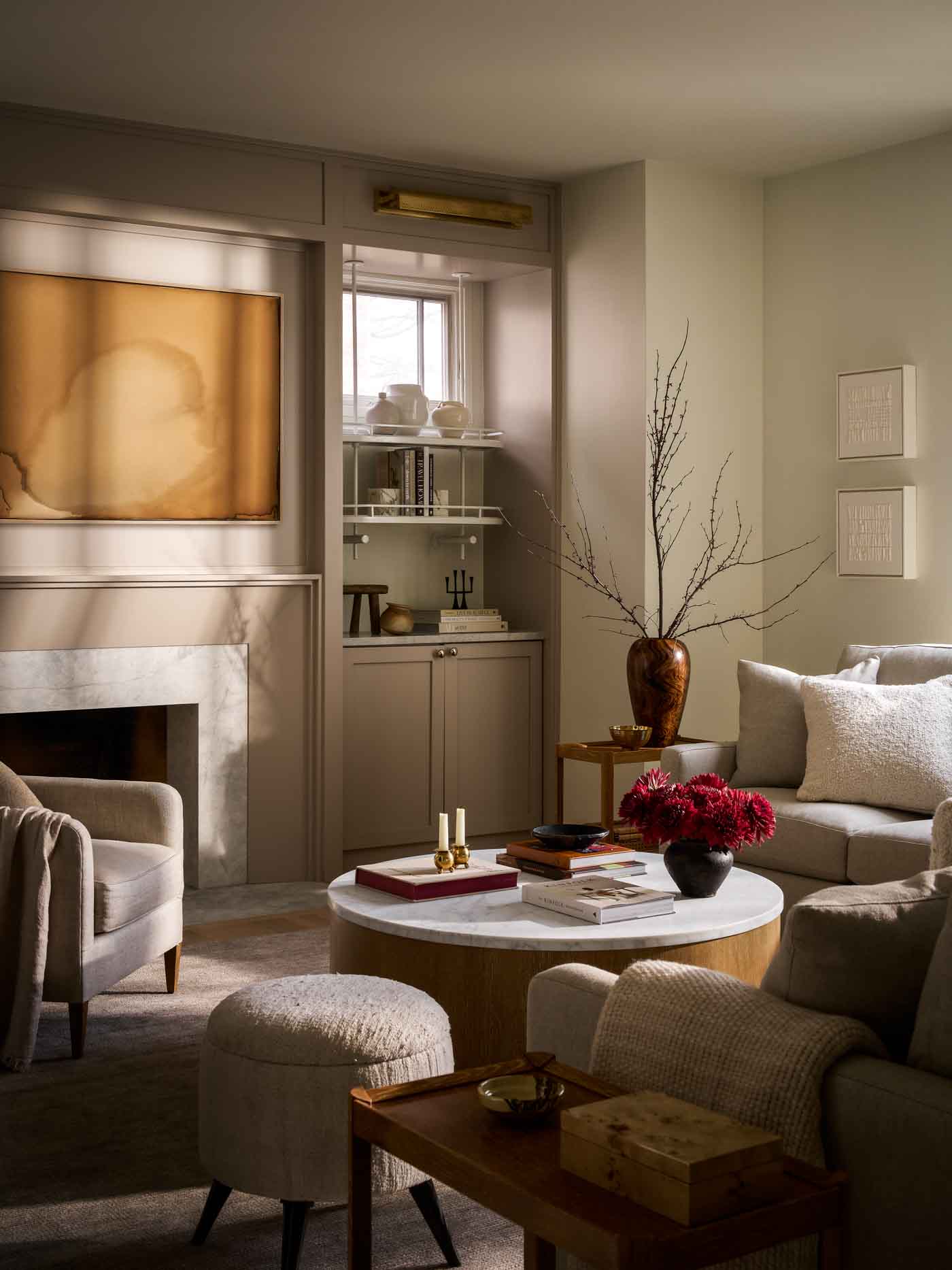
The family room, however, presented a challenge. “It was completely open,” says Wagenbach. “It was really hard room for them to furnish.” Wagenbach gave it structure. She rebuilt the firebox, added walls to define the volume and designed custom built-in on either side of the fireplace. Fabrication company Iron + Easel then created suspended steel shelves for the built-ins that offset some awkward windows. With the architecture settled, the furnishings fell into place: a deep Hooker Furniture sectional and lounge chair, a Delray cocktail table and easy textural layers.
Adjacent to the family, the music room needed a different kind of intention. The original space lacked direction—neither a sitting room nor a true performance space. Wagenbach introduced Hooker Furniture wool chairs in a deeper, moodier tone, giving the room weight and definition, while subtle blues in the Jaipur Living rug and artwork carry the thread of color from the kitchen.
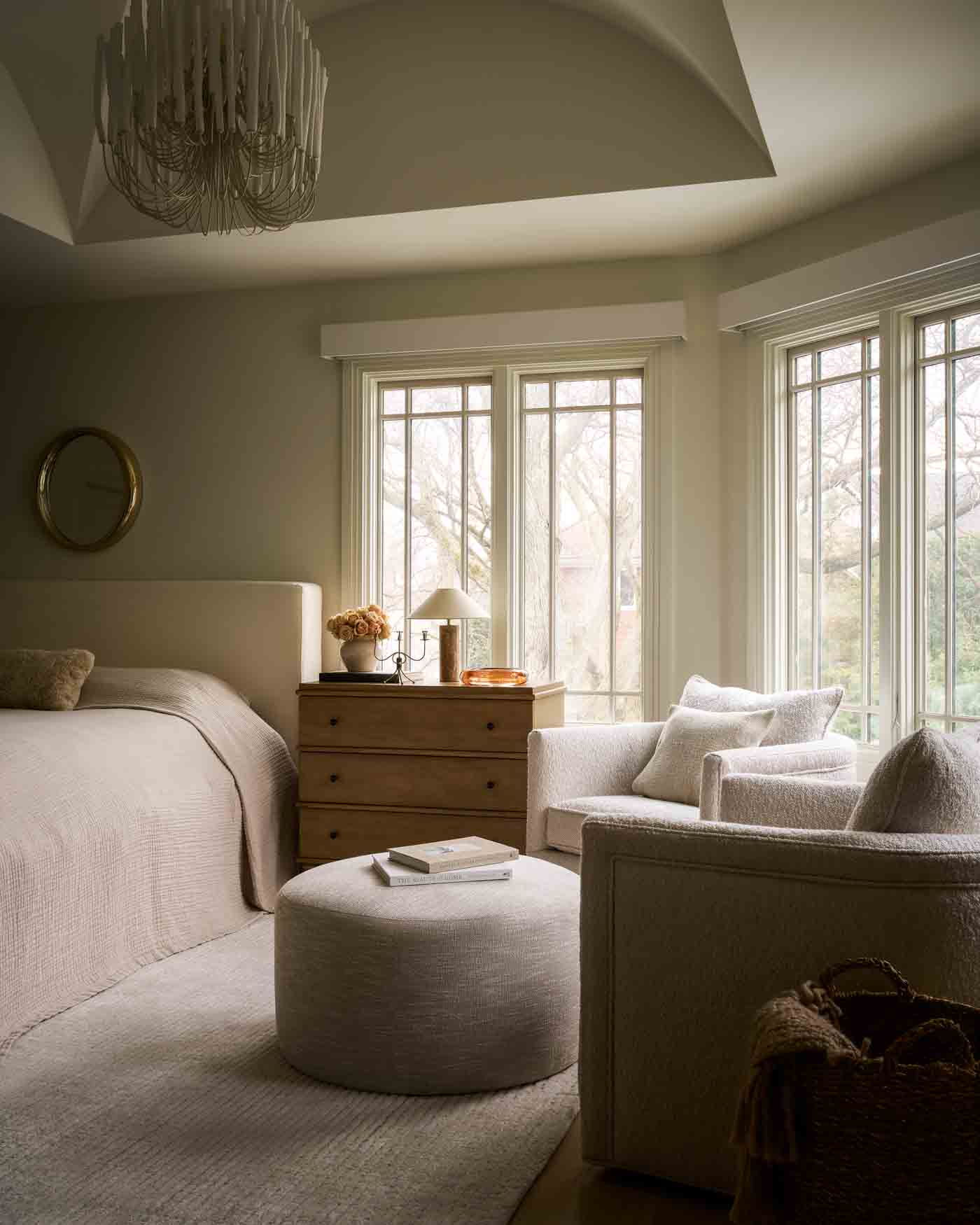
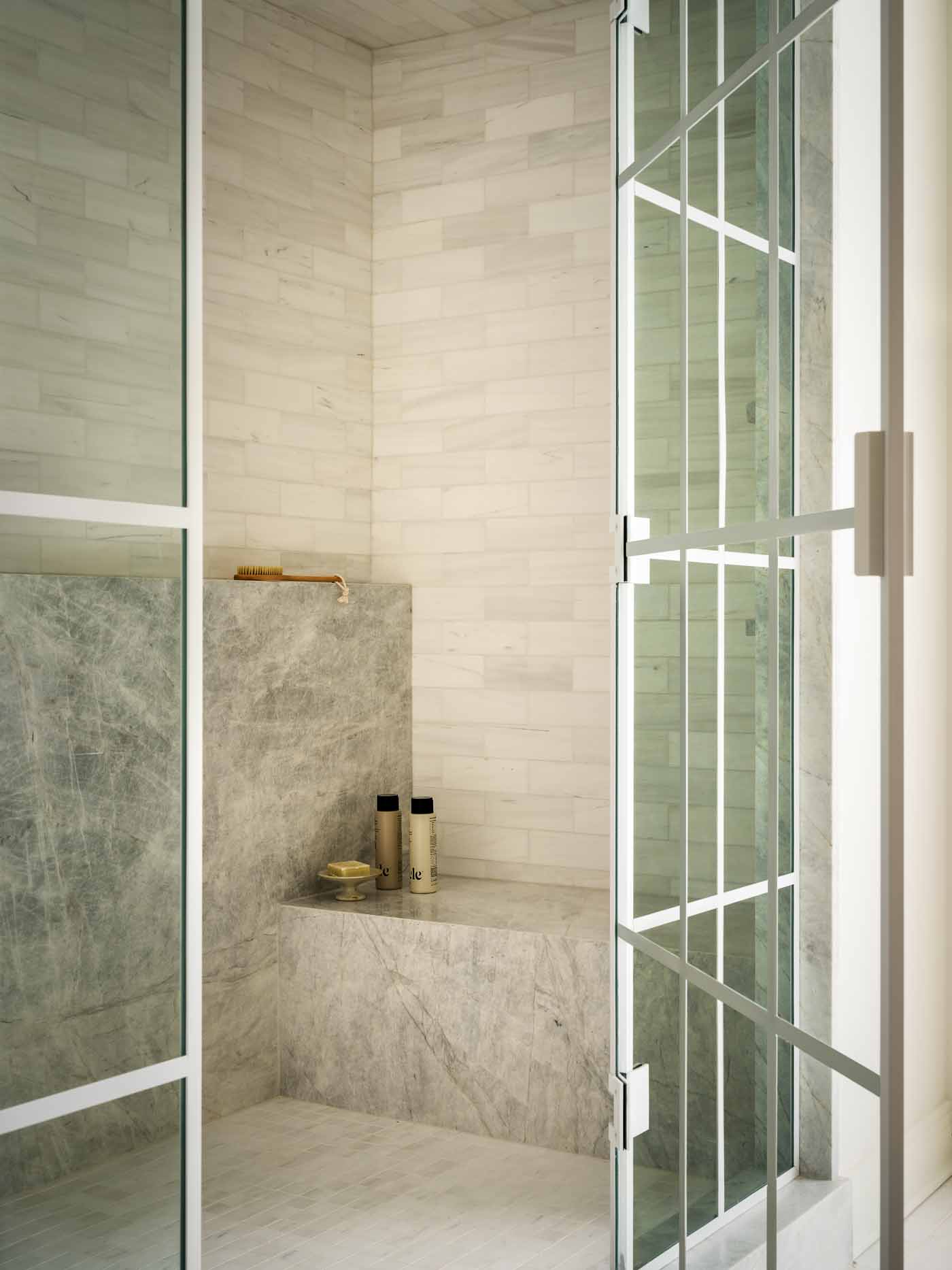
Upstairs, the primary suite became the clearest expression of the home’s new sensibility. Wagenbach rethought the entire space, reconfiguring the bathroom and adding glamour with a Michaelangelo stone, putting a new closet behind it and making the bedroom more compact. “It sounds counterintuitive to make a bedroom smaller,” she admits. “But it actually made it more functional.” She designed the space around an upholstered Moss Home bed, a simple, streamlined piece that allowed the subdued palette to unfold in soft gradations. A serene sitting area, furnished with Hooker Furniture swivel chairs and a matching ottoman, makes for a cozy reading nook.
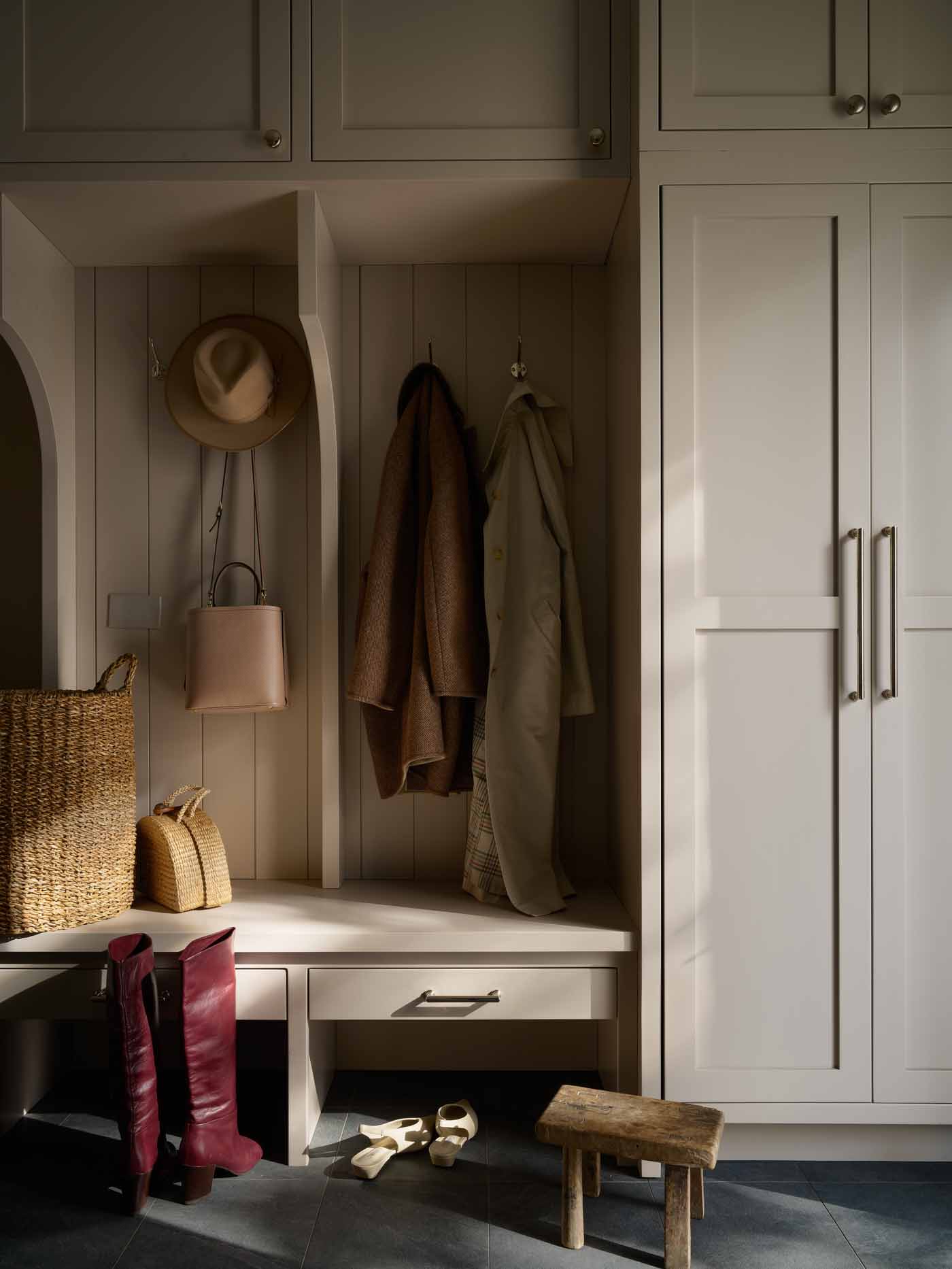
Secondary spaces, such as the laundry room and mudroom, were equally well considered. The two were located in same space and it wasn’t functioning for the family, so Wagenbach redesigned the mudroom with storage for bags, shoes, and the sons’ sports gear out of sight. The laundry room was relocated upstairs, where marble-and-porcelain floors make washing and sorting clothes an elevated experience. Nearby both sons’ rooms got a refresh along with their shared bathroom.
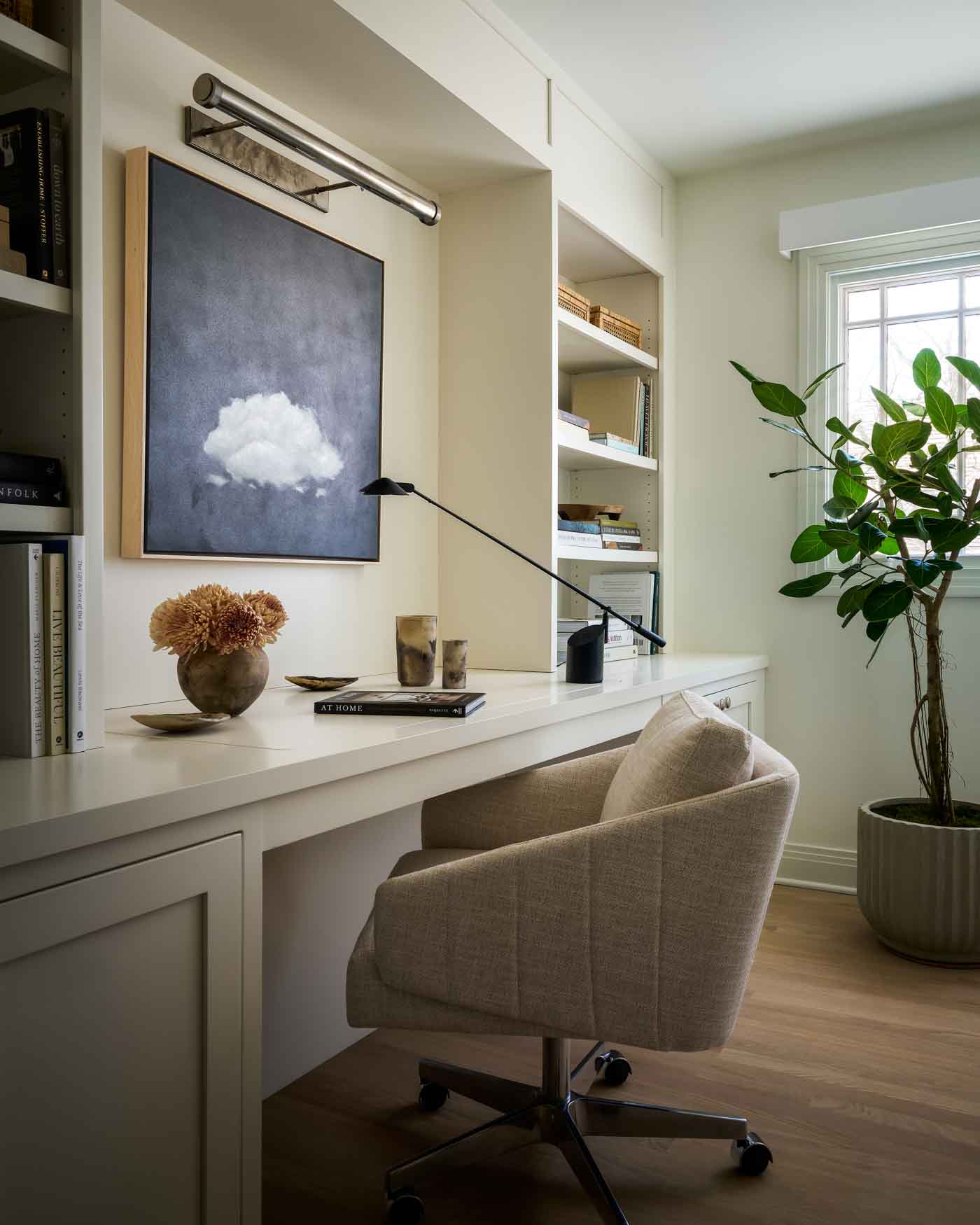
Of course, creating an office space for Susan couldn’t be forgotten, as that was the original goal. With the reconfigured layout on the second floor, Wagenbach created a work oasis, with a custom built-in standing desk and storage that keeps everything out of sight. Wagenbach reshaped each room with purpose, making the spaces calm, functional, and aligned with how the family lives. What started as an attic project became a much broader transformation. As Susan says, “It’s better than I could ever have imagined it could look.”
Studio W Interiors, 102 South Washington Street, Hinsdale, studiowinteriors.com, @studiow_chicago.