Features | Mar. 2026
COUNTRY MOUSE, CITY MOUSE … AND EVERYTHING BETWEEN
By Joe Rosenthal
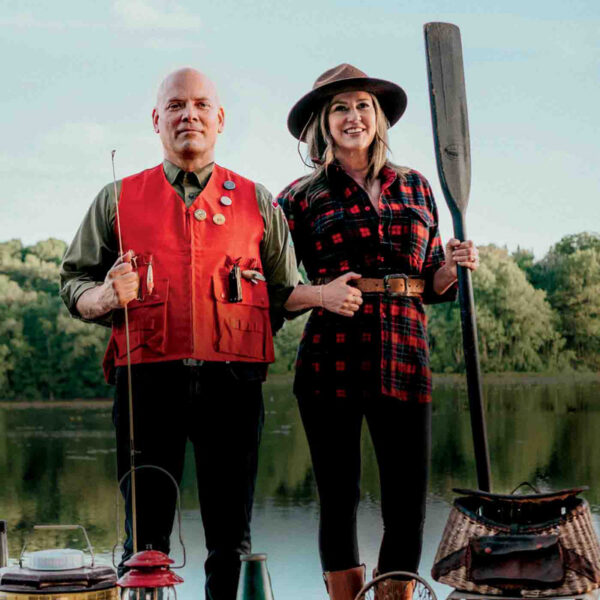
Camp Wandawega owners David Hernandez and Tereasa Surratt. Photography by Andy Berndt

JWC Media
a luxury lifestyle website that delivers a colorful and passionate telling of neighboring events, fashion, beauty, finance, and the pursuit of leisure.
By Joe Rosenthal
Camp Wandawega owners David Hernandez and Tereasa Surratt. Photography by Andy Berndt

The story of Camp Wandawega, a uniquely American tale of grit, faith, determination, and destiny, began more than 100 years ago against a backdrop of stately evergreen trees, shimmering water, and the gently rolling landscape of Walworth County in southern Wisconsin.
Founded during Prohibition in 1925 as a small hotel and speakeasy, Wandawega’s original sin of intemperance and legal defiance soon morphed into other transgressions—becoming a brothel, gambling house, and a magnet for criminal elements and ne’er-do-wells. In 1951, the camp went legit and was renamed Wandawega Lake Resort by its new owners, the Andrzejewski family of Chicago. The modest resort became a getaway for Chicagoans seeking an affordable respite just a short ride from the chaos of Windy City life. In 1961, the property was purchased by the Catholic Church, blessed by His Eminence Cardinal Archbishop Meyer, and handed over to Reverend Boleslavs Baginskis of the Latvian Marian Fathers. “Vandavega,” as it was then called, became a summer gathering place for Catholic Latvian refugees seeking a sense of community some 4,500 miles from their now Soviet-occupied homeland.
It was in this incarnation, in the early 1970s, that a young David Hernandez (whose mother, Anna, was a Latvian refugee born in a German Displaced Persons camp) attended summer camp at Vandavega, setting in motion a chain of unlikely events culminating, more than a quarter century later, in Hernandez and his wife, Tereasa Surratt, then both creative directors at Ogilvy, purchasing the camp from the church leadership. By this point, the buildings were crumbling and the land overrun with brush. Tall weeds broke through concrete tennis courts, and scores of Wisconsin winters had rotted the wooden structures. To the unpracticed eye, Wandawega would have appeared derelict—a tract of land perhaps only of interest to a real estate developer as a “tear down.”
But Hernandez and Surratt, buoyed by an understanding of what had come before and a deep appreciation of American aesthetics, saw a future in the decaying ruins. They knew the bones of the buildings were good and that irreplaceable original surfaces persisted beneath layers of peeling paint and patched-over walls and floors. So, they set about restoring Camp Wandawega to its former beauty, painstakingly dismantling eras of mistakes, reconstructing each room, burnishing metal and wood inch by inch, and unearthing treasures along the way.
After decades of painstaking work, Camp Wandawega was restored. Improvements, like the treehouse, a hilltop outpost of sturdy canvas tents, and a barrel sauna overlooking the lake, followed. The crown jewel was a stunningly elegant new cabin with an immense stone hearth. As the buildings were transformed, the purpose also morphed. Still unmistakably a camp, Camp Wandawega now also operates as a vehicle for unleashing creativity and promoting community. While available rooms and cabins can sometimes be rented in the off-season, the camp now primarily acts as a retreat for artists and companies seeking a new frame of reference for growth, whether individual or organizational.
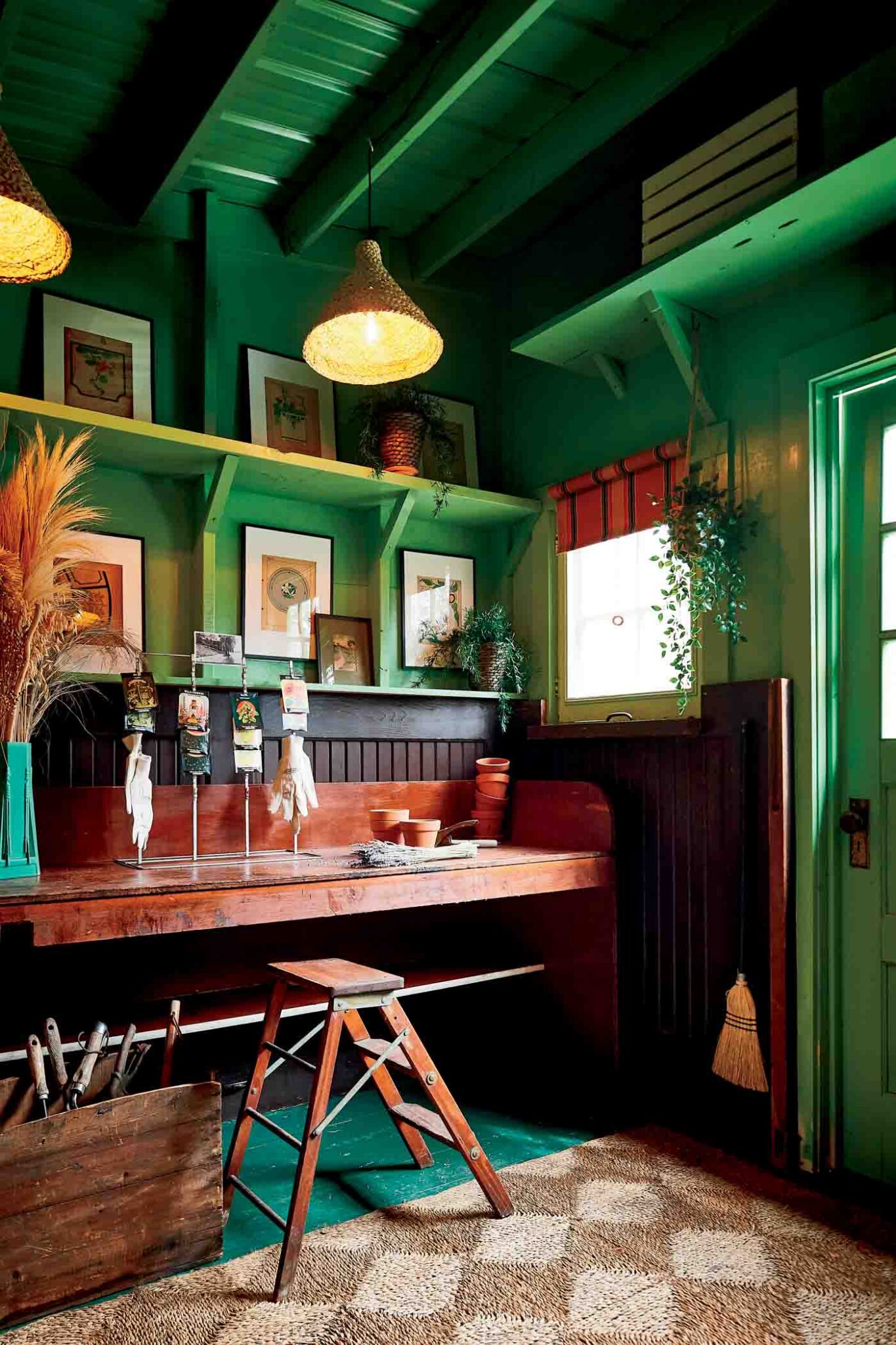
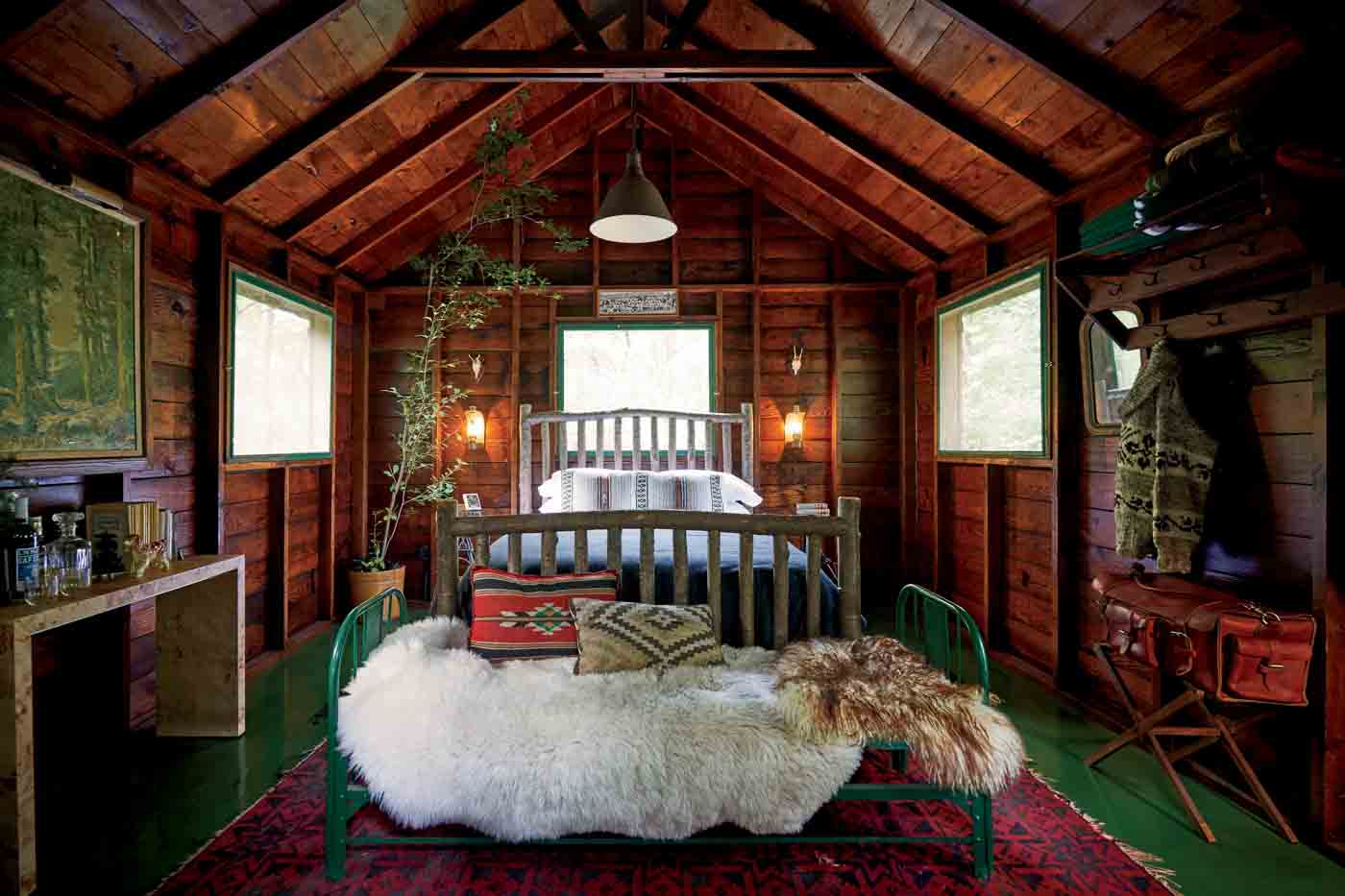
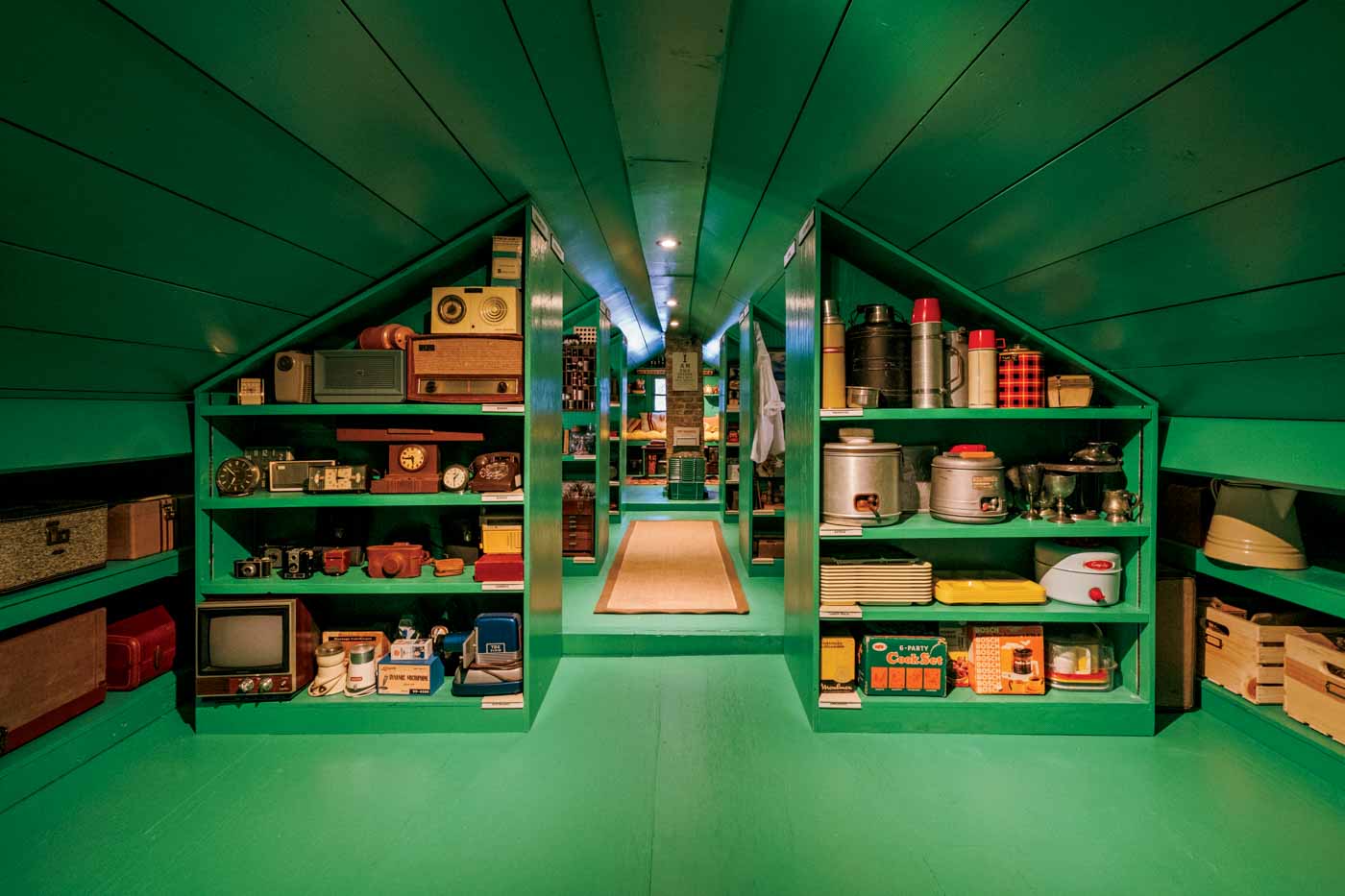
In practice, this means “camp takeovers” by companies like Studio Gang, Crate & Barrel, Shinola, and Patagonia, that are seeking to disconnect, recalibrate, and be inspired. Takeovers can accommodate up to 150 day guests, and 50 to 60 overnight guests, who sign on to the camp’s “Manifesto of Low Expectations,” meaning there may be a frog in your shower or a chipmunk running under your bed, and no night clerk to assist you with extra towels or room service.
“Many historic places … other places that are on the National Register … sometimes you visit and the only thing that’s still historic about those places is the façade. You go inside, and it’s all new—a thousand-thread count Egyptian cotton sheets and what-not,” Hernandez says. “We like to make sure that people understand this is more like going back to your childhood YMCA camp.”
In the hospitality industry, Surratt observes, “money is generated by the number of people who rent per night. And that’s not what David and I aspire to do, because we are stewards of this hundred-year-old property that would quickly fall apart if we were just trying to get as many bodies through as we could.”
That sense of stewardship means not only working with like-minded corporate guests, but also expanding the camp’s reach to different communities.
“There is more soul and purpose in finding ways to give the camp experience to people and groups who need the support,” Surratt notes. “That’s why we started our artist-in-residence program. And it’s why we open the camp to underserved communities as well.”
Having dedicated their lives to the pursuit of creativity and historic preservation, the irony of their proprietor role isn’t lost on Hernandez and Surratt. As much as their decades-long restoration is about preserving this monument to the past, the duo’s sights are also squarely set on the future.
That means constantly expanding and extending the camp’s brand, which already boasts several highly successful collaborations with Tie Bar (retro-print ties, scarves, and socks), Crow Canyon Home (ruggedly beautiful enamelware), Crate & Kids (nostalgic toys, play sets, and bedding), GANT (casualwear), Anthropologie (soy candles), Solemn Oath Brewery (cream ale), and Foxtrot (bourbon). Fans of the 2025 Camp Wandawega “Into the Woods” bedding and home goods collection, which promptly sold out online at Target, will be thrilled to hear that a new collection is set to be launched soon.
All these collaborations and brand extensions naturally led to a thriving online store offering a myriad of Camp Wandawega-branded products. From apparel to housewares, decor to linens, there’s something for anyone inspired by the camp’s vision of rustic beauty and bygone simplicity. It’s the perfect place to shop for unique home goods and gifts for discerning friends and family members.
The couple’s forward-looking perspective inspired them to expand the camp’s ethos beyond the groves of Wisconsin conifers to the bustling city streets of Chicago’s West Town. Last summer, Surratt and Hernandez opened the Wandawega Bureau of Tourism in the building that once housed a commercial bakery. True to the camp’s allegiance to Chicago’s culture of makers and creators, the space is now home to a boutique retail showroom featuring custom Wandawega goods (by appointment only), a workshop, and a photo studio.
“Our calculus for opening the storefront was because of Tereasa’s two successful pop-ups,” Hernandez explains. “One at the Tie Bar on Armitage in Lincoln Park, and the other one on Grand Avenue at The Center for Order and Experimentation. So, it was a good impetus for us to keep that going with our own space.” Surratt adds, “We used the 100th anniversary as the catalyst to launch the Bureau and really approached it from beginning to end as a multifaceted sort of space.”
In December, the pair launched Country Mouse City Mouse. In their telling, Chicago native Hernandez is the city mouse, and Surratt, having grown up on a farm in southern Illinois, is the country mouse. The new company pulls together three properties—Camp Wandawega, the Bureau of Tourism, and the couple’s Chicago house, known as the Brickweave House, architect-designed by Jeanne Gang of Studio Gang and the site of shoots for Porsche and Valspar—into a portfolio available for photo and video shoots.
“Actually, our relationship with Studio Gang sort of exemplifies how we bridge Chicago and Wisconsin,” Surratt says. “Jeanne comes to camp and rolls up in shorts and a T-shirt with her whole team. She’s building these world-famous museums, but she’s in the literal weeds, birdwatching.”
It’s the kind of relationship that Hernandez and Surratt live for. Because Camp Wandawega has never been about preservation supplanting the future. It’s about cherishing what’s beautiful from the past and pulling that beauty into the present day; about not letting the unique fade from view, while using it as a springboard to create what’s yet to come.
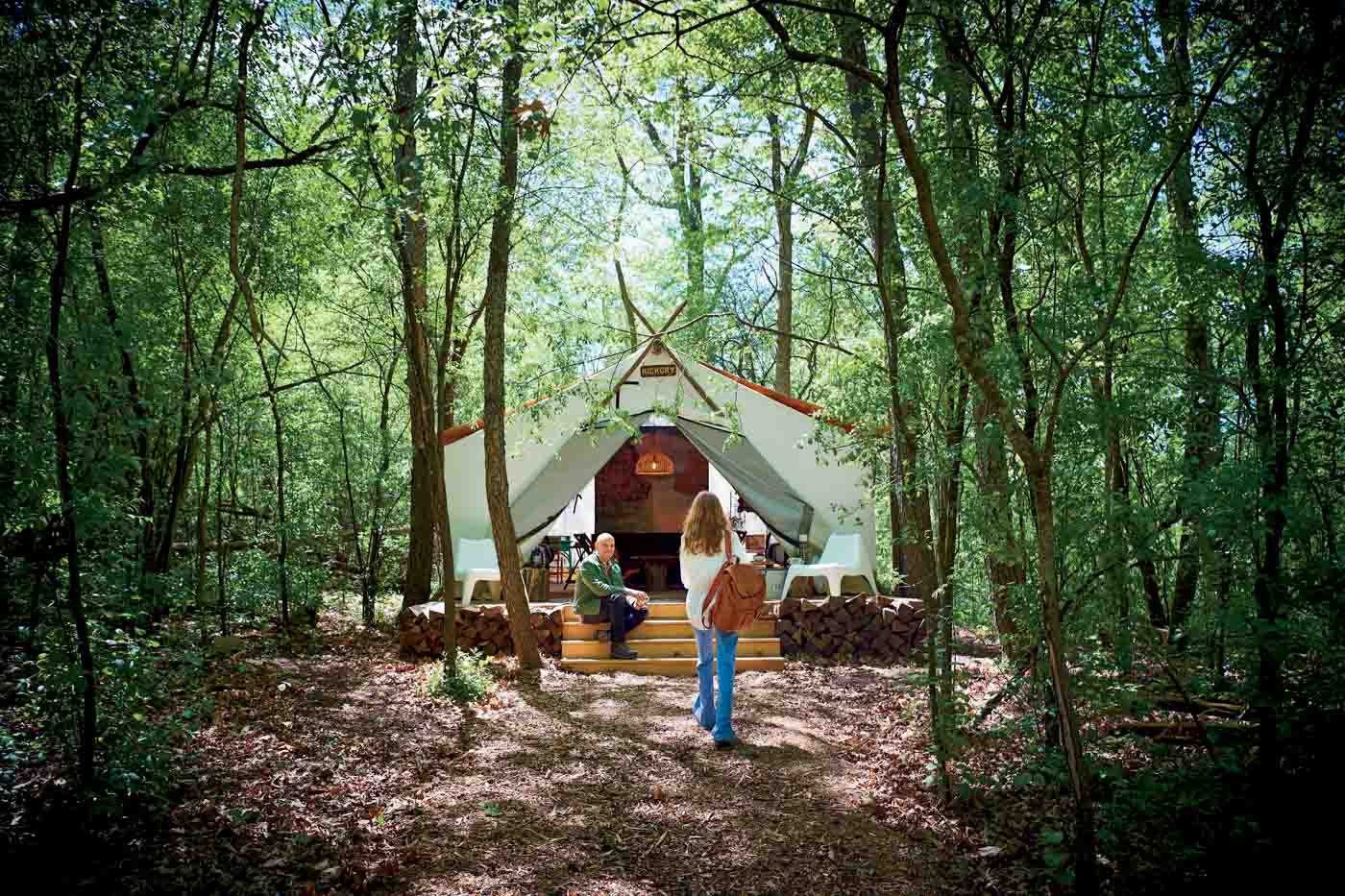

To learn more about Camp Wandawega, The Wandawega Bureau of Tourism, and Country Mouse City Mouse, visit wandawega.com, citymouselocations.com, and wandawegacampstore.com.